


 News
News Contest
 Forums
 Collectors
 Videos
 E-books
A Summer at Marlinspike Hall
Behind its gates lies what is arguably one of the most famous residences in the world of comic strips. It is a vast white-stone château featuring a park perfect for a sunny stroll, a stretch of woodland offering refuge from the heat, and enough guest rooms to accommodate passing visitors—a group you are cordially invited to join.
On paper, it is hard to imagine a better place to settle in for the summer. Especially since the owner—a certain Captain Haddock—now seems to lead the peaceful life of a country squire. Well... "peaceful" might be an overstatement! This quirky guesthouse is home to a cast of colourful characters, a few unwelcome visitors, and enough trouble to keep you busy throughout your stay.

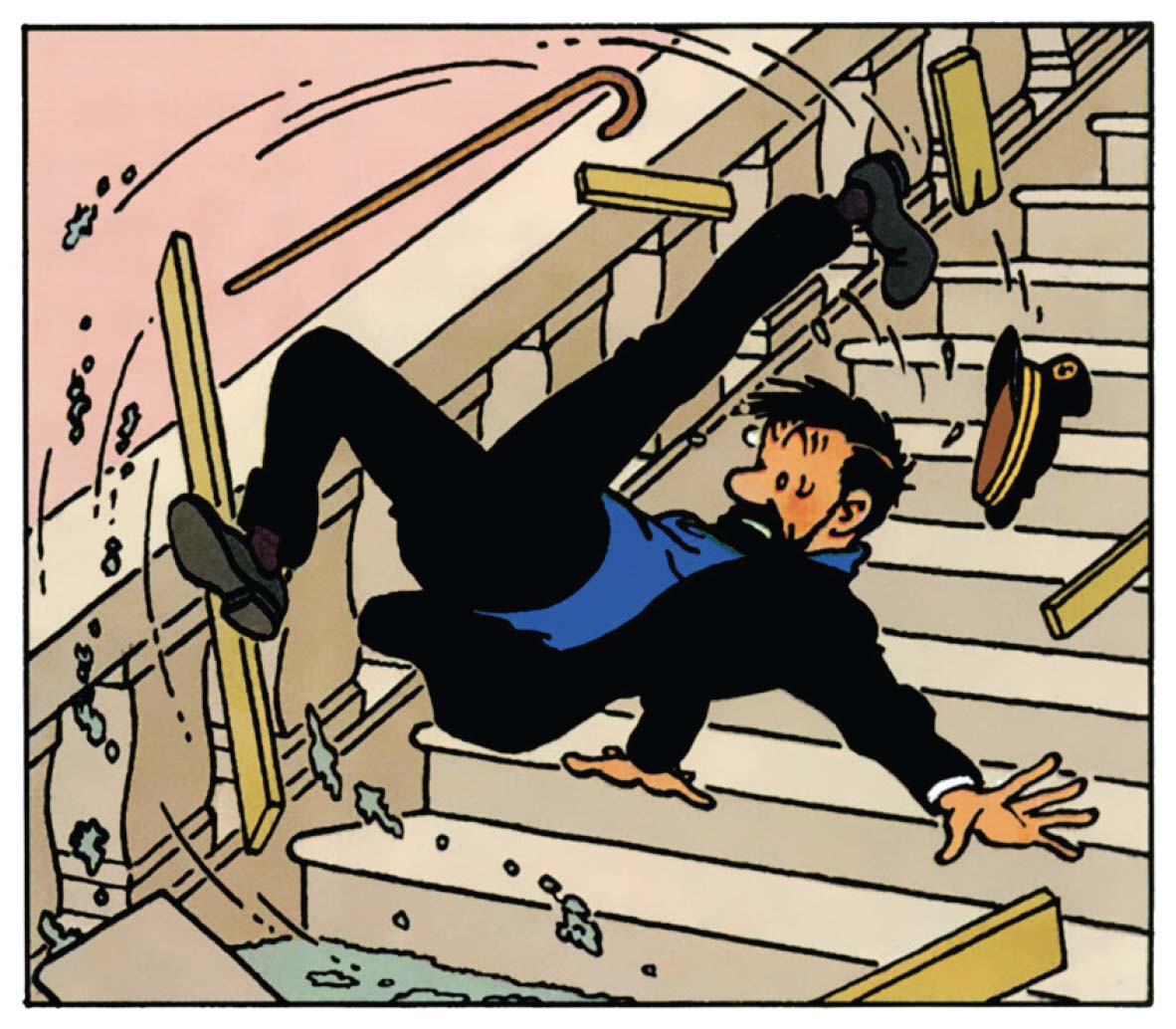
For staying at Marlinspike Hall means accepting that, behind the façade of a quiet country estate, a new adventure could erupt at any moment. A world-famous opera singer might arrive with a mountain of luggage, an absent-minded inventor could turn an outbuilding into a secret laboratory, journalists might overrun the lawns, and a particularly tenacious insurance agent could appear around a corner. And what of Abdullah—that absolute menace capable of sending our poor Captain’s blood pressure soaring? Not to mention the unwelcome visitors, the vanishing objects, and that wretched step at the entrance that no one seems willing to fix.
So, without further ado, a quick overview of the place is in order. Settle into this building, which holds a thousand secrets—and we are about to open a few of its doors for you in this exclusive feature.
Welcome to Marlinspike Hall!
Marlinspike Hall plays a far more significant role in The Adventures of Tintin than that of a mere setting. During the early years of his adventures, Tintin rarely stays in one place. From the Congo to America—and through the most improbable journeys—his true home base is adventure itself; the open road is his key, and the entire world, his horizon.
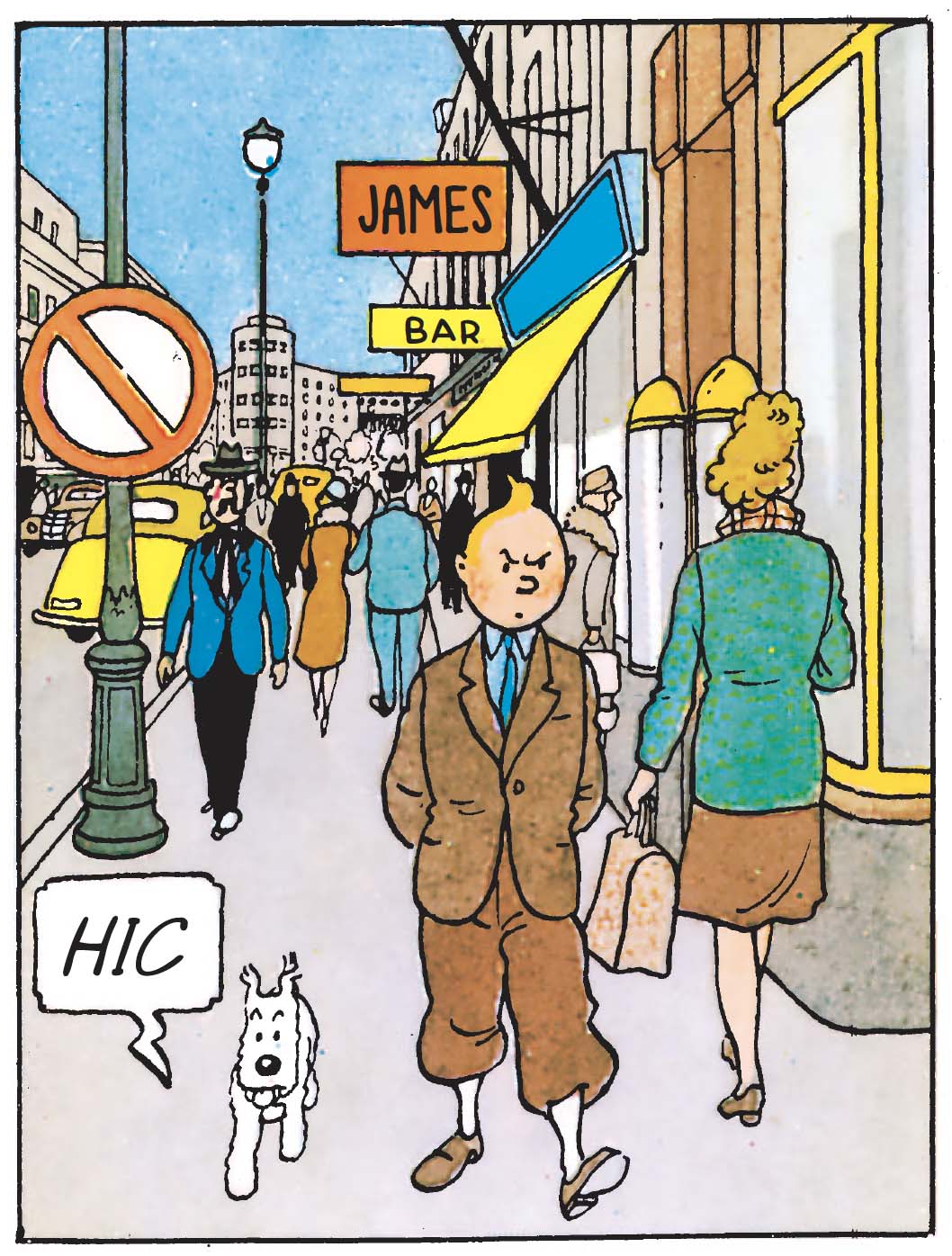
While his apartment on Labrador Road certainly provides a roof over his head between journeys, the reporter seems almost condemned to perpetual motion. It takes only a telegram, a chance encounter, or an unexpected event for him and Snowy to set off once more for the other side of the world. And for all the conversation his faithful companion offers, it goes without saying that one cannot stay cooped up forever, just having a chat with a fox terrier.
With the appearance of Marlinspike Hall, something changes profoundly. For the first time, the adventure drops anchor and finds a real home—a place to return to after travelling the world.
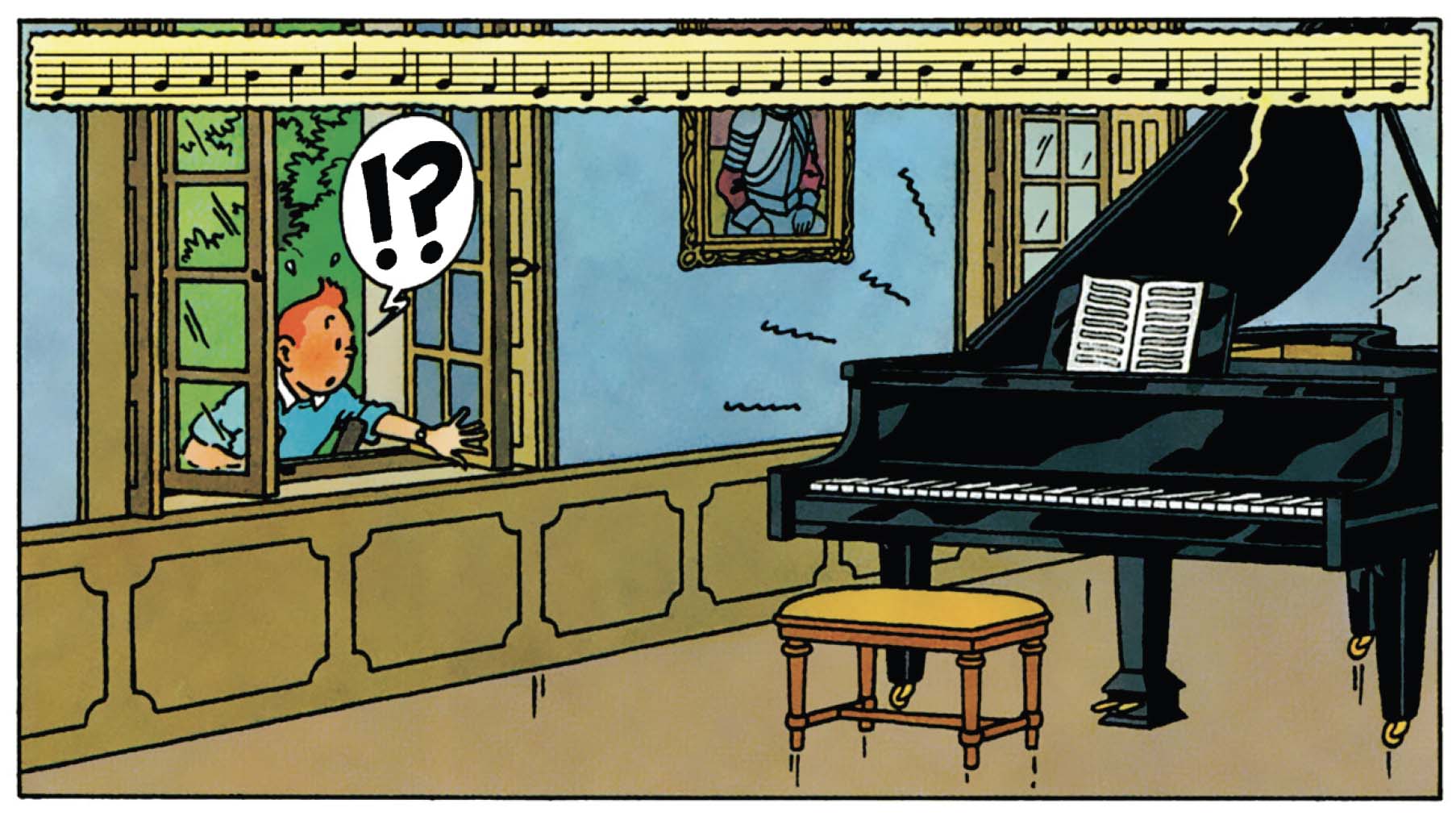
So let’s take advantage of the long summer days to step through the estate’s gates. From the grand staircase to the cellars, and from Professor Calculus’s laboratory to the park’s pathways, a visit is a must. But do keep an eye on your luggage; at Marlinspike Hall, even when no one is setting off on an adventure, the extraordinary always finds a way in. Even the birds turn out to be thieves—which goes to show you shouldn’t leave anything lying around near an open window.
A château rediscovered by chance
When Marlinspike Hall first appears in The Secret of the Unicorn, there is as yet no hint that it will become the geographical heart of the entire second half of The Adventures of Tintin. Moreover, the château is not discovered at the end of a leisurely house-hunting stroll—brochure in hand, with an instant love for historic stonework guaranteed.
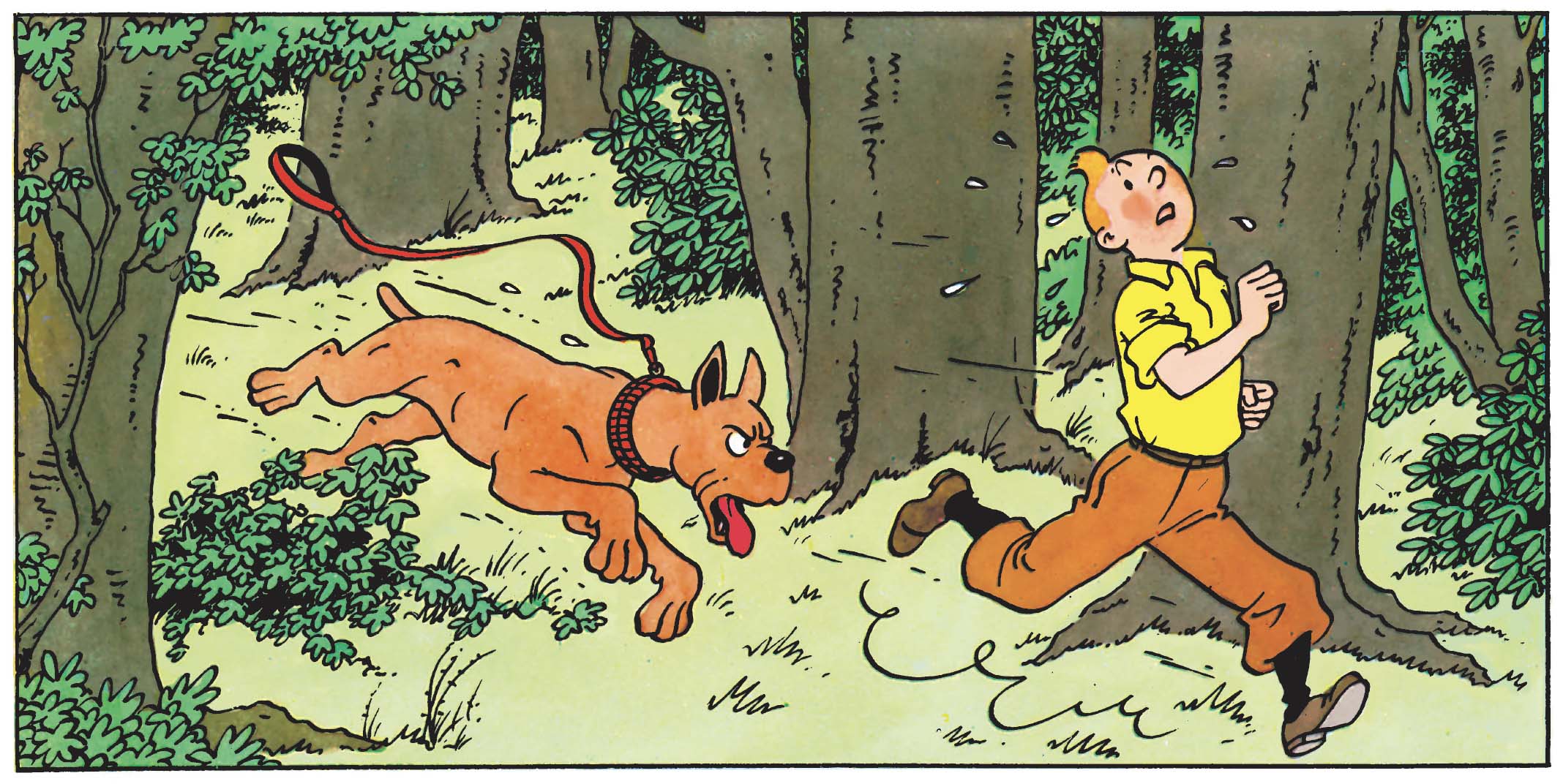
No, no—Tintin arrives there under far more turbulent circumstances: abducted by the Bird brothers—two antique dealers with, to put it mildly, questionable business practices—he finds himself locked up in the estate's cellars.
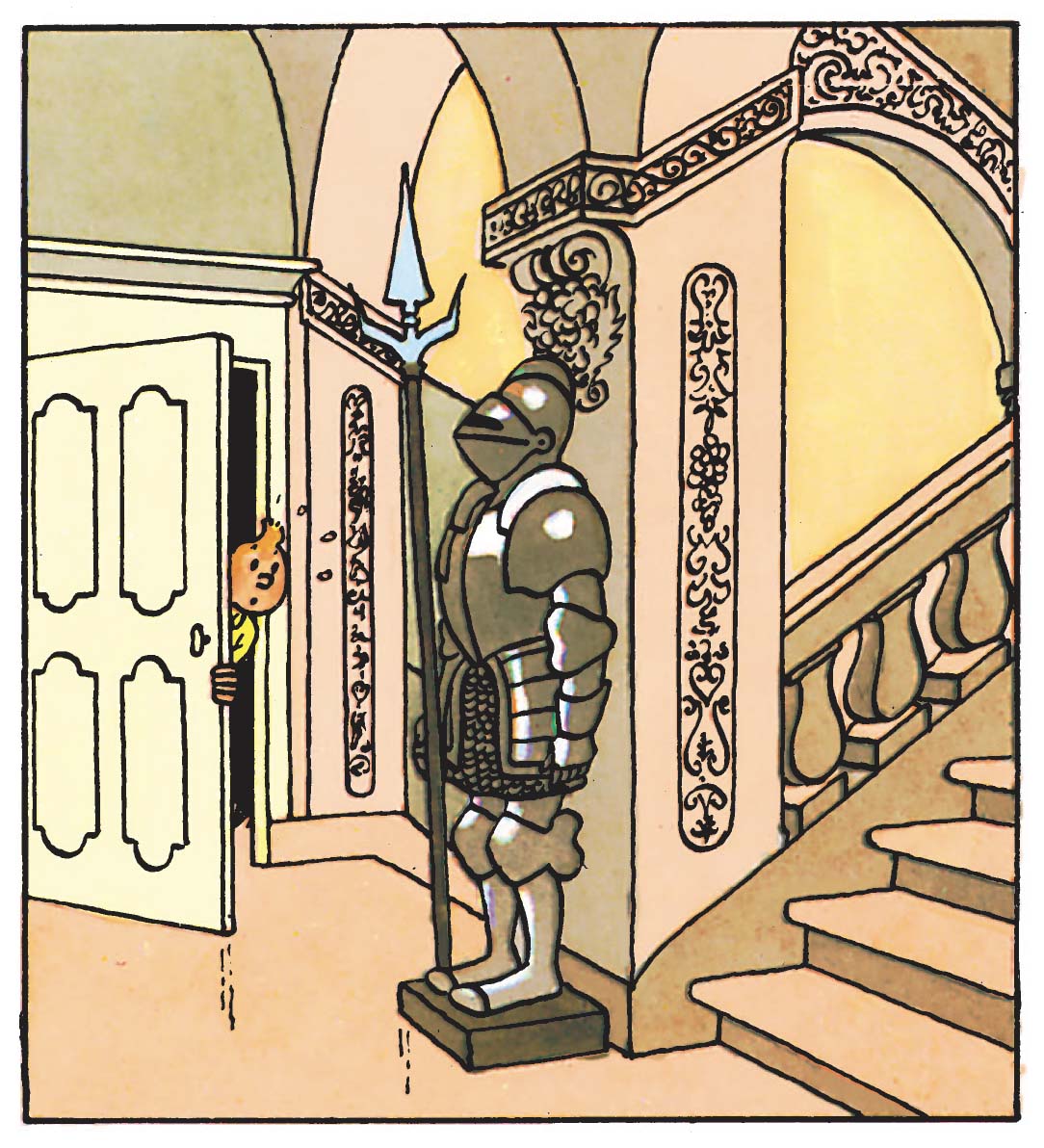
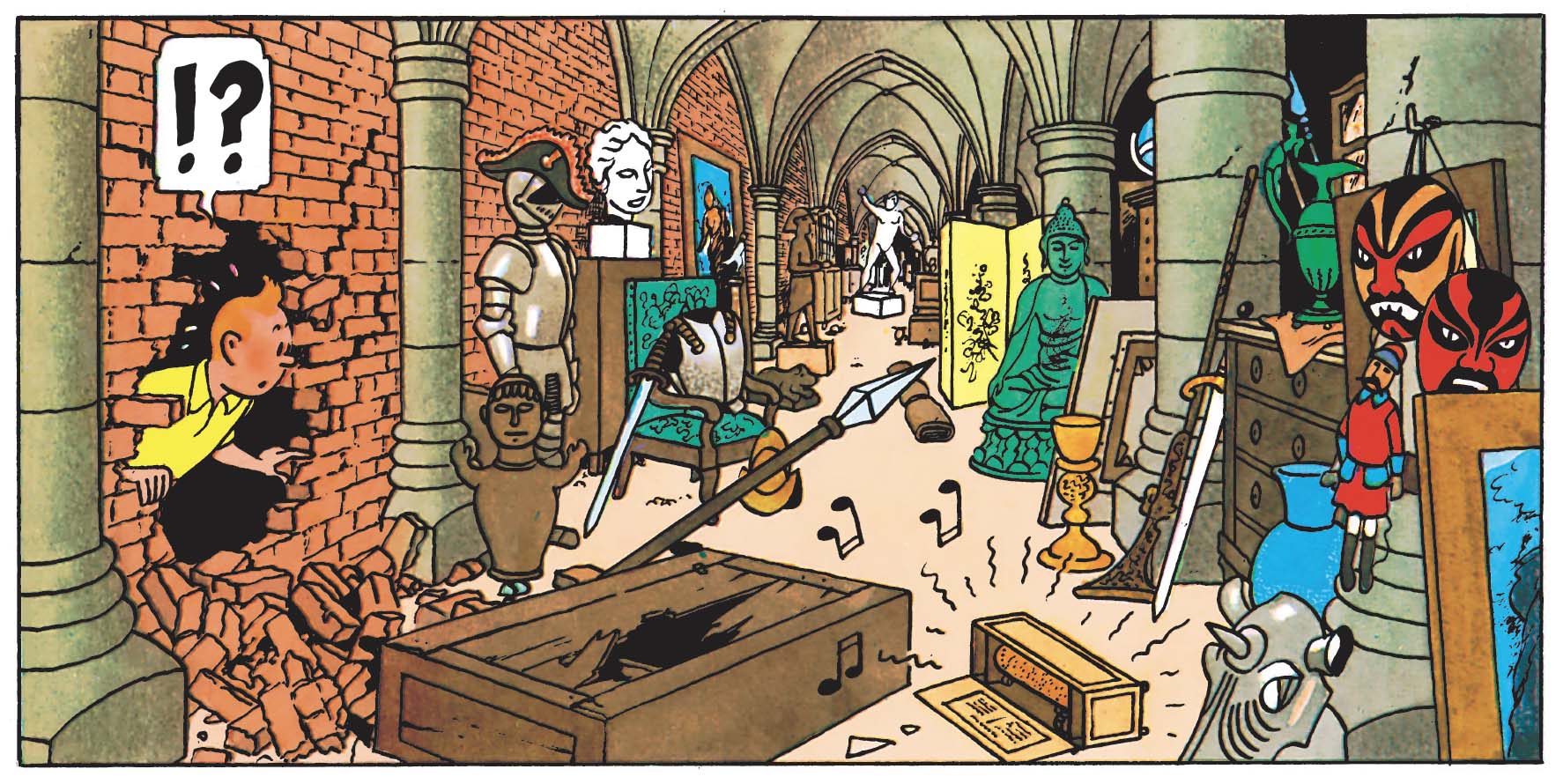
So, this first visit begins in the basement. Tintin discovers the place from the inside out and soon sets about testing the solidity of the walls himself. There are better ways to tour a property, perhaps, but at least he avoids the usual social pleasantries of a welcome.
Yet, Marlinspike Hall is no ordinary château. The estate once belonged to Sir Francis Hadodock—the Captain’s ancestor and commander of The Unicorn. Without even realising it, Tintin has therefore stumbled upon a piece of his friend’s past. The man who, just a few adventures earlier, was still adrift at sea aboard the Karaboudjan suddenly finds himself with far more solid roots: tons of stonework, a vast park, and—a detail of no small importance for what follows—a rather well-stocked cellar!
Of course, the property still had to be acquired. As luck would have it, Professor Calculus provided the solution at just the right moment in Red Rackham's Treasure. The sale of the patent for his miniature submarine brought in enough money for the Captain to buy back his ancestral estate. This was undoubtedly one of the wisest investments in the entire series. After a few eventful dives, Haddock was finally able to trade his sailor’s cabin for life in a château. There is no need to rush; the master of the house is waiting for you.
A pied-à-terre for a sailor
The change is therefore considerable! Haddock becomes the lord of the manor, Nestor remains in charge of the house, and Tintin, without ever officially becoming its owner, also ends up settling in. Professor Calculus soon moves in, along with a few experiments whose existence the neighbours would probably have preferred to ignore. Little by little, Marlinspike Hall becomes the home base for this quirky blended family. Come in, come in—you are expected there, too. Make yourself at home, but perhaps don’t unpack just yet; in this house, quiet stays have a curious tendency to go wrong.
And as if Hergé wanted to definitively cement this new living arrangement, the treasure so avidly sought in Red Rackham’s Treasure turned out to be—of all places—at Marlinspike Hall. After a sea voyage, an island explored from end to end, and enough dives to outfit the entire team with flippers, Tintin and Haddock discover Red Rackham’s hoard in the château’s cellars, hidden inside a globe in the crypt.
So, it took travelling thousands of kilometers to discover that the family fortune was quietly waiting back home. A lesson to ponder before booking your next vacation.
The whole world comes to Marlinspike Hall
With this installation, Marlinspike Hall profoundly transforms the geography of the adventures. Until then, Tintin almost always had to leave for anything to happen. Now, the world can come to him… And he certainly takes advantage of it! As the adventures progress, the château even takes on the air of a train station. Bianca Castafiore takes up residence there with Irma and Wagner. Abdullah turns the place into a giant playground, and Jolyon Wagg breezes in with an ease that seems inversely proportional to the Captain’s desire to welcome him (to put it mildly). Friends, nuisances, and total strangers all seem to know the way to Marlinspike Hall—an address that is evidently far less exclusive than its owner would have liked.
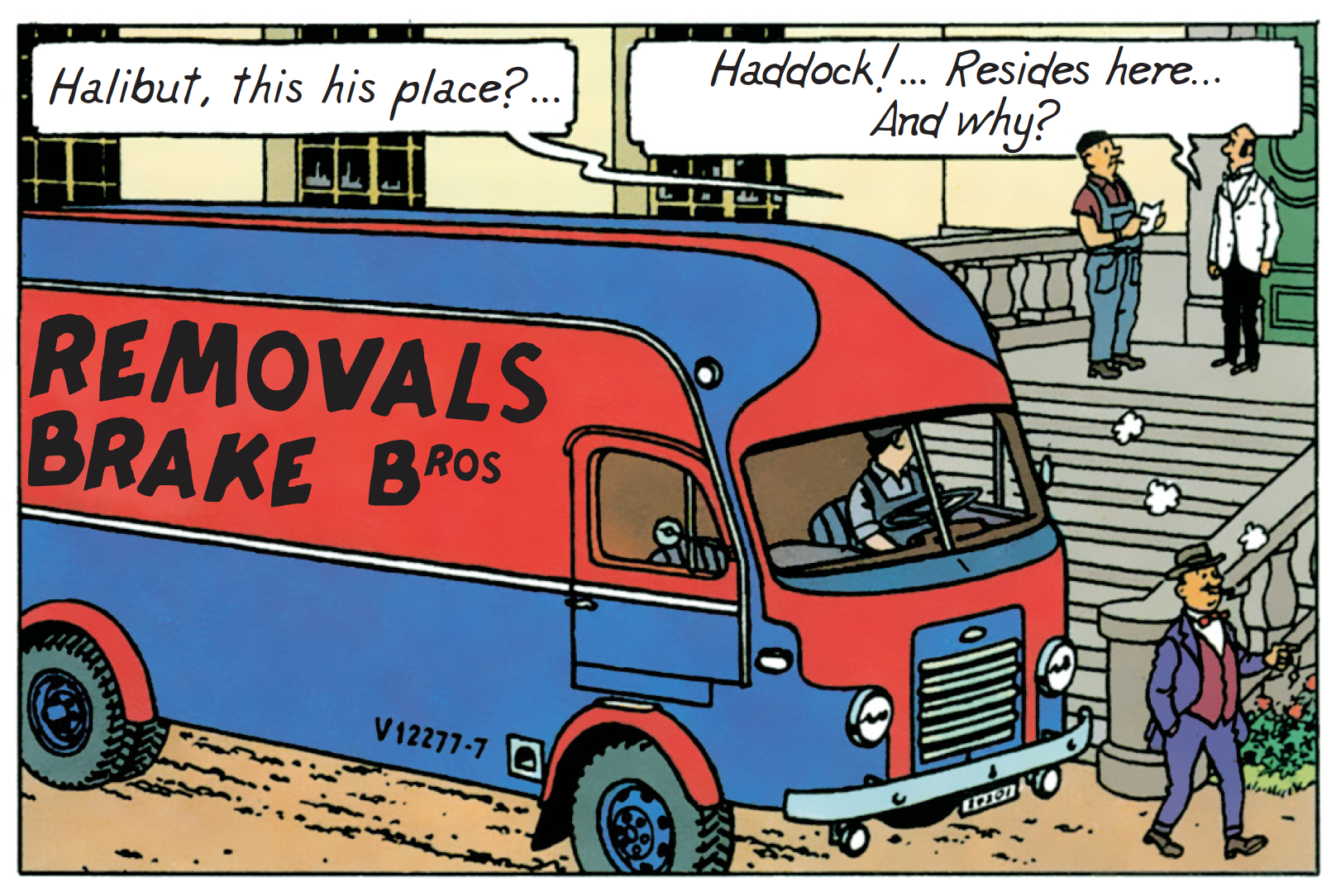
This restlessness reaches its peak in The Castafiore Emerald. After sending Tintin to the Soviet Union, China, South America, Tibet, and even the Moon, Hergé achieves something quite extraordinary. This time, there is no need to pack your bags; the adventure unfolds almost entirely in one place.
And if you plan to stay there for a few days, be warned: rest is not included in the package. A broken step triggers a series of accidents, Castafiore arrives with an armada of luggage, journalists take over the premises, a television crew sets up camp at the château, and an emerald mysteriously vanishes. Throw in a few unexpected visitors, and you will quickly realize that the tranquility promised in the brochure was somewhat exaggerated. Had you come to enjoy the grounds and the peace of the countryside? Too bad!
Hergé demonstrates that adventure does not, after all, require distant frontiers. A few rooms, a park, and a handful of visitors are enough. At Marlinspike, there is no need to roam the world; adventure always ends up knocking at the door. But since you are already here, you might as well continue the tour and discover what this imposing residence really has to offer…
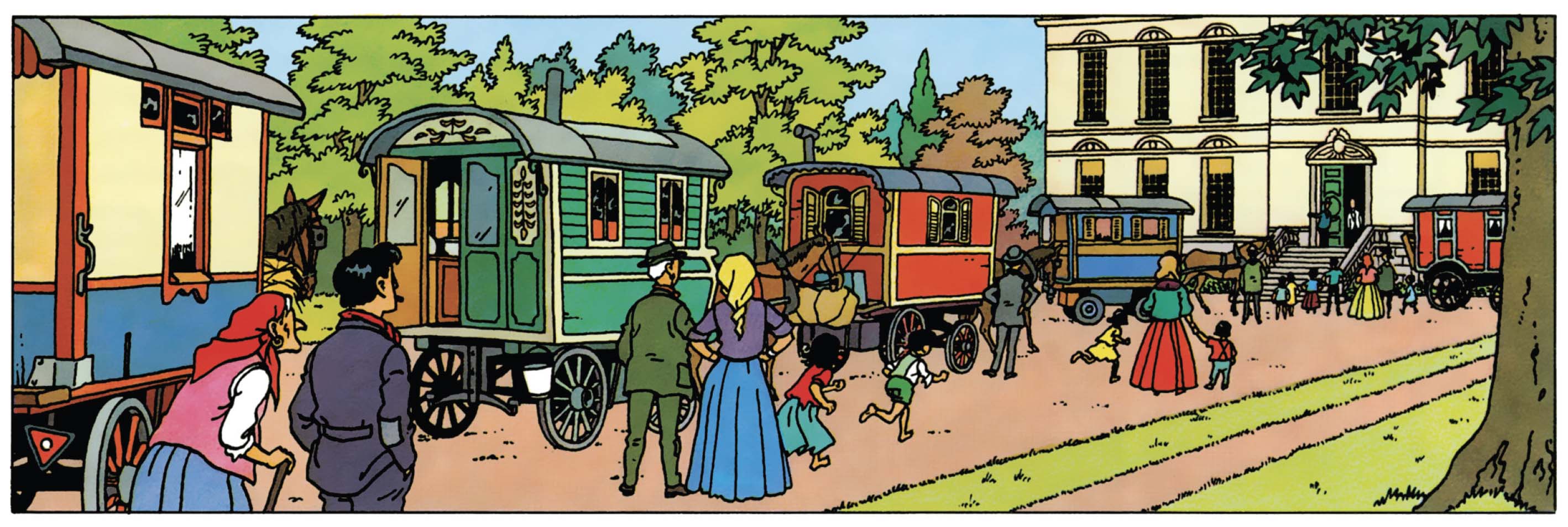
What if Marlinspike Hall really existed?
Are you starting to get a taste for the château lifestyle, and does the thought of handing back the keys already sadden you? Good news: the experience can continue in the real world.
You simply need to leave Tintin and his companions for a moment and head to the Loir-et-Cher region of France. There, at the end of a long driveway, a silhouette should look strangely familiar. You have arrived at the Château de Cheverny. Not quite Marlinspike Hall—but almost.
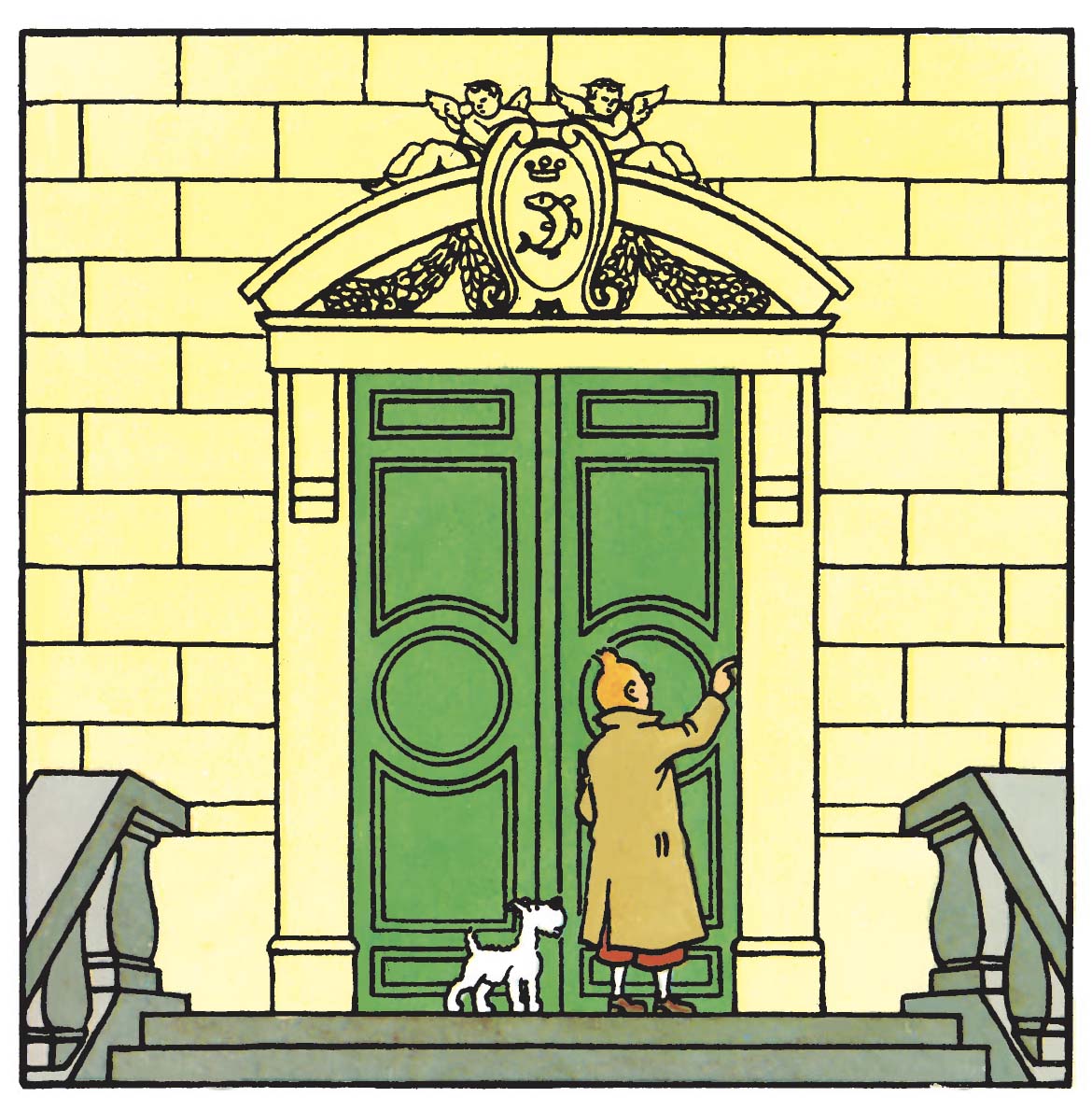
When Hergé conceived Captain Haddock’s home, he drew direct inspiration from this 17th-century château. The resemblance is striking—so much so that a Tintin enthusiast standing before its central facade might almost expect to see Nestor open the door. However, Hergé took the liberty of carrying out a few alterations without applying for planning permission. He simply removed the two imposing side wings of Cheverny, retaining only the central section—which was more compact and, above all, easier to fit into the vignettes of his adventures. Marlinspike Hall was born.
And Hergé did not stop at the facade. The research material he gathered on Cheverny also helped him envision certain interiors and furnishings for Marlinspike Hall. This makes the boundary between fiction and reality rather uncanny when moving from a Tintin vignette to the rooms of the actual château.
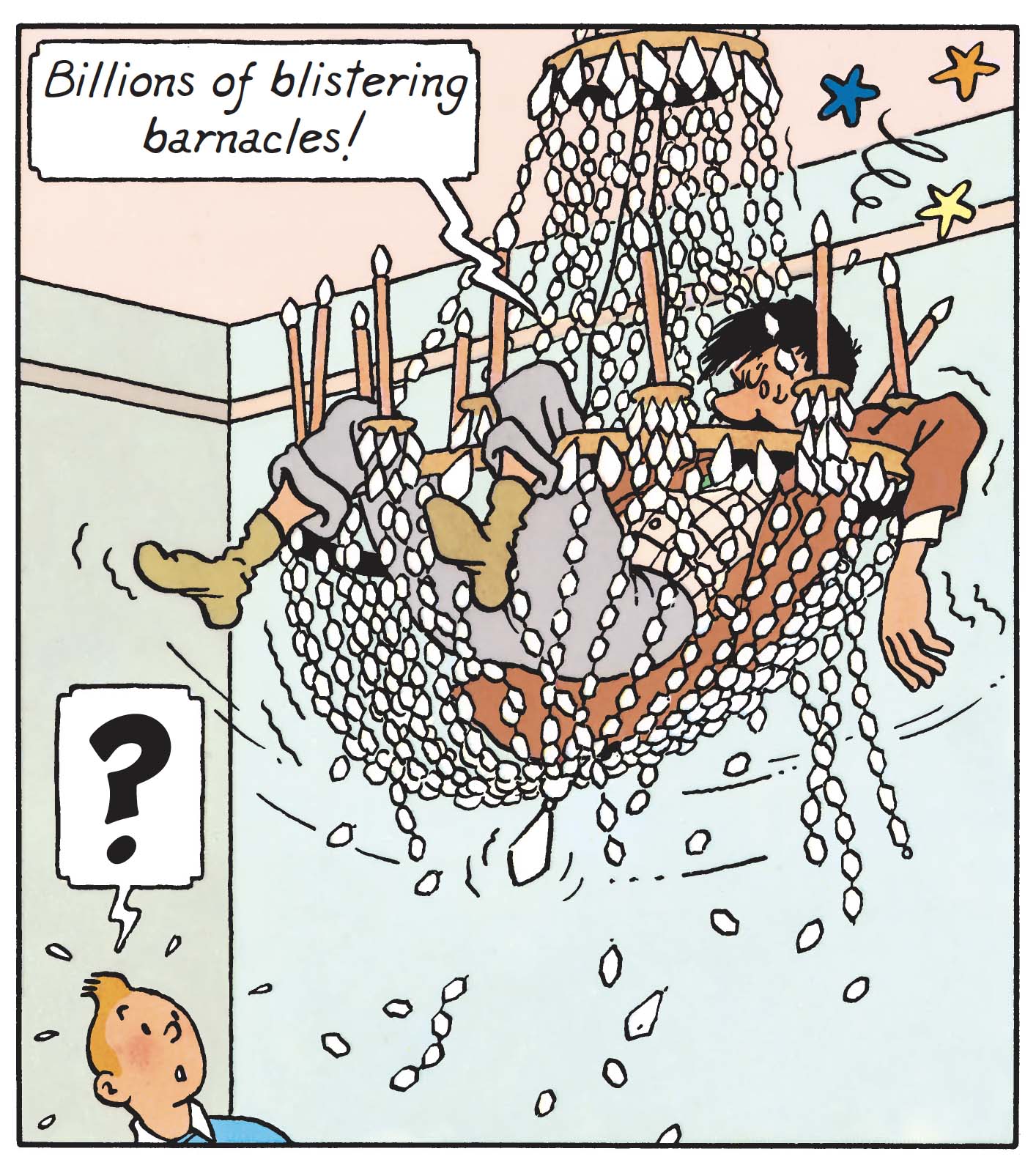
But don't put your map away too quickly, because our Marlinspike Hall also has a little piece of Belgium in it. Its original French name is Moulinsart, which is said to be directly inspired by Sart-Moulin, a hamlet in Braine-l'Alleud that Hergé knew well. As for the paths, woods, and peaceful countryside surrounding the property in the books, they owe much to the landscapes of Walloon Brabant, where the artist himself lived for many years. In short, Moulinsart has a French façade, a Belgian name, and a touch of Walloon Brabant in its garden. A château like that could surely only exist in a comic strip.
So, our stay is drawing to a close, and it is time to hand back the keys. Unless, of course, you choose to extend your holiday a little by opening the books again. After all, at Marlinspike Hall, a room always seems ready for anyone who turns the page.

Texts and images © Hergé / Tintinimaginatio - 2026


