Le Journal
 Concours
 Forums
 Collectionneurs
 Vidéos
 Livres (e-books)
The Gallery of Artefacts
Like the familiar figures that populate the books, the objects imagined by Hergé do not
merely animate the setting. These discreet but essential artefacts always come at the right time to give breath and life to the story. Whether they evoke the great outdoors, ancient civilisations, mysticism or scientific daring, they embody adventure... the real one, the one with a capital ‘A’. Strong and unique symbols that, by themselves, summarise an entire universe and extend its magic well beyond the books.
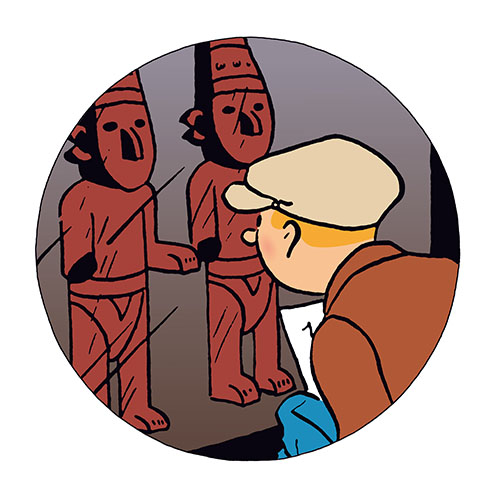
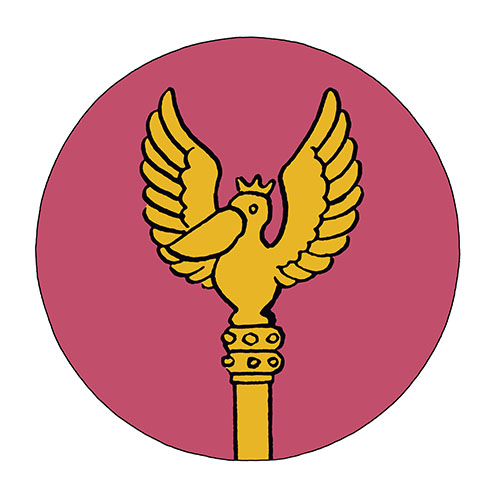
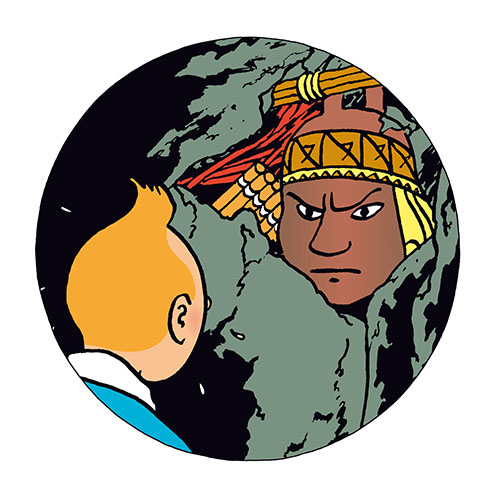
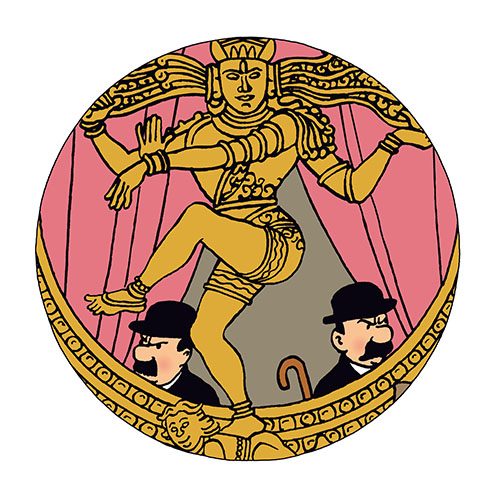
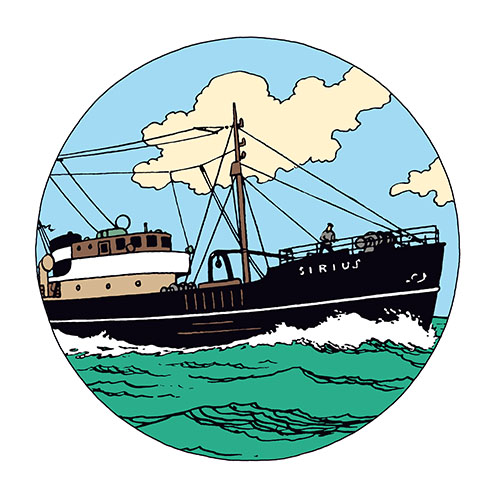
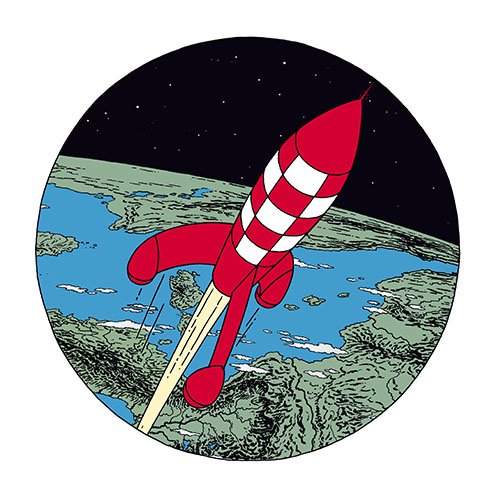
To explore all of these treasures, simply slide the horizontal scroll bar from right to left. Enjoy your discovery!
A major first!
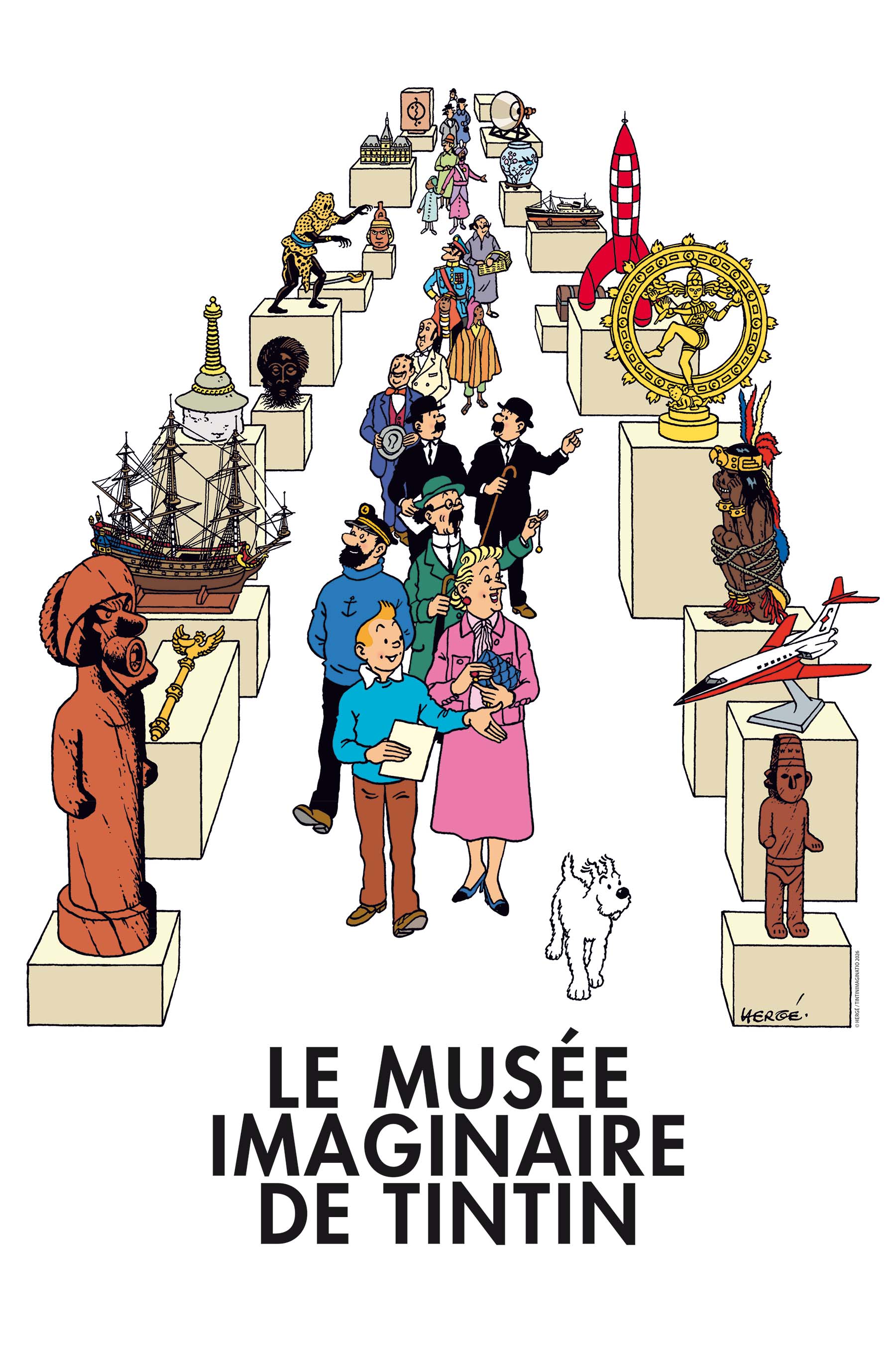
In 1979, the art critic and exhibition curator Michel Baudson devised and curated a major exhibition dedicated entirely to the young reporter, on the occasion of his 50th birthday, at the Palais des Beaux-Arts de Bruxelles (now Bozar),
Entitled, Le Musée Imaginaire de Tintin, (The Imaginary Museum of Tintin), the event celebrated the work of Hergé (who himself signed the poster) with an original approach: a fictitious dialogue between illustration plates and potential documentary sources. So much so that a whole visual world – made of works of art, artefacts and ancient objects – unfolded, in a mirror image, of that of the artist.
By revealing these connections, The Imaginary Museum of Tintin went beyond a simple retrospective. It highlighted a creative process. A method. It also permanently inscribed Hergé’s work in a vast and lively visual culture, nourished by art, history, and careful observation of reality.
And for those who would like to discover some of the iconic objects – full-size – featured on the poster of this famous historical event: a detour is required to visit the temporary exhibition currently held in Spa (to find out more, click here).
Entitled, Le Musée Imaginaire de Tintin, (The Imaginary Museum of Tintin), the event celebrated the work of Hergé (who himself signed the poster) with an original approach: a fictitious dialogue between illustration plates and potential documentary sources. So much so that a whole visual world – made of works of art, artefacts and ancient objects – unfolded, in a mirror image, of that of the artist.
By revealing these connections, The Imaginary Museum of Tintin went beyond a simple retrospective. It highlighted a creative process. A method. It also permanently inscribed Hergé’s work in a vast and lively visual culture, nourished by art, history, and careful observation of reality.
And for those who would like to discover some of the iconic objects – full-size – featured on the poster of this famous historical event: a detour is required to visit the temporary exhibition currently held in Spa (to find out more, click here).