


 News
News Contest
 Forums
 Collectors
 Videos
 E-books
A summer icon
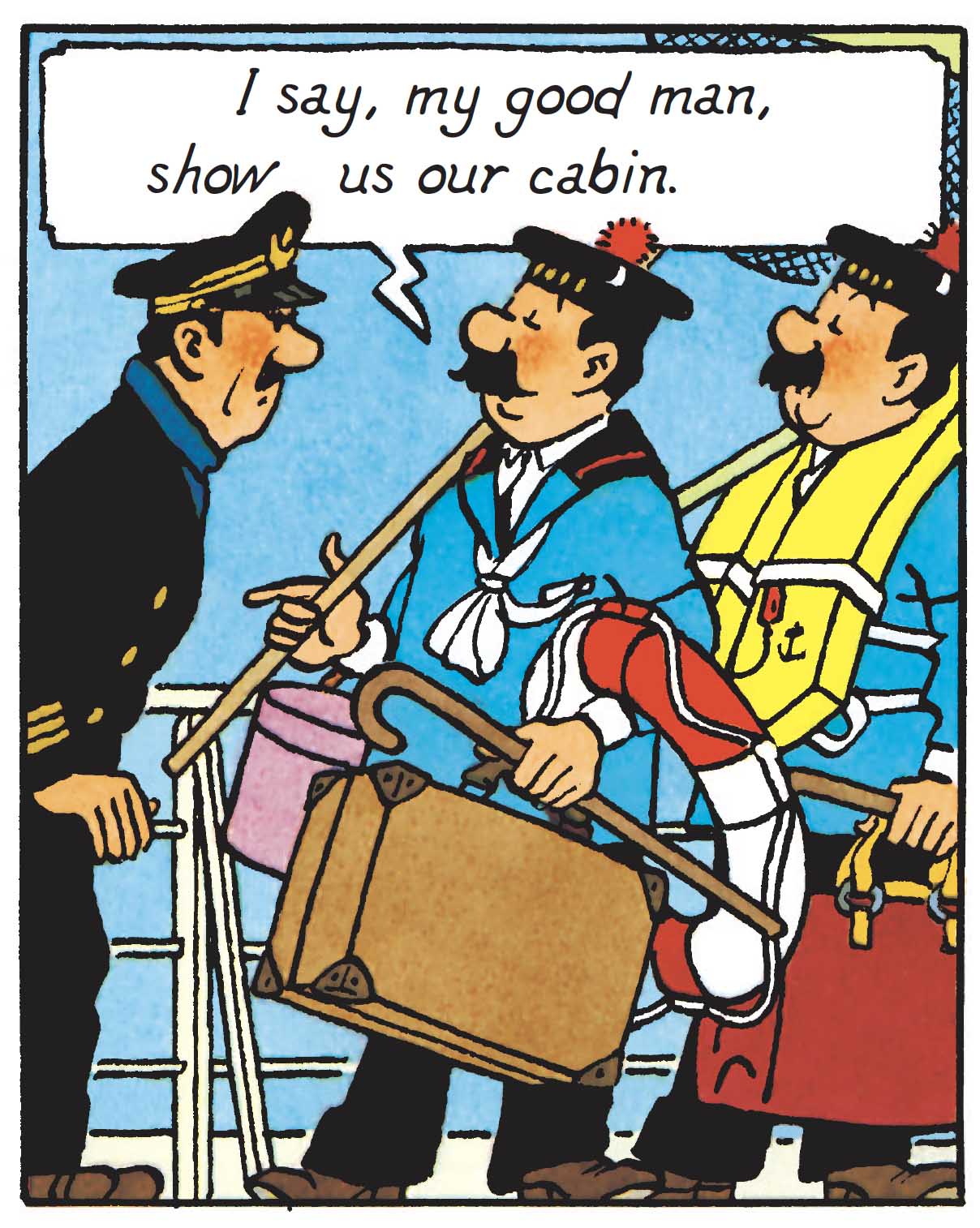
There's no doubt about it, Thomson and Thompson are big fans of dressing up. So when they get the chance to set sail, they don't hesitate to swap their usual ‘Men in Black’ outfits for sailor’s costumes.
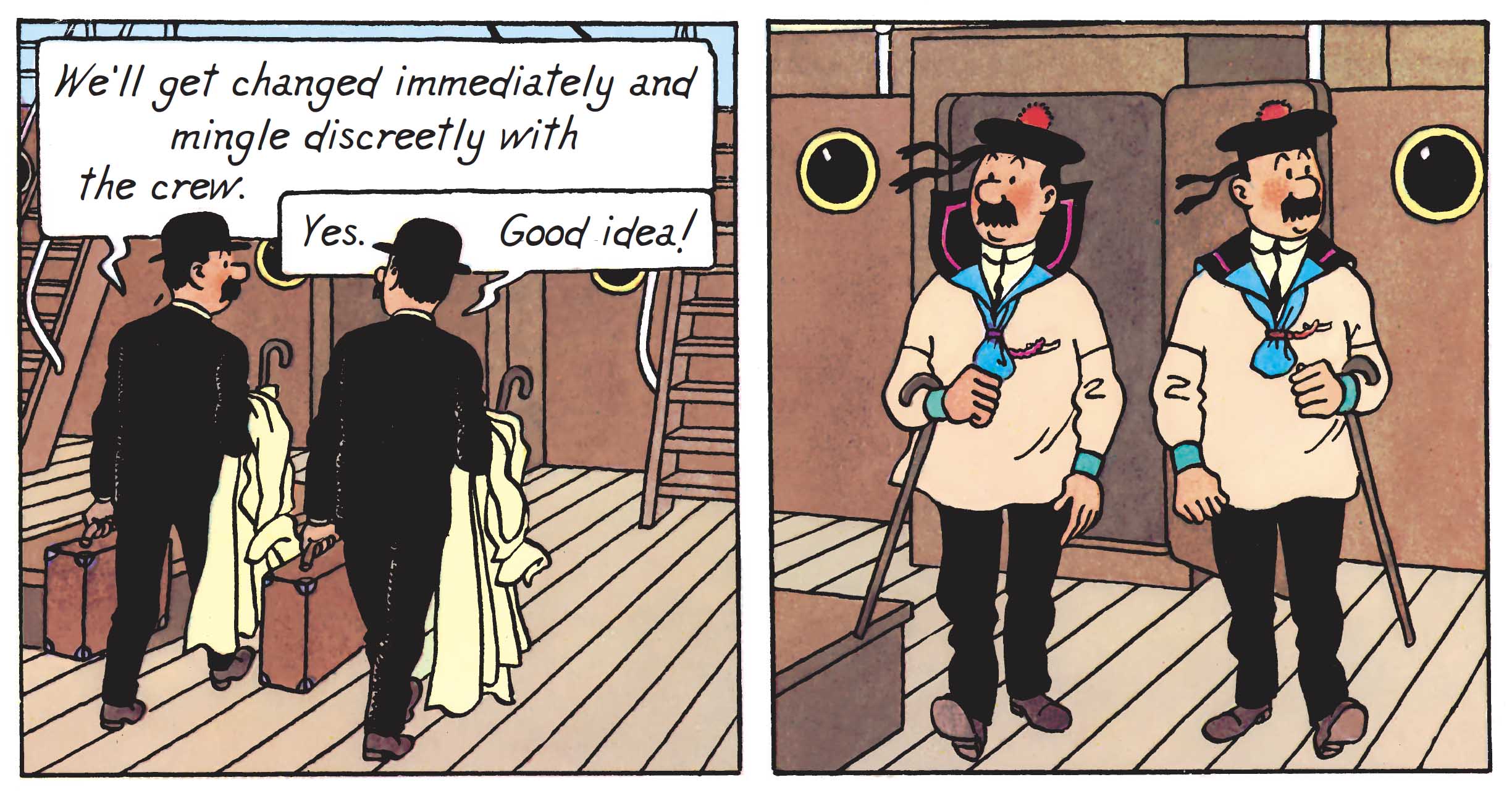
In Red Rackham's Treasure, just like in Tintin in the Land of Black Gold, it is indeed in this attire that they proudly climb onto the deck, convinced that they are perfectly dressed for the situation. Another fashion faux pas, of course! But behind this amusing sartorial blunder lies a broader, almost unconscious reference to well-established popular imagery…
Like a sea breeze
Originally, the sailor suit was the uniform worn by ‘the lads of the navy’ (according to Captain Haddock in The Crab with the Golden Claws). In other words: by military sailors.
But against all odds, in the last quarter of the 19th century, it became surprisingly fashionable and was adopted as children's clothing in aristocratic and bourgeois circles. In fact, the first famous toddler to be seen wearing it was none other than the Prince of Wales (the future King Edward VII of England) himself.
That was all it took for navy blue, stripes and square collars to become the hallmarks of a chic, practical and elegant style, but one that was nonetheless synonymous with a certain discipline. From 1900 onwards, and particularly between the two world wars, its symbolism evolved.
It should also be noted that the 1930’s saw the birth of seaside tourism. This social phenomenon was encouraged by the development of paid leave (from 1936 onwards in Belgium and France) and by the medical ideal of the time, which extolled the benefits of sea air. Going to ‘get some fresh air’ was now a luxury accessible to a growing section of the population. In this context, the sailor suit logically became THE symbol of seaside holidays.
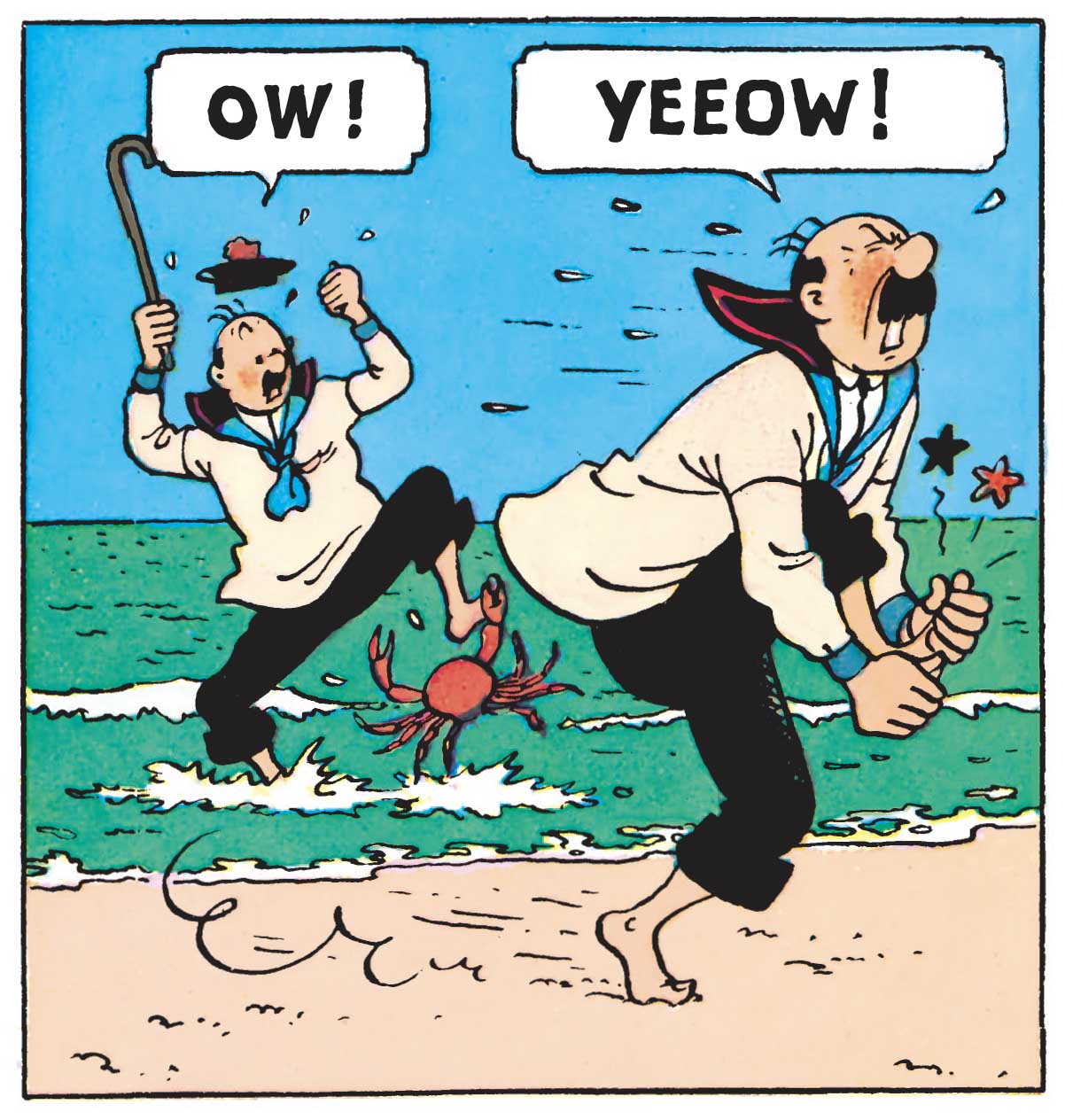
The illustrated press – very much in vogue at the time – published a new image in its pages: that of a young cabin boy, embodying the joy of setting off on holiday.
‘Long live the holidays!’
Like other colleagues before him, Hergé also experimented with this type of iconography. For example, he created a cover illustration on this theme for Le Petit Vingtième on 7th July 1932. In this composition with its refined graphics, marked by the Art Deco style, the character is a universal archetype, immediately understandable and identifiable: it is not a particular child, but rather children on holiday in general.

In addition, the accompanying inscription seems to float like a summer song, emphasising its carefree cheerfulness. And interestingly, the luggage labelled ‘Ostend’ suggests the modernity of the train rather than that of the yachts and other pleasure boats used in the North Sea during the summer months.
Conclusion
Whether worn by a child on their way to holiday or by the indescribable Thompson on a mission, sailor’s suits are much more than just a clothing choice. They embody a tradition, an aesthetic, but above all a collective imagination made up of departures, adventures and light-heartedness.
Hergé, a keen observer of his era, captured its full symbolic and graphic significance, integrating it with humour and finesse into his comic strips. Under his pen, costumes became a true narrative vehicle, both comical and evocative, connecting characters to a shared visual culture... between fashion, history and leisure.
Texts and pictures © Hergé / Tintinimaginatio - 2025


