


 News
News Contest
 Forums
 Collectors
 Videos
 E-books
The Speaking Vignette: trouble in the air
A fist swings, a chair flies, a lifesaving somersault rolls through, and a blow is sent right back where it came from. That’s how, in The Black Island, the brawl between Tintin and Dr. Müller heats up. It all unfolds in mere frames, yet it snaps with energy: the action is loud, choreographed, and legible like a score.
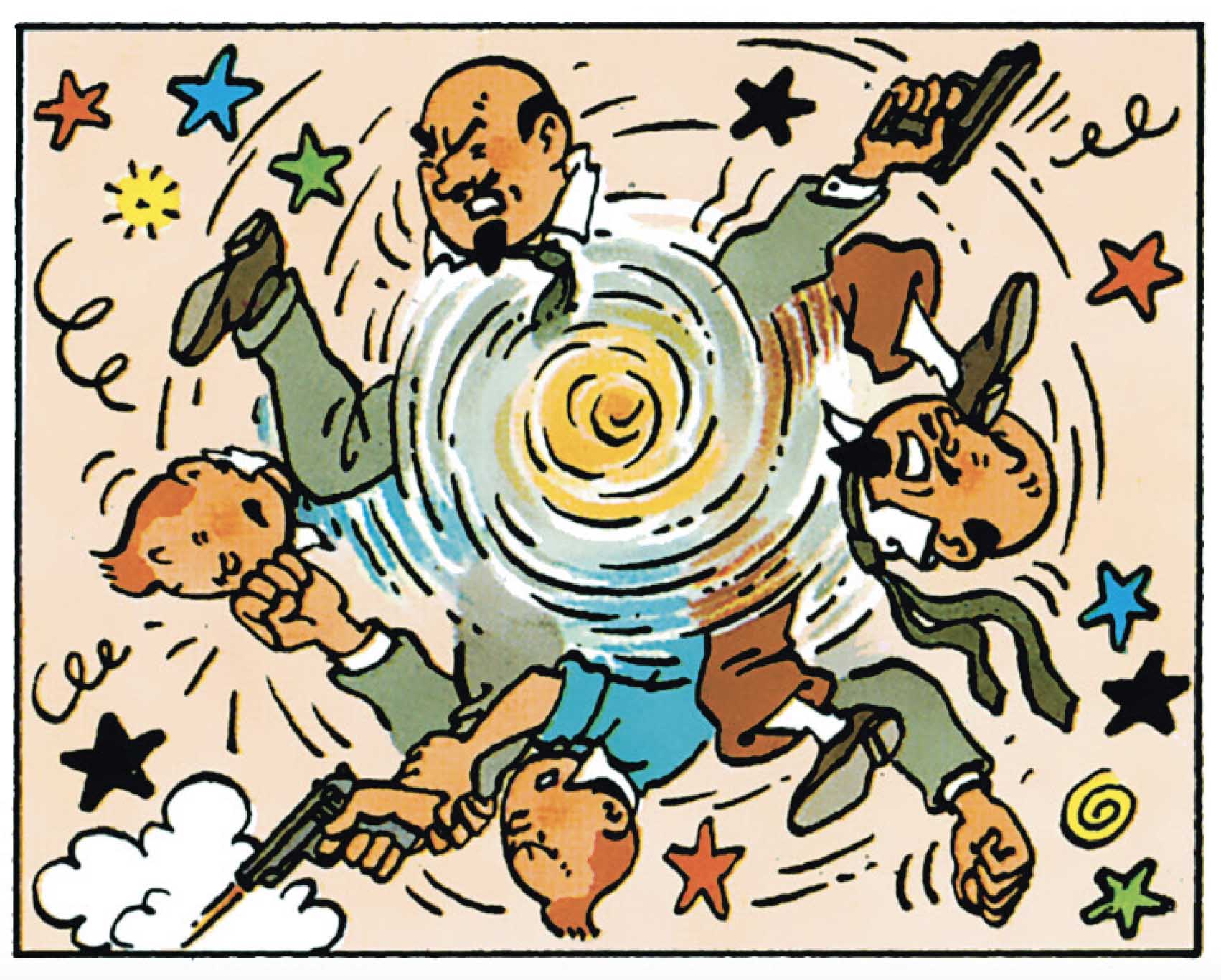
Hergé never hid his burlesque influences.
In these fight sequences—true feats of graphic bravura—a whole visual heritage resurfaces. That of slapstick, the physical comedy born of silent cinema, which finds here a distilled, rhythmic, and crystal-clear expression.
No blood spatters, no deafening explosions. Just the visual punch of a sharp motion, often absurd, always readable. A chair flung, a spinning hat, a villain slipping on a slipper: pure Keaton or Chaplin, in clear-line style.
Beneath this apparent fluidity lies a precise art of framing and pacing. Every move is suspended; every imbalance sculpted in the ellipsis. Hergé shows neither the blow itself nor the impact, only the moment before and the moment after—leaving the reader to animate the action in their mind. A true stuntman’s storyboard, where gags strike like percussion.
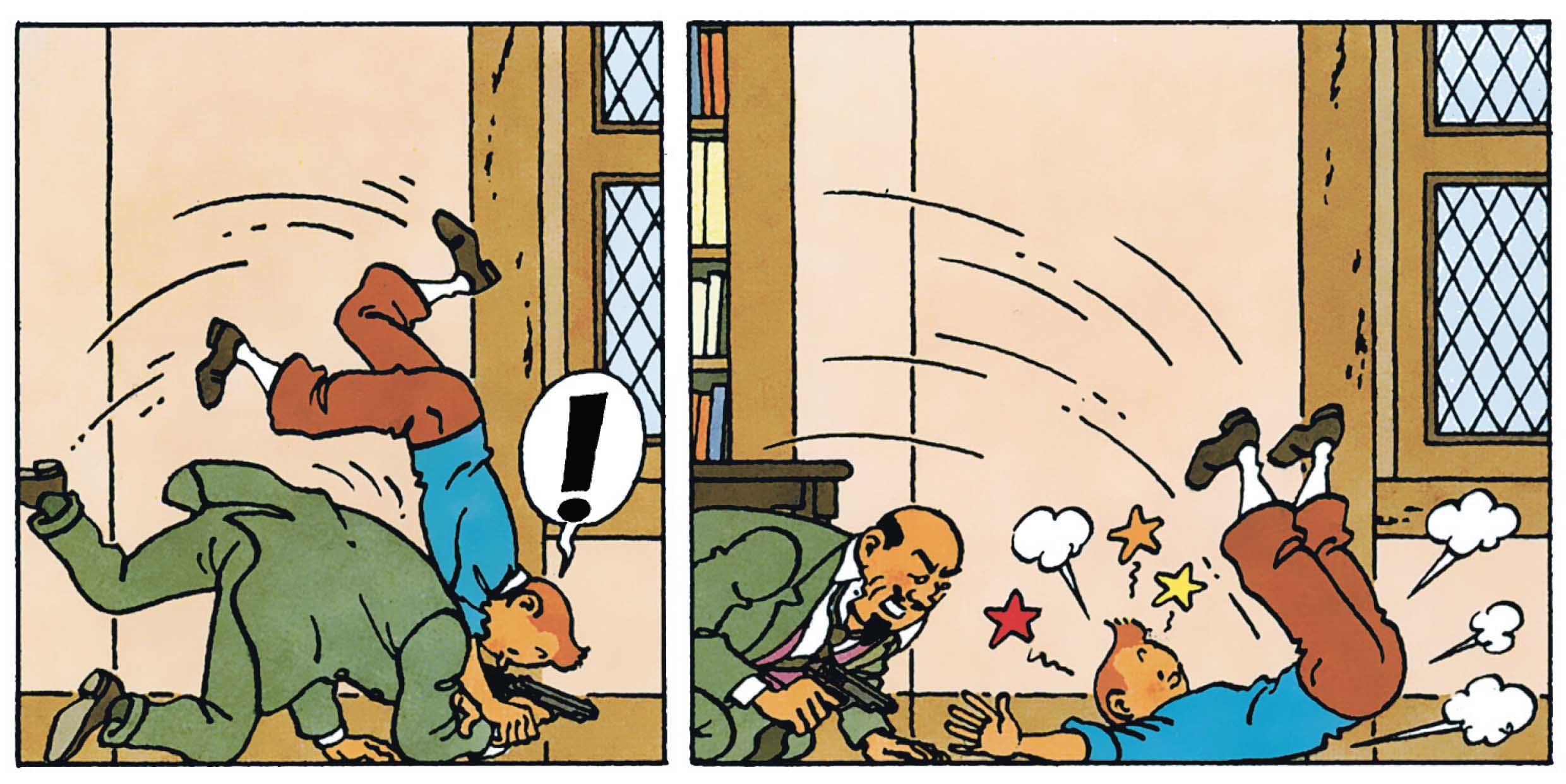
This sequence is not simply a brawl. It’s a moral choreography: Tintin doesn’t fight to harm, but to restore balance. He disarms, topples, dodges—more often than he hits. Even amid chaos, he remains agile, restrained, upright. The set becomes part of the action, props revolt, and space turns into a stage. That’s the elegance of Hergé’s touch: a slap becomes a dance move, a slip a sidestep in the face of the world’s absurdities.

And in this precise string of panels, it’s all there: tempo, balance, and burlesque. Far from gratuitous violence, Hergé crafts an action that is stylized, playful, and deliberate. A language of motion born from black-and-white screens—translated into comics.
Texts and pictures © Hergé / Tintinimaginatio - 2025


