News
News Contest
 Forums
 Collectors
 Videos
 E-books
Hergé's frescoes now classified as remarkable heritage
World Scouting Day is being celebrated on 22 February! A look back at a founding period for Hergé: the frescoes painted by him in his troop's premises, recently classified, bear witness to a time when Georges Remi was a curious fox.
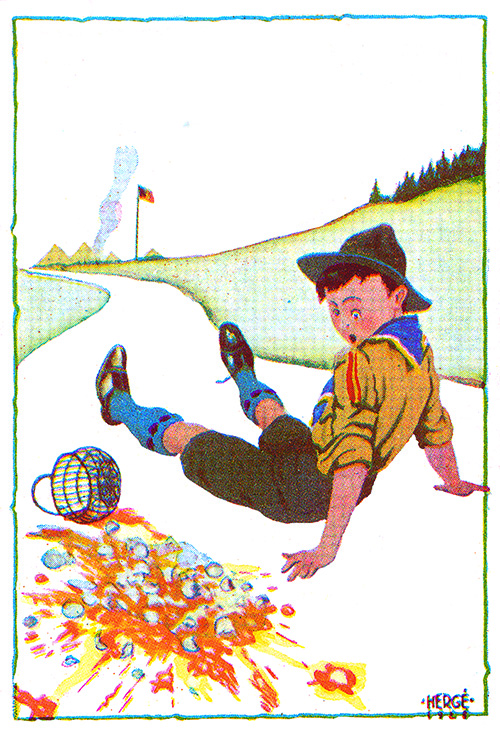
Georges Remi was Renard Curieux before he became Hergé
As a member of the Saint-Boniface unit, young Georges Remi lived the Scouting adventure for 10 years.
With his troop, he broadened his horizons at an age when few young people were travelling. He travelled to the Dolomites, the Austrian Alps and the Pyrenees during his camps. He nourished his mind during hikes in the woods, fireside evenings and nights under the stars. He observes the world around him, things and people. He is curious about everything, which earned him the totem of Renard Curieux (literally, Curious Fox).
Hergé's frescoes at the Saint-Boniface Institute classified as remarkable heritage
Founded in 1866, the Saint-Boniface Institute never ceased to evolve, moving first to the chaussée de Wavre, then to the chaussée d'Ixelles. In 1920, it moved to a new place in the rue du Viaduc. The acquisition in 1911 of the boarding school of the sisters of Saint-Vincent de Paul, rue du Conseil, and the important works that followed, allowed the Institute to have all the space it needed.
In the autumn of 1922, the federation of the Belgian Catholic Scouts encouraged its troops to renovate the headquarters that
which had been placed at their disposal. The one before us (8.80 x 3.5 x 3 m) is on the ground floor of the house adjoining the chapel. The Unit's troop leader entrusted the project to a certain Georges Remi, the future Hergé, who, at the age of 15, completed the decor with the scouts of his patrol in the spring of 1923. The budding artist created stencilled friezes with 35 galloping knights one metre above the ground, as well as 52 American Indians and scouts alternating on all fours at ceiling level.
Scouts climbing a rope frame the two doors of the room and the chimney, while others, pulling the same rope back to back, stand over the doors. At the back of the room, a large map lists the troop's camps.
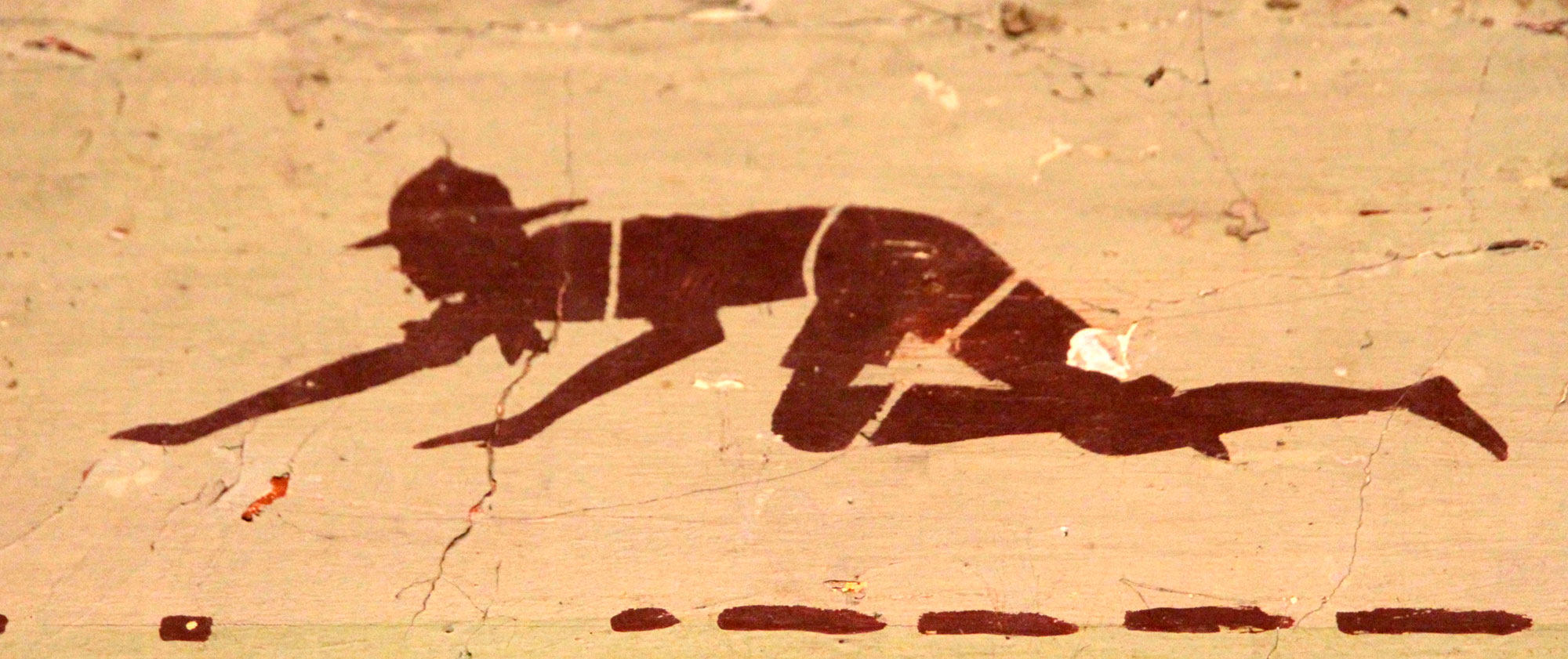
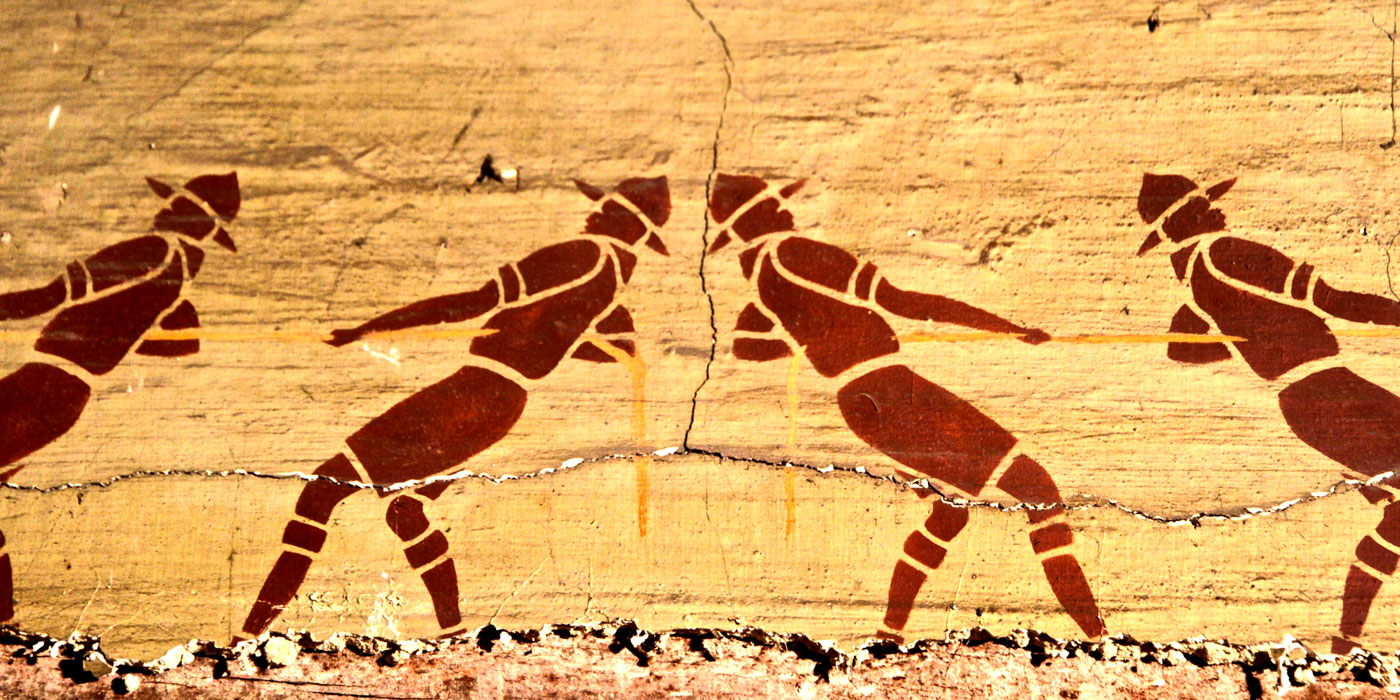
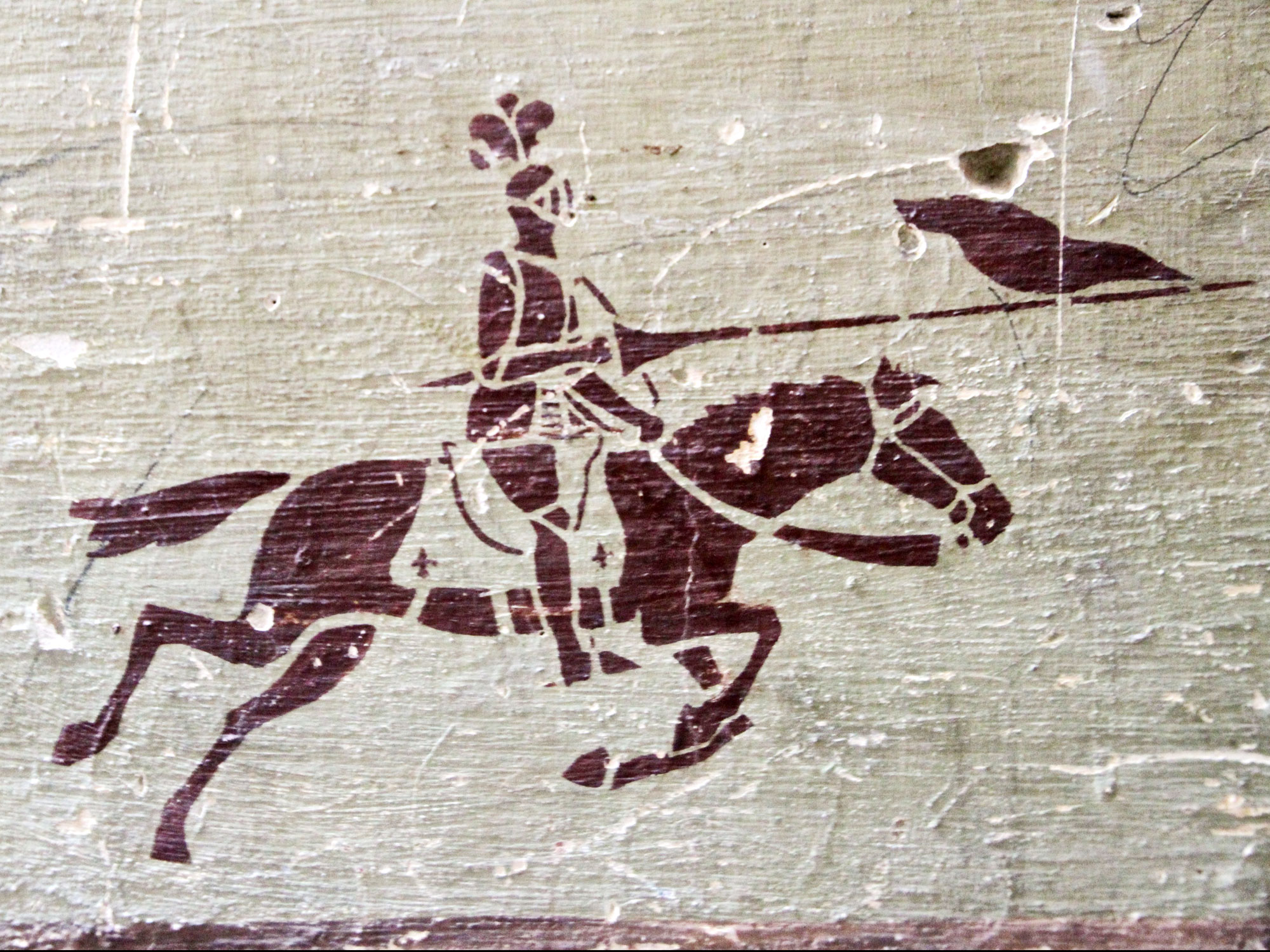
The scout hall were used for other purposes from 1925 onwards, notably as a garage, which saved the frescoes from unfortunate overpainting over the decades. Plunged into a certain anonymity, this testimony to Hergé's early imagination was rediscovered in 2007.