


 News
News Contest
 Forums
 Collectors
 Videos
 E-books
"Here, in Tibet"
According to the Grand Abbot. At a time when the great Parisian museums are being forced to withdraw the name of this autonomous region from their exhibitions, it is important to remember that Tintin continues - and always will - to talk about Tibet.
When "Great Heart" and his friends climb the highest peak in the world to save Chang, they are in Tibet. There's no doubt about it. In fact, it's even written in black and white (and highlighted with a red solid) on the cover of the twentieth book in The Adventures of Tintin.
Irrefutable proof that Tibet is an integral part of Tintin's ‘world’ - just like America, Egypt or Peru, for example. So, no offence to those who are trying to erase Tibet from our collective memory.
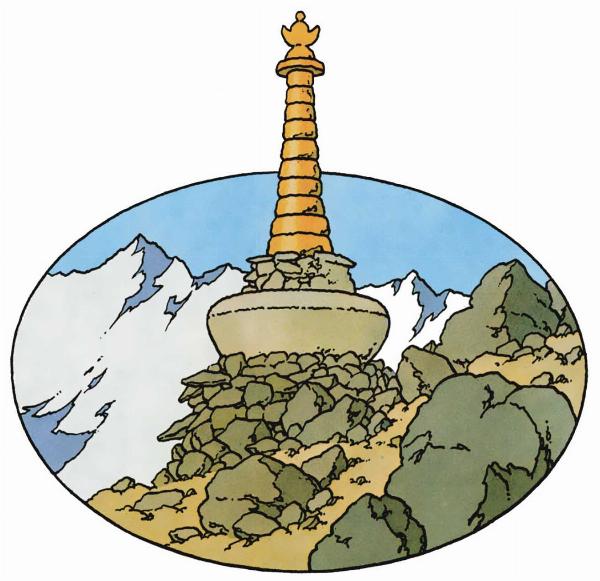
An endangered heritage
Like any other territory, Tibet has a culture and a history. This fertile melting pot - where Indian, Chinese and Oriental influences meet and mingle - is indeed the source of age-old spiritual traditions, fertile currents of thought, high-quality artistic productions and many other treasures.
But today, this heritage is under threat. For political reasons, its artefacts are lying dormant in museum storerooms, and when they are exhibited, they are given new names... of controlled origin (for some time now, the word ‘Tibet’ has been systematically replaced by expressions such as "Xizang" or "Himalayan world", for example).
This trend raises questions insofar as the promotion and preservation work carried out by cultural institutions is being undermined by contemporary diplomatic issues.
Once a Tibetan, always a Tibetan!
Tintin, for his part, has been intimately linked with the history of this country since 1960. And the poignant adventure that took him to the "The Roof of the World" remains, even today, a formidable vehicle for Tibetan culture. Hergé's faithful and respectful portrayal of Tibetan culture is all the more impressive for this.
As well as imbuing his characters with Buddhist thoughts, he peppered his story with authentic references such as traditional clothing (particularly that of the sherpas and monks), culinary practices (such as the Tsampa eaten during the ascent), traditional architecture (the chorten and lamasery, among others) and a deep admiration and respect for nature (regularly highlighting the majesty of the Himalayan landscapes).
Drawing on his experience of Tibet, Tintin continues to pay tribute to the richness and depth of its culture, particularly through the events organised in his name. From the first exhibitions to those presented today, including ‘In Tibet with Tintin’ (a temporary travelling exhibition that toured the world from 1994 to 1997) and the Hergé Museum, there has always been - and always will be - a wink or a reference to the history of this unique territory.
 1_o.jpg)
 2_o.jpg)
 3_o.jpg)
 4_o.jpg)

Finally, in 2006, on behalf of the Fondation Hergé, Fanny Rodwell was awarded the ‘Light of Truth’ prize by the International Campaign for Tibet (ICT). This distinction, awarded annually, honours ‘individuals and institutions whose significant contributions contribute to public understanding of Tibet’ (quote from an article in La Libre describing the event). At the award ceremony, the Dalai Lama recalled how the book, ‘Tintin in Tibet’ helped many people to know that Tibet existed.
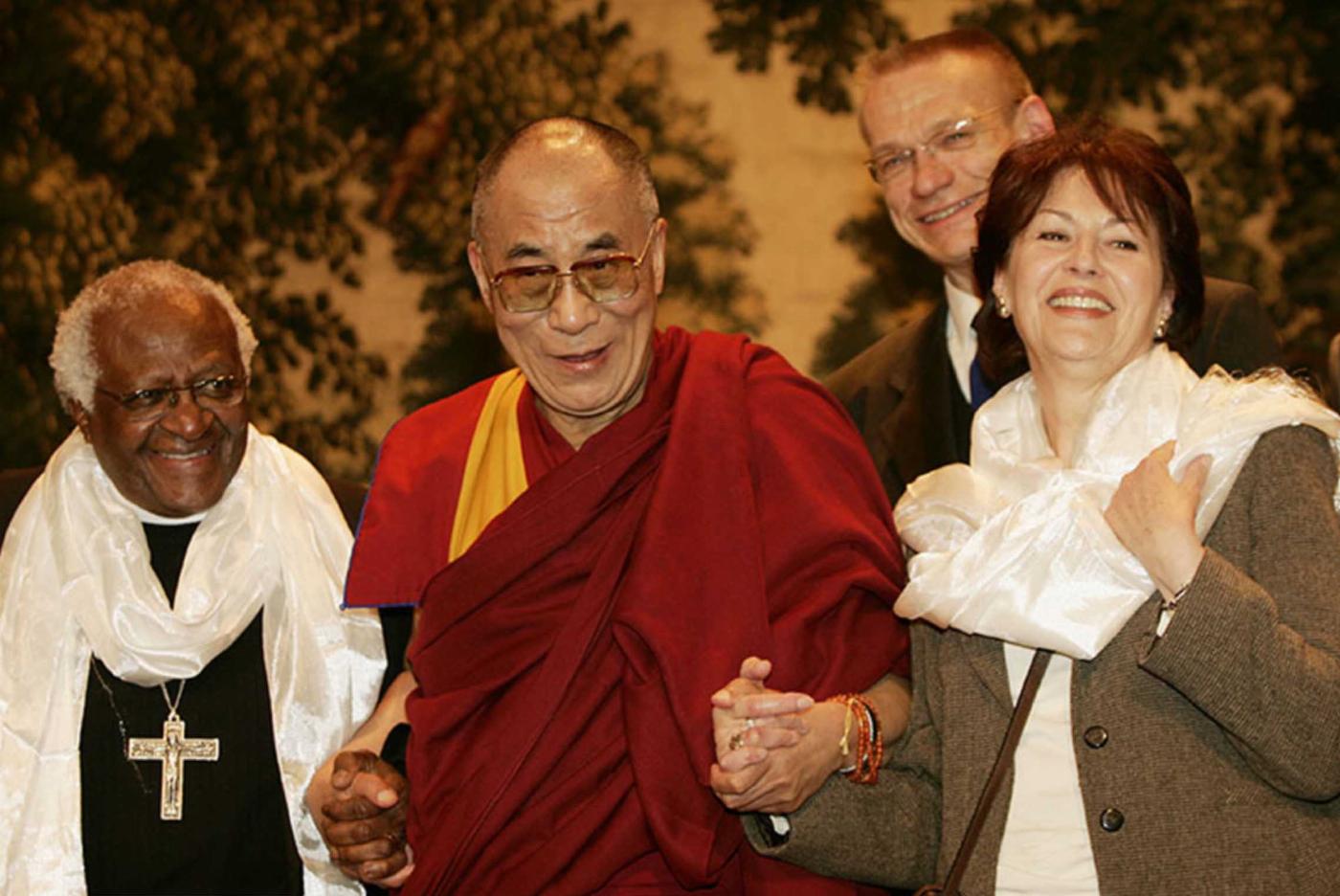
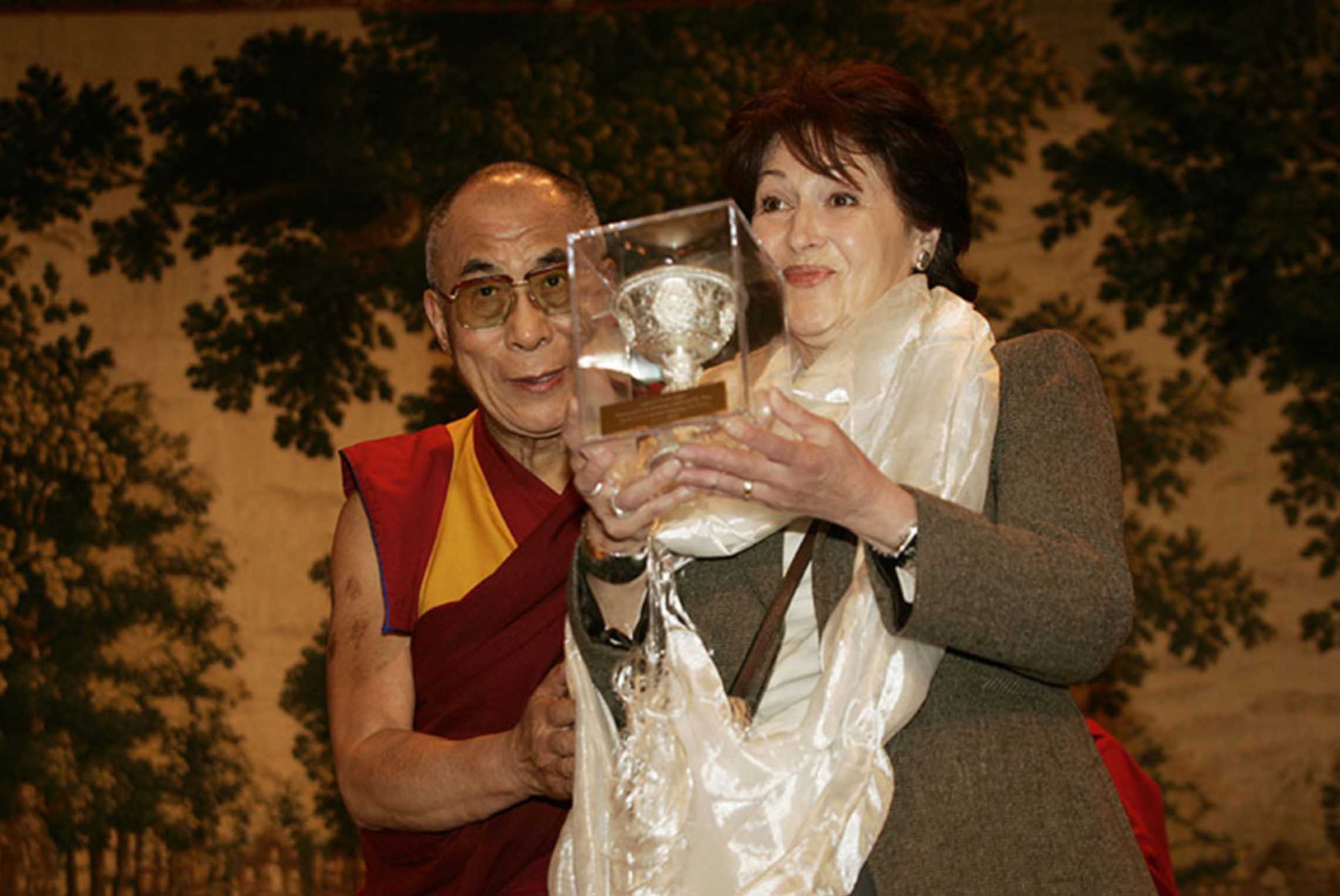
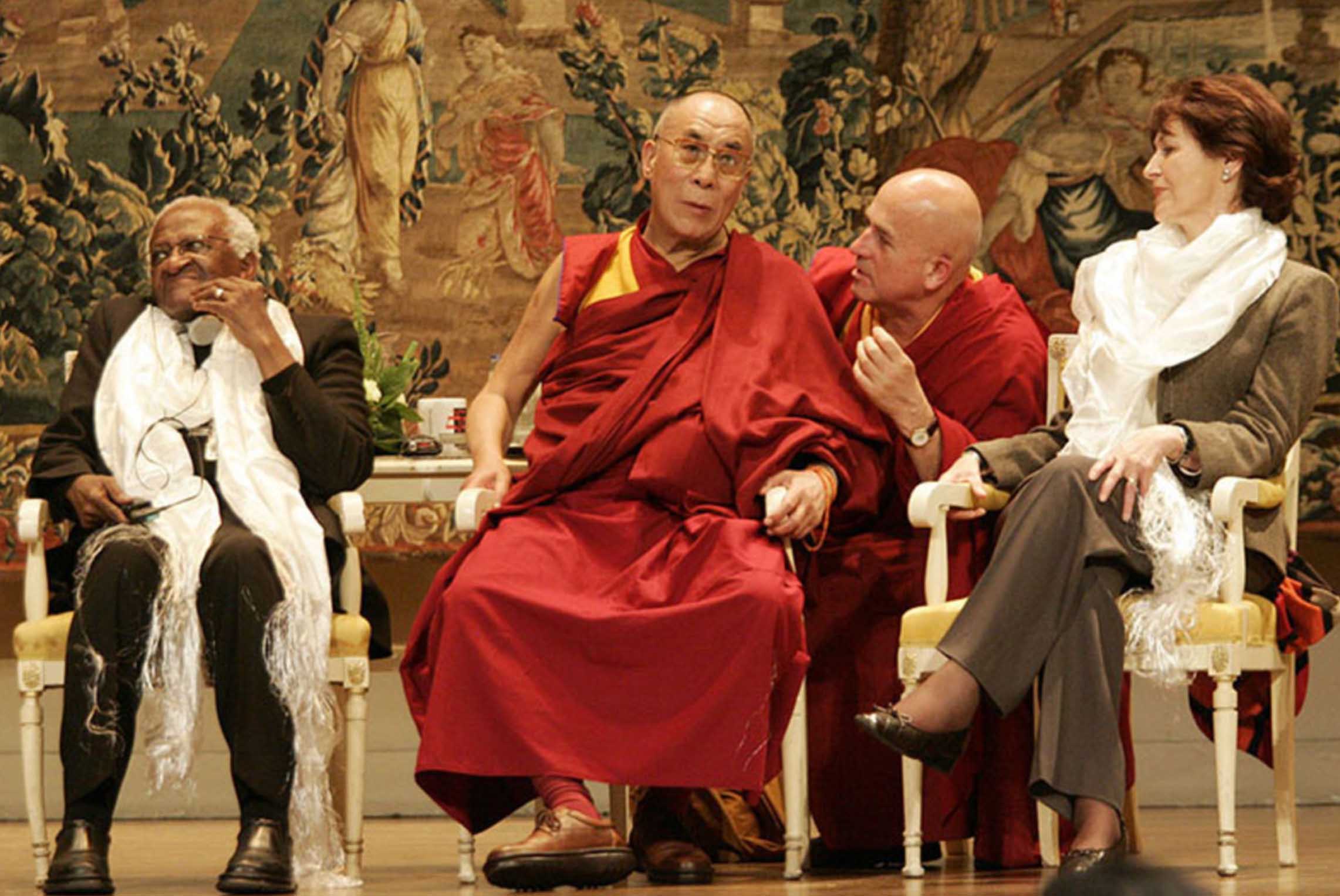
© Mark Renders / Getty Images - 2006
For more information...


