


 News
News Contest
 Forums
 Collectors
 Videos
 E-books
What a character... perfect!
In Hergé's carefully drawn world of intrepid reporters and ingenuous adventurers, one mischievous monkey stands out from the crowd: Jocko. Let’s shine a light on this friendly furry companion.
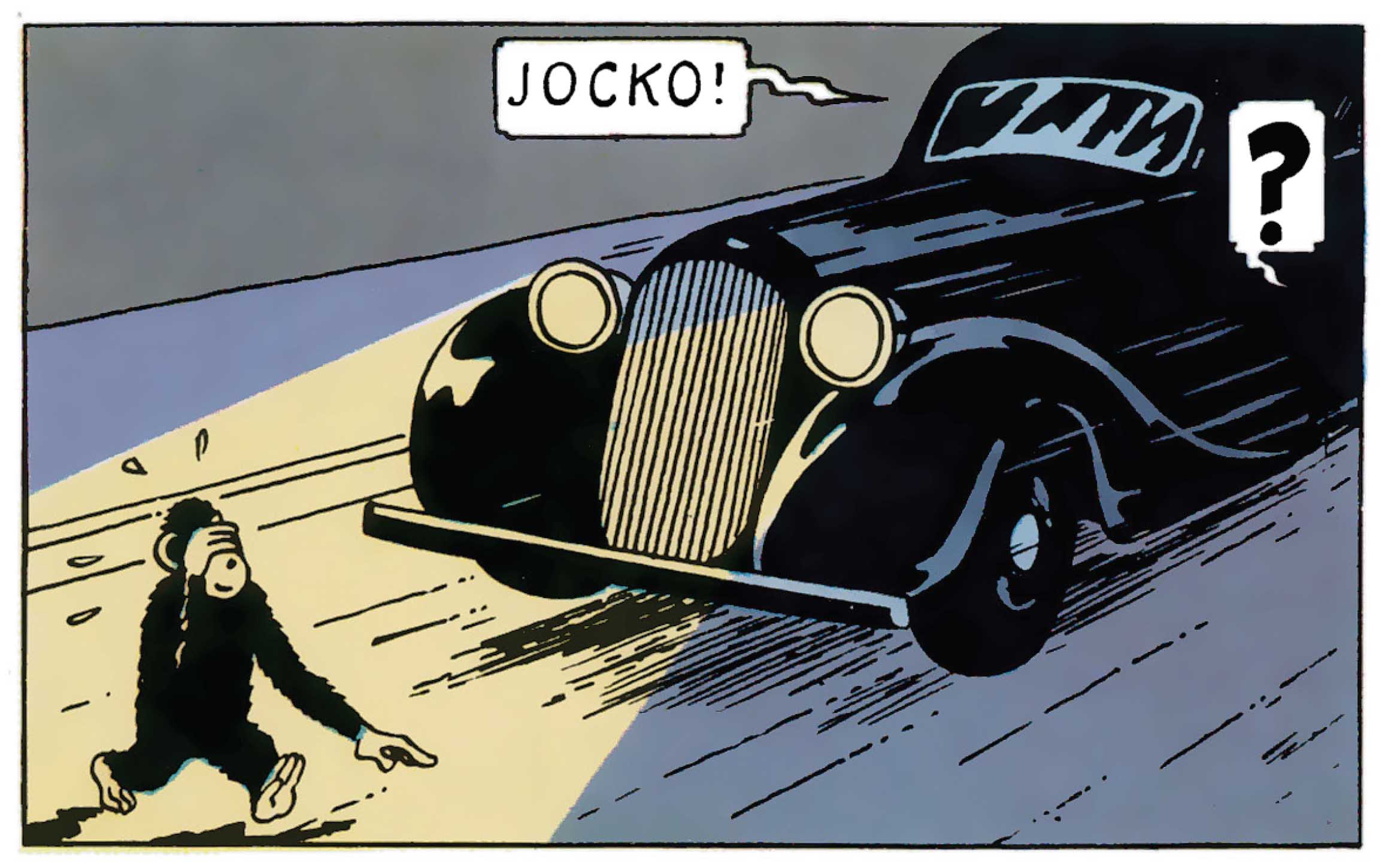
Identity card
- Species: Chimpanzee, from the Hominidae family (great apes)
- Status : Domesticated monkey, pet

- First name: Jocko. Usually given to individuals of his species. In other words, the name ‘Jocko’ is what the name, ‘Felix’, is to a cat. And obviously, this cultural tradition is not new... In 1740, a monkey captured alive was sent to Paris to be ‘put on show by an animal exhibitor’, explains Jorge Martinez Contreras in his book Les primates de Buffon. The animal died shortly after its arrival and Count Georges-Louis Leclerc de Buffon, then the Director of the Jardin du Roi (or Royal Garden of Medicinal Plants, now the Musée National d'Histoire Naturelle in Paris), bought its remains and had it stuffed with a view to studying it. To describe it in his work and distinguish it from the ‘pongo’ (another species in the Hominidae family), the scientist called it... a ‘jocko’. According to Jacques Cuisin in, Singerie. A la frontière de l'humain, this French term, used by Buffon, "is based on the name “enjoko”, published in volume five of Abbé Prévost's Histoire générale des voyages (1748). (This) name (was) originally reported by Andrew Battel during his long stay [...] in the Congo in the form “engeco”." Subsequently, the term ‘jocko’ slipped into popular parlance to become THE simian name par excellence. As a result, many individuals were given this name. Some of the most famous are: the central character in Jocko ou le singe du Brésil, an 1825 play by Gabriel and Edmond; the hero drawn by Benjamin Rabier in 1912 for the children's book Martin et Jocko; and Jocko, the cuddly toy monkey marketed by Steiff from the 1930s onwards.
- First appearance: The Manitoba No Reply, first part of The Secret Ray
- Distinctive feature: He was the founding character - and also a unifying one - of Jo, Zette and Jocko, a series created by Hergé in 1936 at the request of Coeurs Vaillants (the first French weekly magazine to publish The Adventures of Tintin). "At that time I had toys at home for an advertising job, including a monkey called Jocko. And so, from this Jocko, I created a little new family, really to meet the wishes of the gentlemen at Cœurs Vaillants", explained Hergé, in his interviews with Numa Sadoul.
- Character: Faithful, clever, curious, mischievous and affectionate
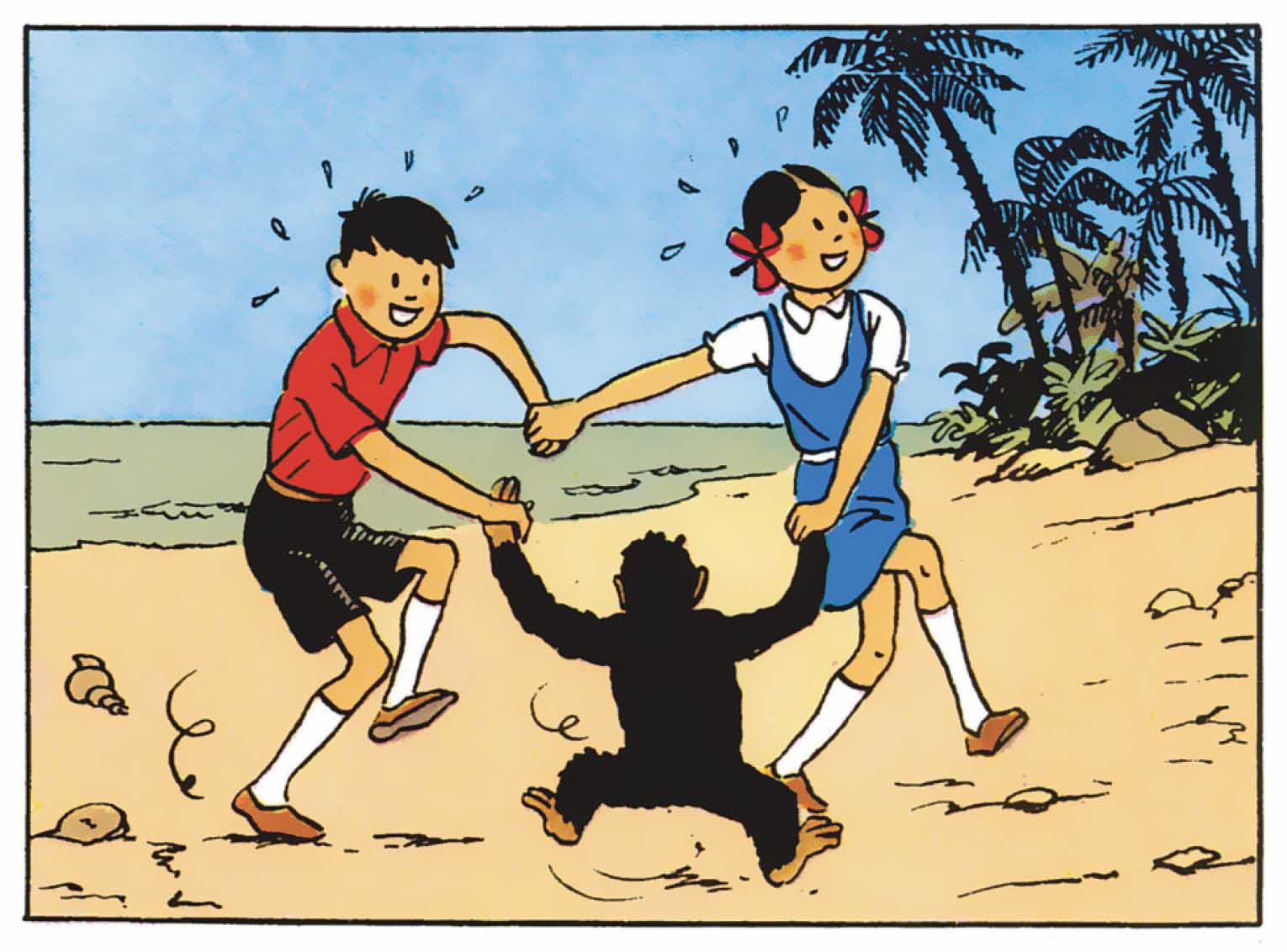
The animal part
Animals have always had an important - and special - place in Hergé's work. The most famous is, without doubt, Snowy, Tintin's faithful fox terrier, who is a companion, an ironic commentator and a heroic saviour.
He is joined by Jocko, Jo and Zette's mischievous, wily and spirited monkey. Like his canine ‘cousin’, Jocko has been anthropomorphised to enrich the story. He expresses emotions and reflects the humanity of the characters around him, but above all he speaks and thinks in speech bubbles - even if he soliloquises more than he talks.
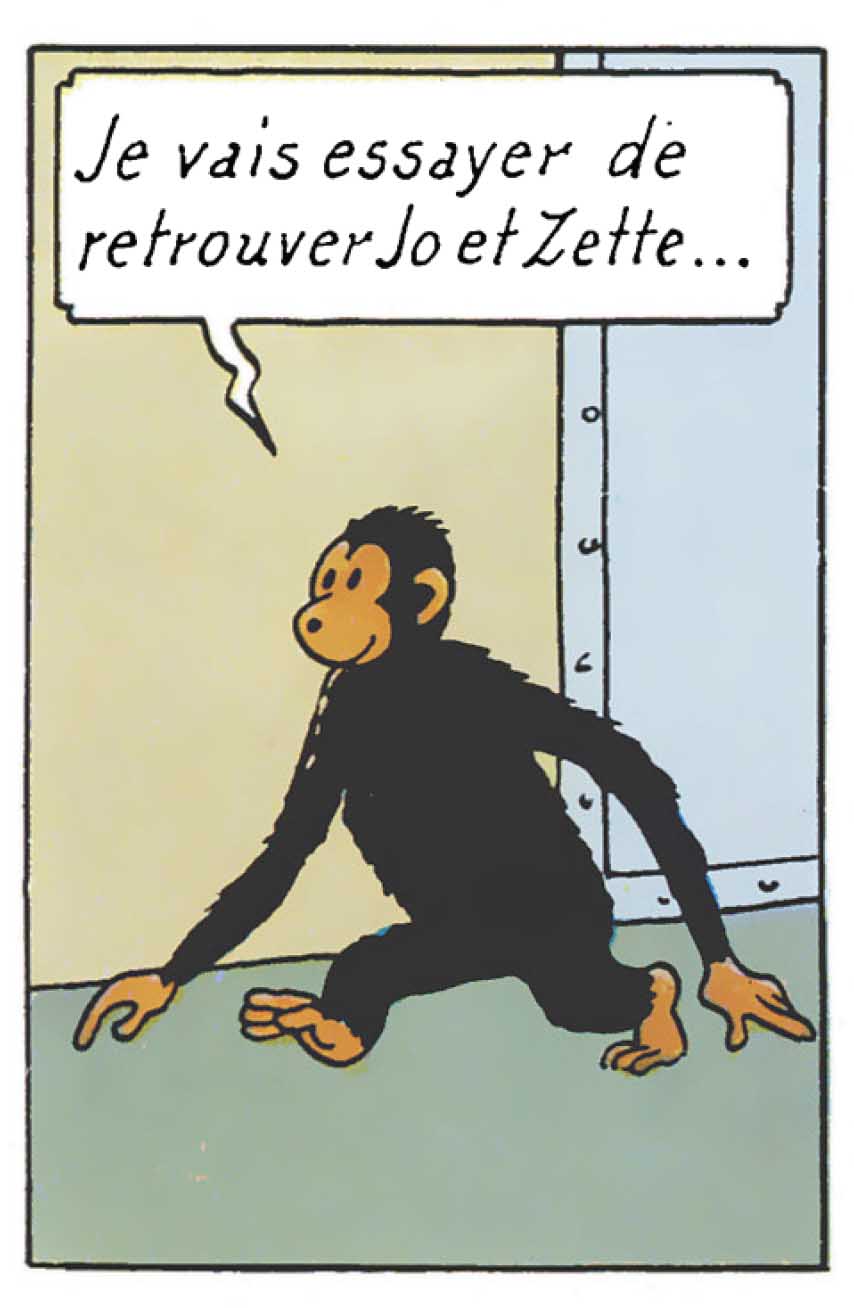
Although humanised, Jocko still retains his original essence. That's why he jumps, climbs, grimaces and screams. Spontaneous behaviour, of course, that introduces a touch of unpredictability and, by extension, fun. It's the perfect way to shake up the childlike charm of the story.

The Valley of the Cobras (page 28, vignettes D1 to 3)

Destination New York (page 47, vignettes D1 to 3)

Clever... like a monkey
Like his fellow monkeys, Jocko has a keen intelligence, a sharp sense of observation and an astonishing ability to react to danger. He understands the situation quickly, spots traps and enemies, and finds unlikely, even unexpected solutions to help his young masters.
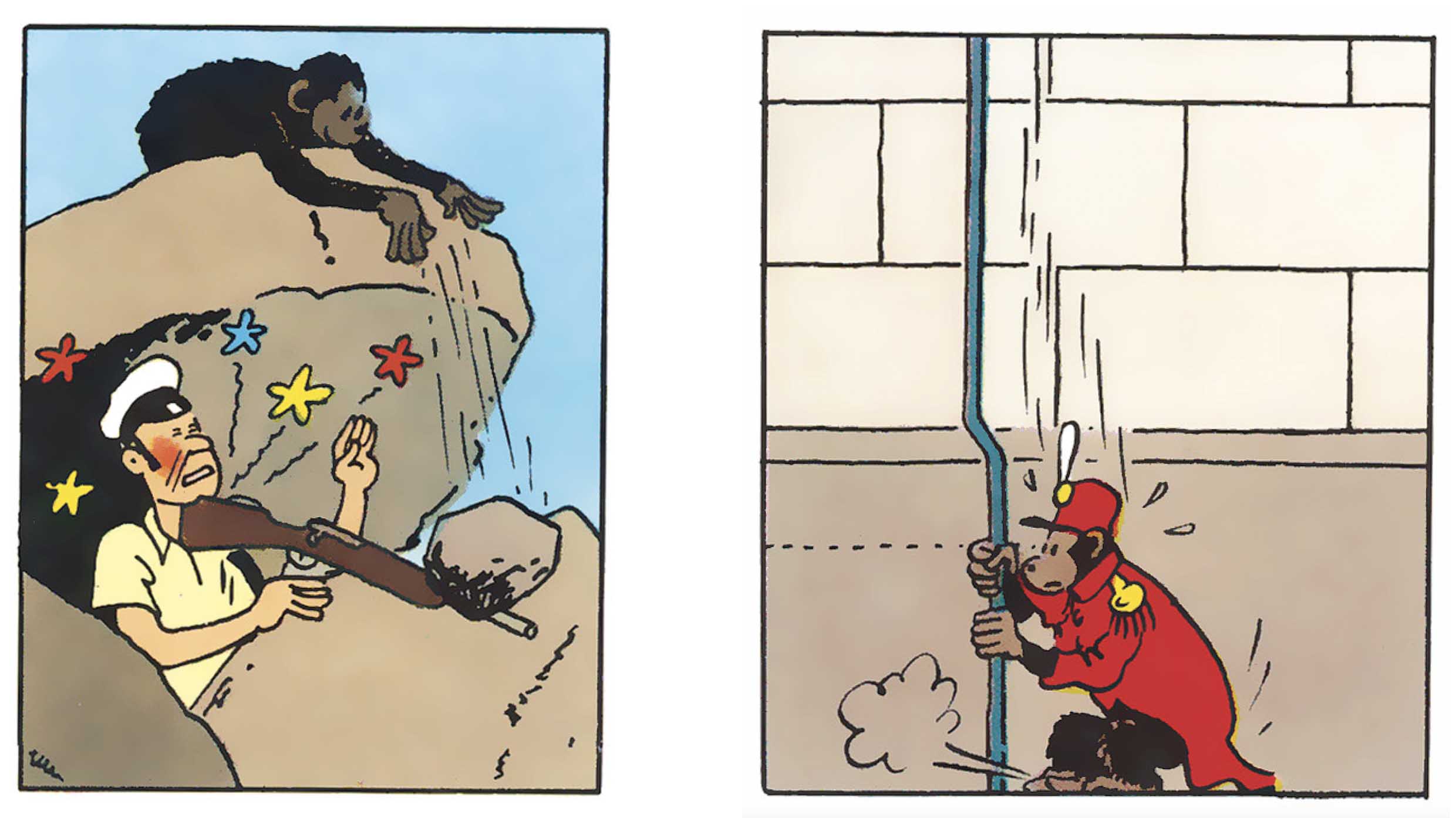
Whether it's finding key elements, triggering mechanisms, evading pursuers or signalling danger, Jocko always acts with speed and ingenuity. His resourcefulness and cunning make him a real ally, especially at the most critical moments in the story.
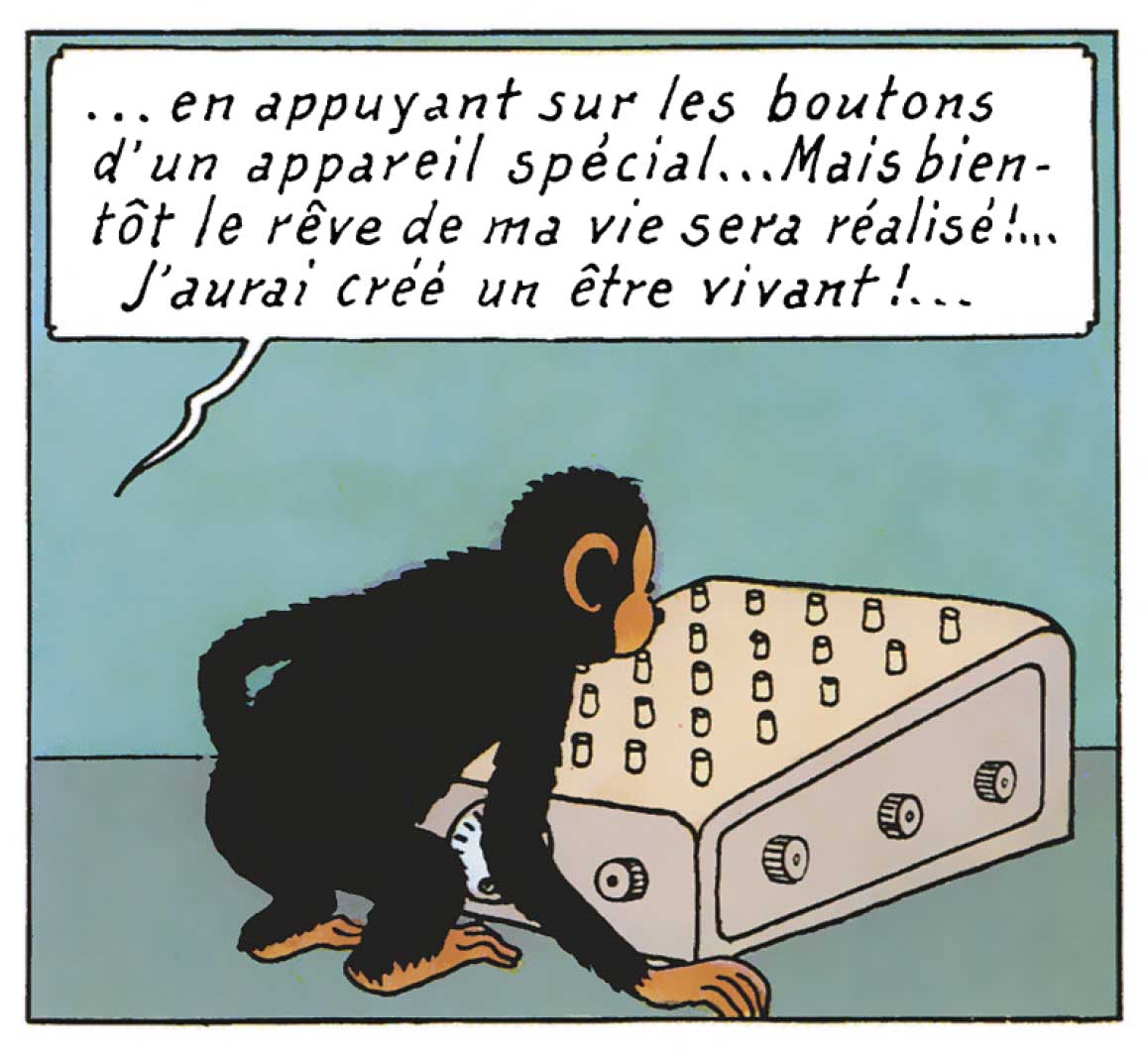
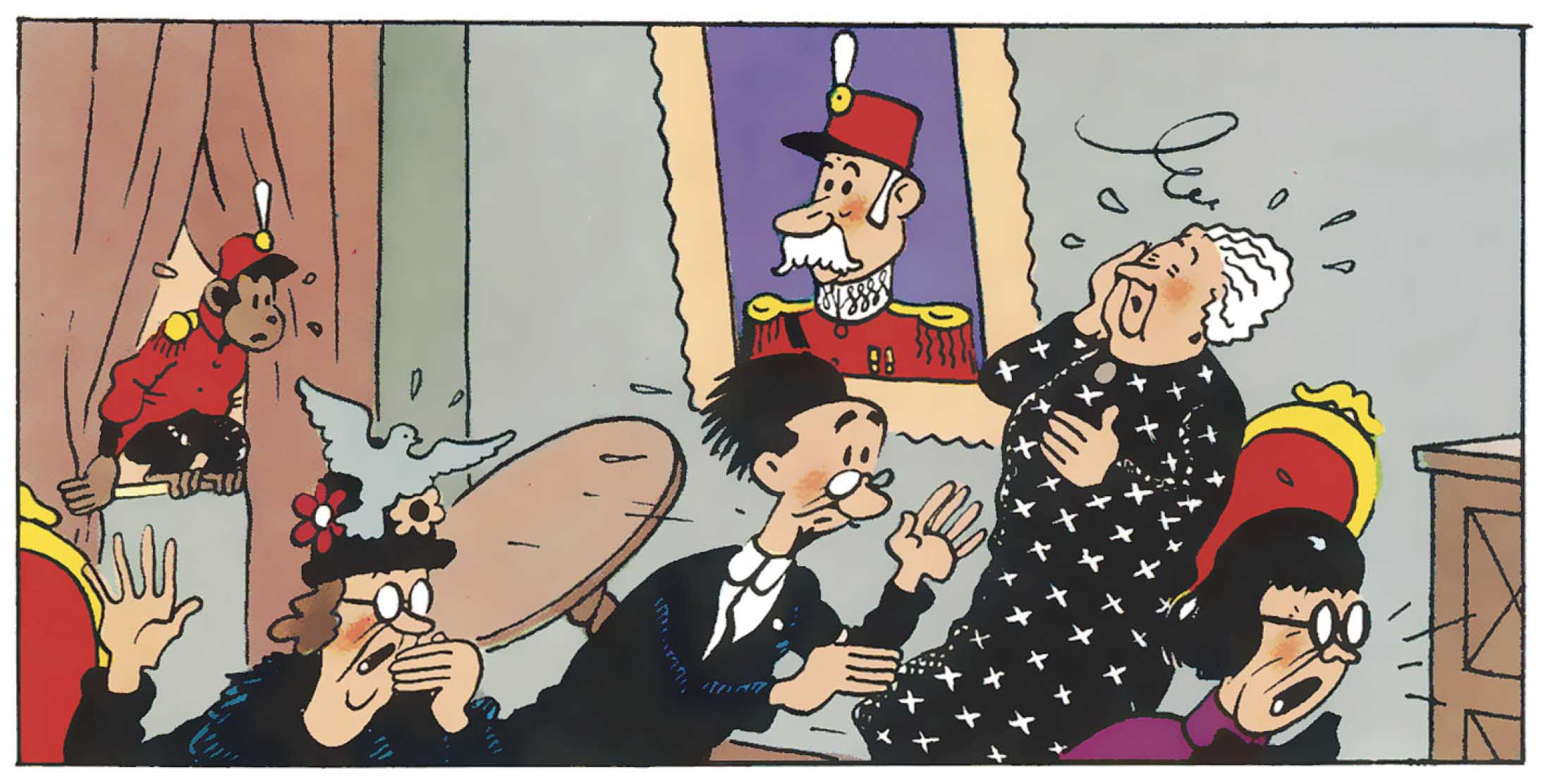
As well as actively contributing to the plot, Jocko is also a great source of humour. In fact, even if his interventions are often decisive, they very quickly tend to turn into gags, giving rise to truculent comic scenes, for which he alone has the secret. In The Eruption Karamako, his appearance during the seance is a perfect example.
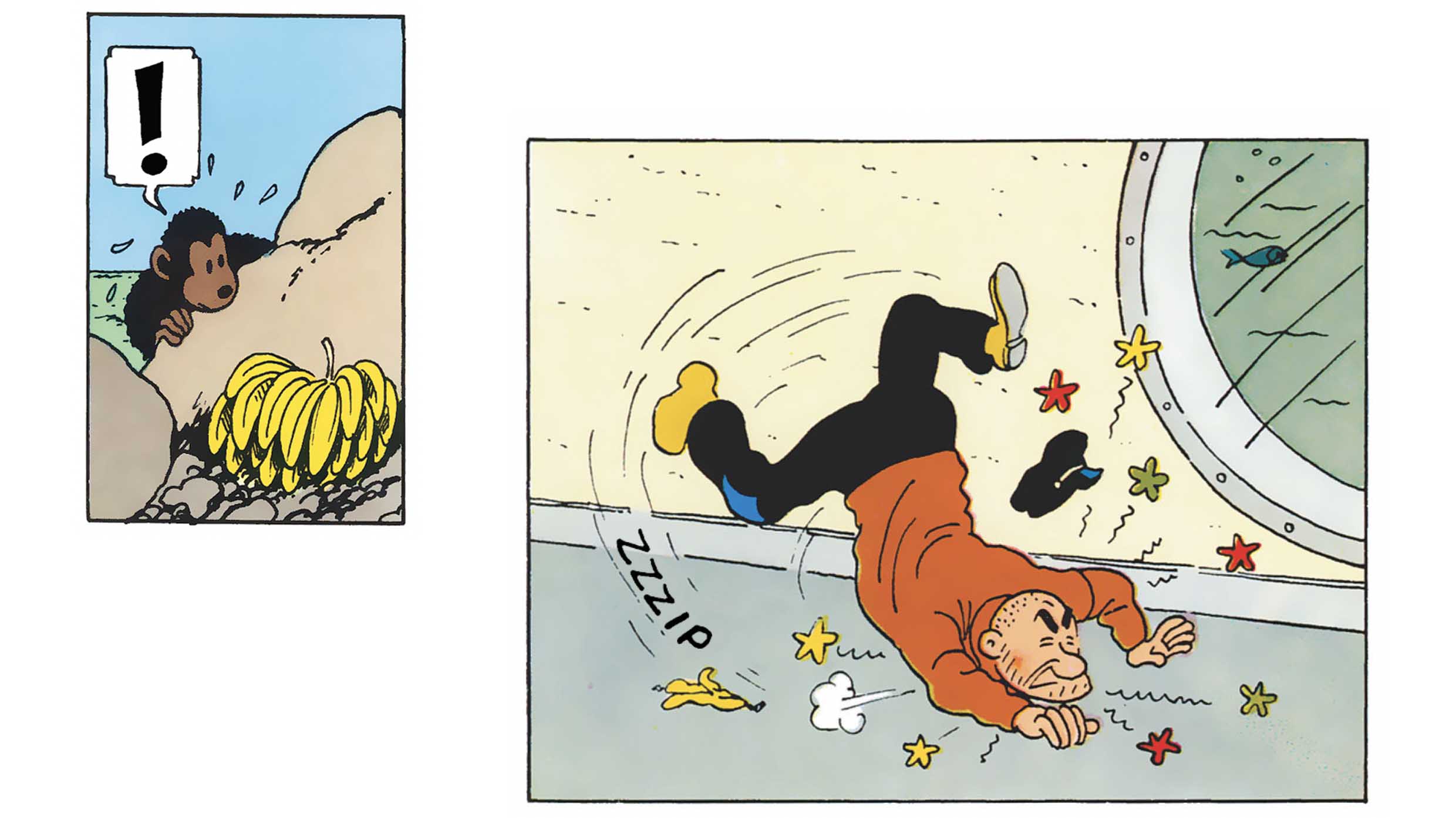
And since you can't teach an old monkey to make a funny face, he also knows full well that the surest weapon - both for entertaining the crowd and neutralising the enemy - is the inevitable... banana peel. Which is why he uses and abuses this slippery classic throughout the series.
Texts and pictures © Hergé / Tintinimaginatio - 2025


