


 News
News Contest
 Forums
 Collectors
 Videos
 E-books
A One-Way Ticket to Adventure
As the month of December wraps its chilly arms around us, railway stations light up, trains whistle in the cold, and travelers hurry along, suitcase in hand and dreams in their heads. And what if, at the end of this year, we were to climb aboard with the most famous globetrotter with a quiff? Long before our own winter holidays, Tintin was already on the road, crisscrossing the world to the rhythm of rails, rivers, and oceans. All set? Ticket, please!
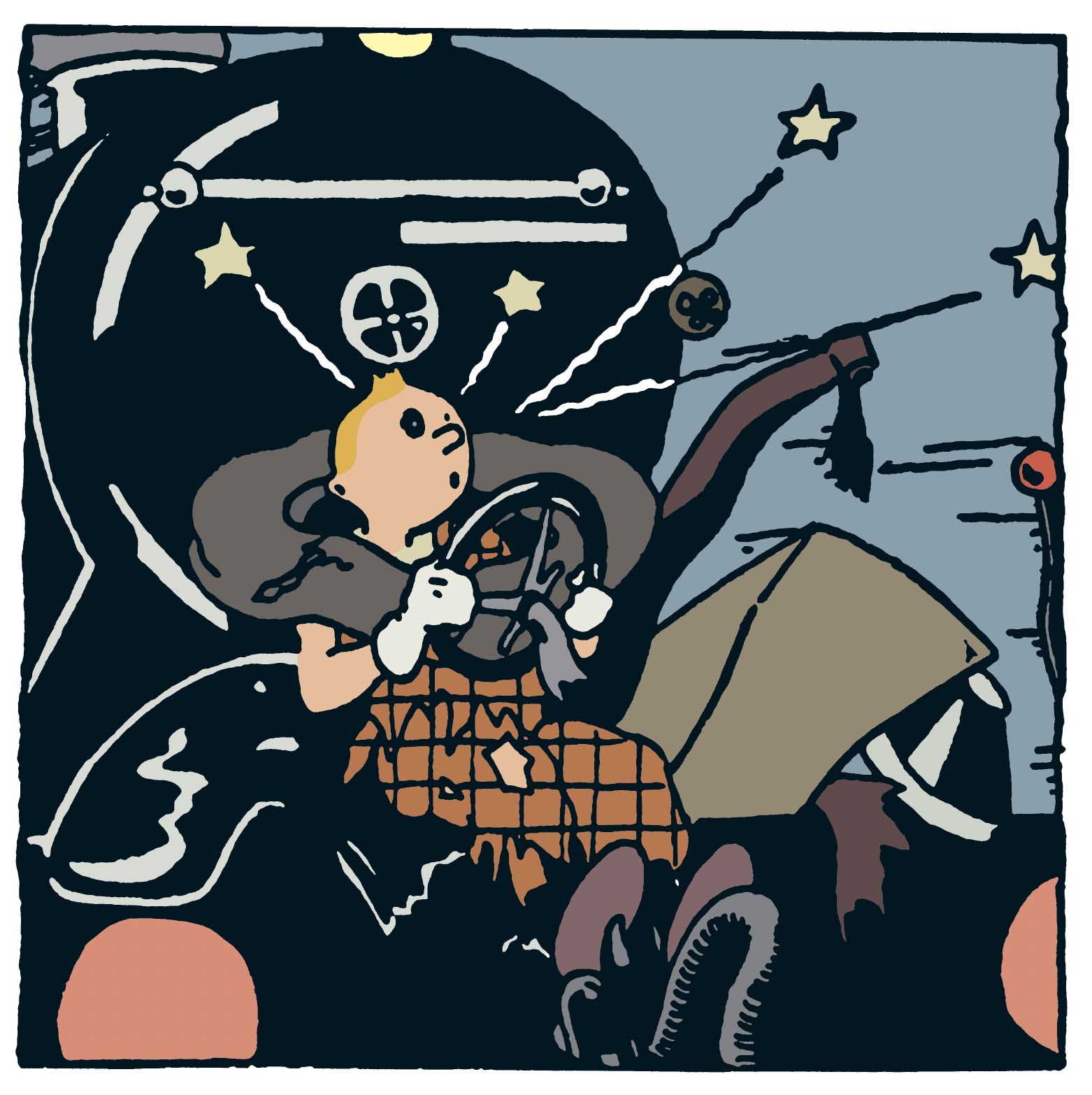
His very first great departure is Soviet. In the late 1920s, the newspaper Le Vingtième Siècle commissions Hergé to produce an illustrated report on the USSR. Tintin boards the prestigious Nord-Express, the international luxury train linking London, Ostend, Brussels, and Paris to Saint Petersburg and Moscow. But the journey quickly turns into sabotage: a Soviet secret police agent detonates a bomb, forcing an unexpected stop in Berlin. Tintin then resumes his journey, now confined to the very front of the locomotive, an ideal lookout point over nearly 800 kilometers across Poland. On the route maps, we can clearly trace Brussels, Berlin, Warsaw, Stolbtsy, and finally Moscow. The tone is set: with Tintin, travel is rarely peaceful, shocks punctuate the stops, and beware your head when sitting at the very front of the engine!
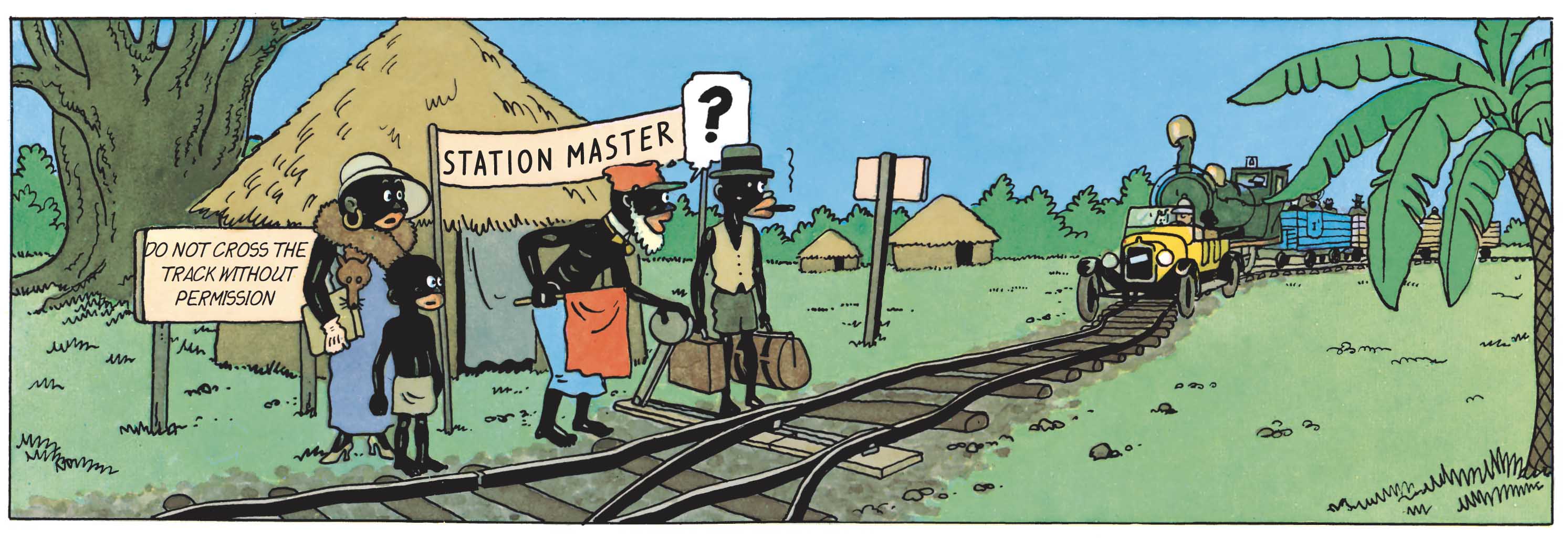
No time to lose, off to Africa and its natural wonders. In Tintin au Congo, the adventure officially begins on the platform of Brussels’ Gare du Nord. Tintin takes the train to Ostend before boarding a ship of the Belgian Maritime Company bound for Africa. Once there, he drives a rented Ford T, nicknamed the “Tin Lizzie,” directly inspired by automobile catalogs of the time. But the road soon crosses the colony’s only major railway line, the Matadi–Léopoldville railway, stretching 366 kilometers. Narrow gauge, makeshift crossings, an average speed of 20 km/h, tight curves, occasionally broken rails, the setting is laid with a delightfully naïve tone. In a comical scene, the Ford T is struck by a locomotive and ends up… being towed to the next station, under the astonished gaze of the stationmaster. As the reader quickly realizes, travel is already a fine mechanical adventure.
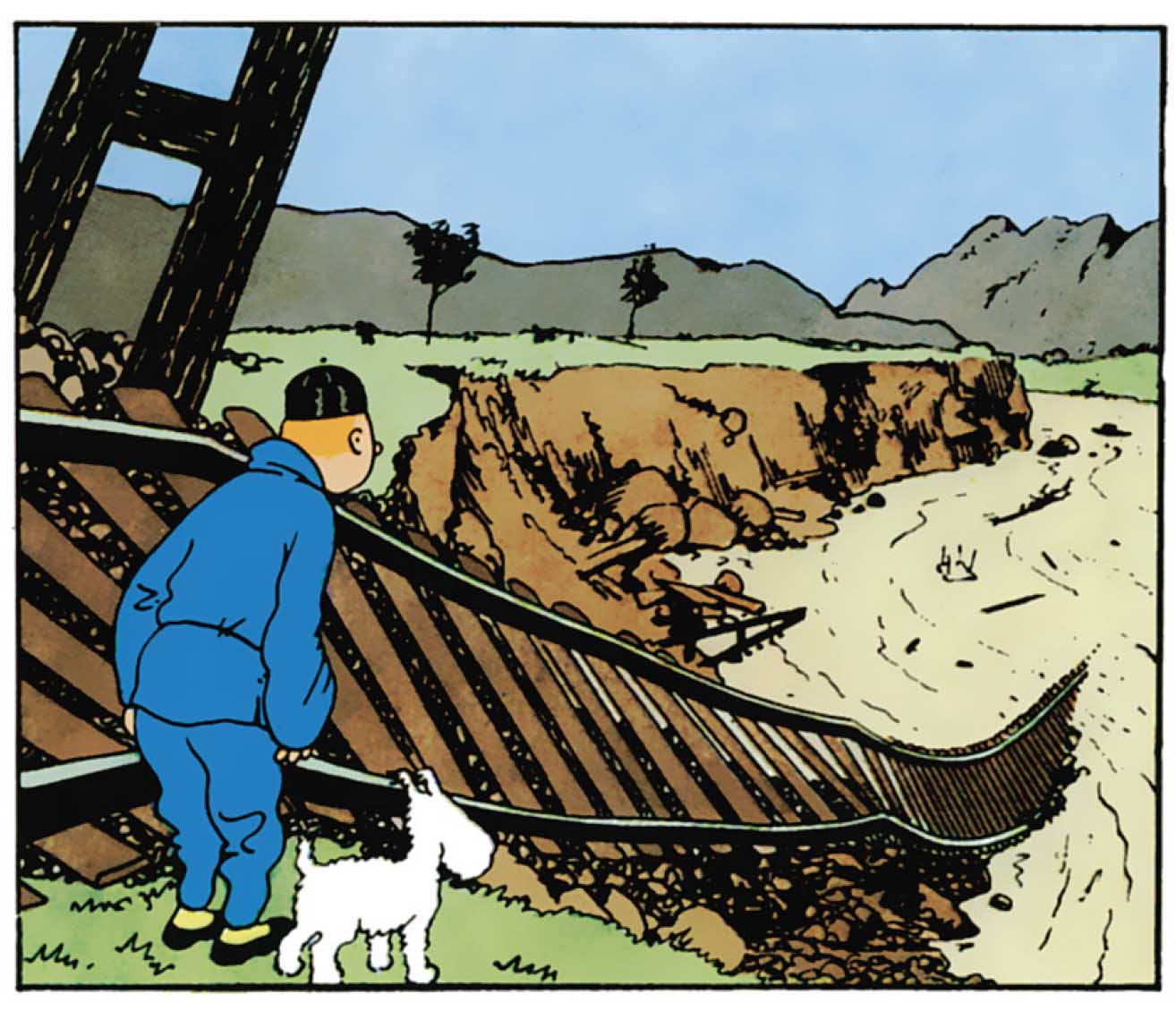
Hop, hop, let’s keep moving! The scenery changes dramatically in The Blue Lotus. In China, Hergé turns the railway into a true strategic issue. During the Houkou episode, train traffic is brutally halted by the catastrophic flooding of the Yangtze River. Tintin throws himself into the raging waters to save Tchang from drowning, there, amid the swirling currents, the birth of an unbreakable friendship becomes palpable. Later, the album refers to the Mukden railway sabotage of September 1931, considered the trigger of the Sino-Japanese War. Tintin witnesses the destruction of railway lines by the Japanese, travels through flooded regions, skirts Lake Poyang, and is sometimes forced to abandon the train altogether when the tracks become impassable. Whew, one never gets bored with Tintin, that’s for sure!
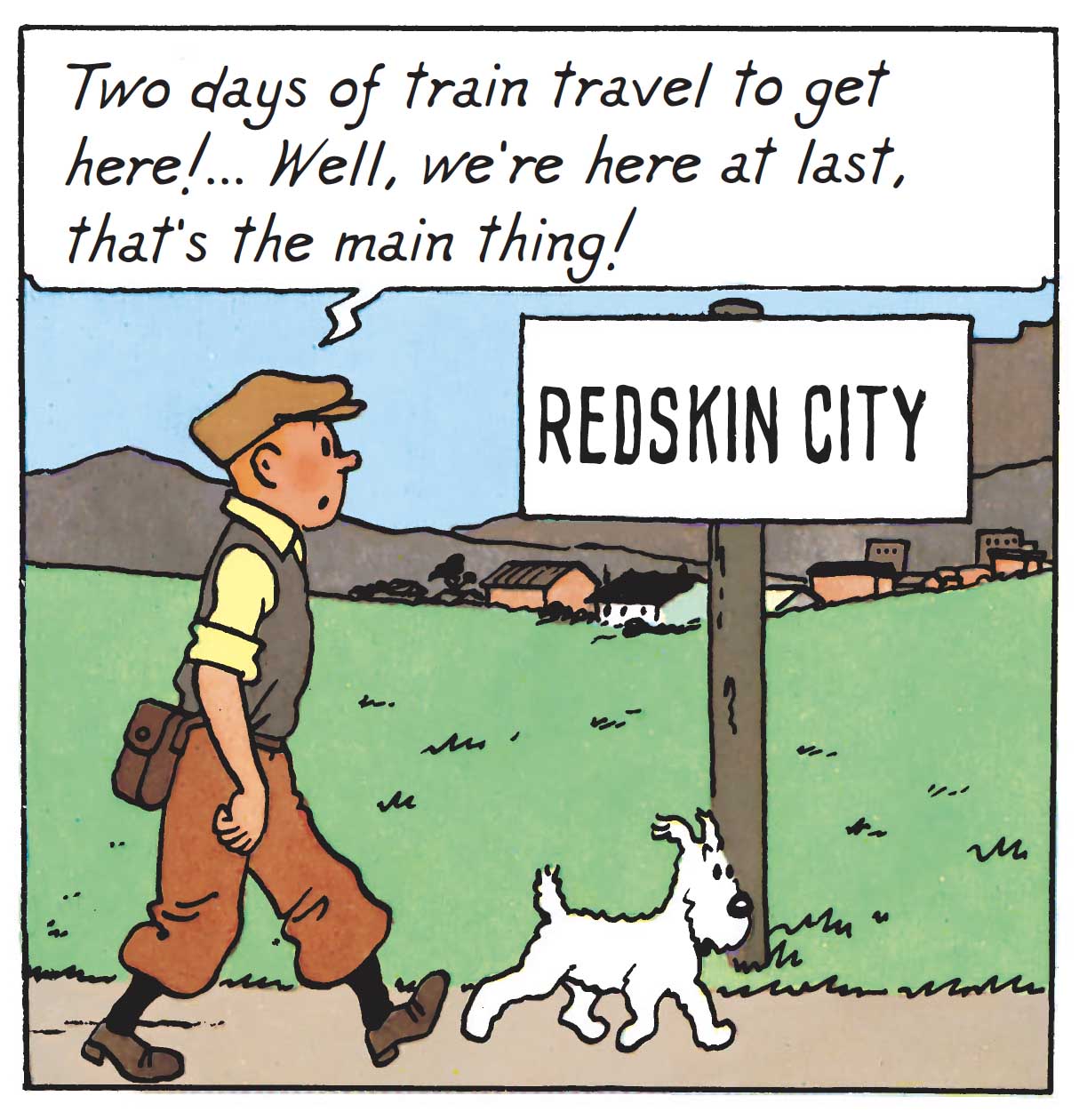
Stand back! A hero in golf breeches at full speed! On the other side of the Atlantic, the pace quickens in Tintin en Amérique. The reporter must travel from Chicago to the mysterious Redskincity. The journey takes two full days. Based on roughly thirty hours of train travel at an average speed of 50 km/h, this comes to about 1,500 kilometers. By this point, Tintin has already seen plenty of railway scenery roll by. Three main routes stretch out from Chicago: toward the Northwest and Canada; toward Omaha, Cheyenne, and Salt Lake City; or toward the Southwest via Kansas City, Salina, then Denver or Pueblo. It is this third option that Hergé chooses, an American West shaped by open plains, oil fields, Native reservations, and the first foothills of the Rockies. The spectacle is breathtaking, but there is no time to linger, danger and distance follow one another like a roller coaster.
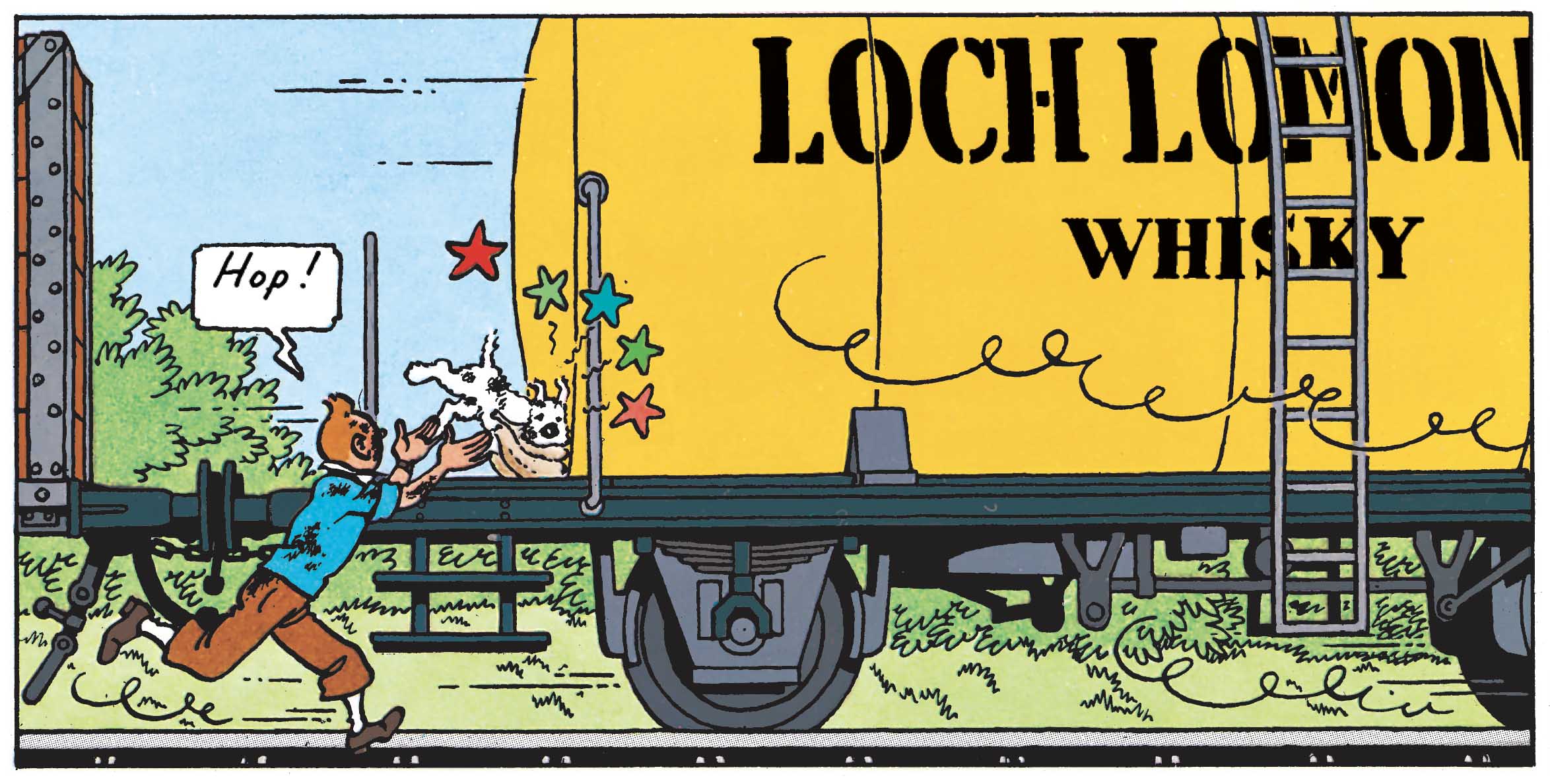
Back to old Europe in the blink of an eye. Even the United Kingdom cannot escape Tintin’s whirlwind passage. In The Black Island, Tintin lands in Dover after crossing the English Channel. He then takes the train to the imaginary town of Puddlecombe, before heading on to London, Brighton, Glasgow, and Carlisle. At one point, he even travels clandestinely aboard a Loch Lomond Whisky tank wagon. Passenger train, freight train, then airplane, England becomes a thrilling railway playground. He doesn’t even have time to sample legendary British cuisine in first class.
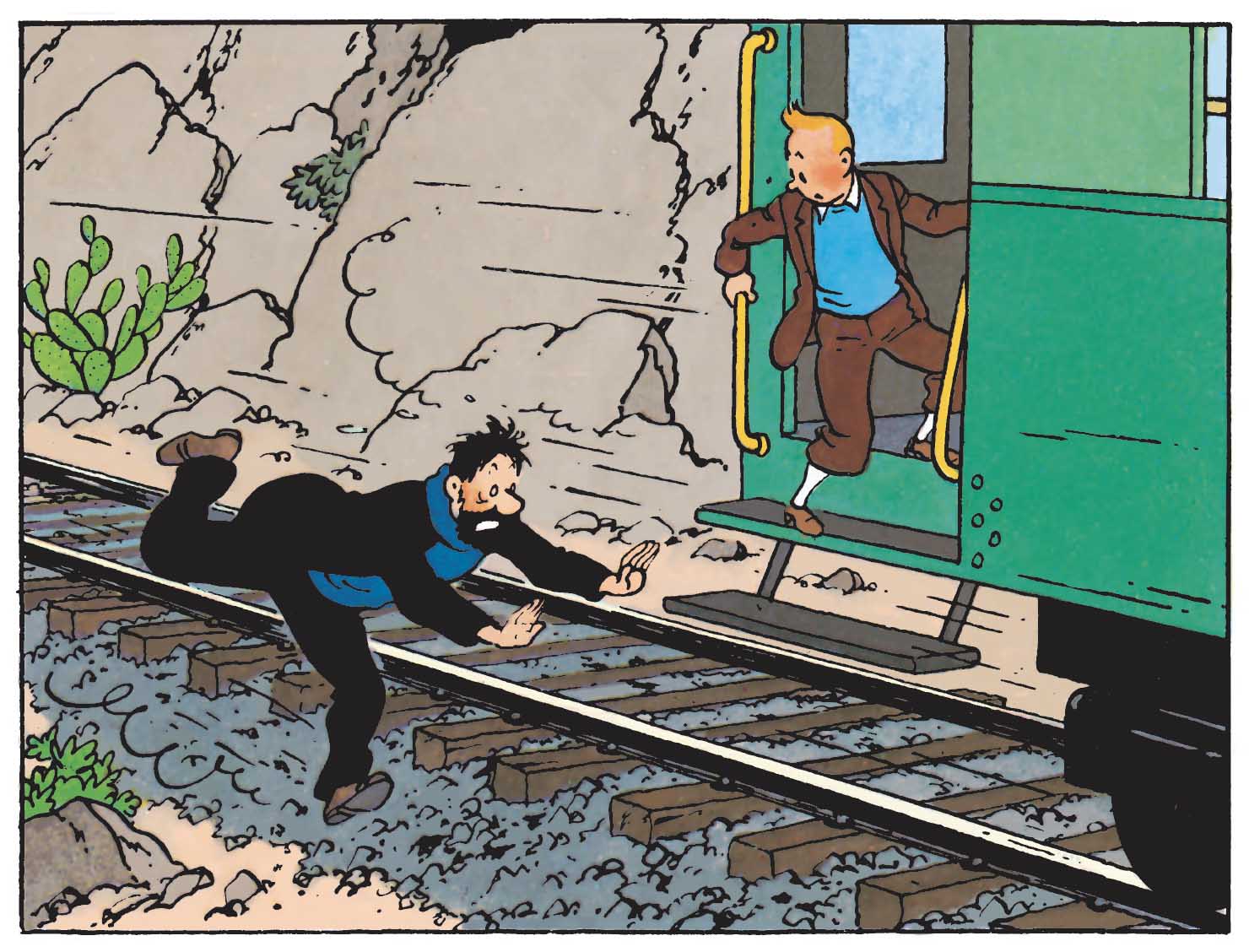
Come on! one final effort! We have reached the terminus of this article at a decidedly record-breaking pace. Without warning, the dizzying summits of the Andes rise before us in Prisoners of the Sun. Having arrived in Peru via Callao, the port of Lima, Tintin and Haddock board the train bound for La Oroya. The line follows the Río Rímac valley and climbs to an altitude of 4,836 meters over a distance of 173.8 kilometers. Hergé relies on extremely precise documentation to describe the power of the locomotives, the need to limit the number of wagons, and the crucial importance of braking on the descents. Aside from the cacti, the most spectacular moment remains the crossing of the El Infiernillo viaduct, completed in 1908 after the construction of 63 tunnels and 58 viaducts. Here, travel becomes almost a high-wire balancing act. Isn’t that right, Captain?
From Moscow to Chicago, from Brussels to Léopoldville, from the banks of the Yangtze to the Andean peaks, Tintin travels the world along the rails, aboard luxury trains, rickety convoys, colonial lines, and viaducts suspended over the void. With him, every journey becomes a story, every route an adventure.
So this December, as suitcases are opened in living rooms and platforms once again fill with travelers, let us remember that the most beautiful journeys sometimes begin with nothing more than a simple train ticket… and a quiff turned toward the horizon. And if the journey ever feels too long, no worries, there’s always a perfect excuse to dive back into a Tintin album!
Texts and pictures © Hergé / Tintinimaginatio - 2025


