


 News
News Contest
 Forums
 Collectors
 Videos
 E-books
“What is this thing?”
In the unfinished adventure Tintin and Alph-Art, Hergé imagines a form of contemporary art, based on conceptual, minimalist works that glorify the lettering of letters.
Tintin.com deciphers this narrative discovery for you to reveal its influences and significance…
To the letter
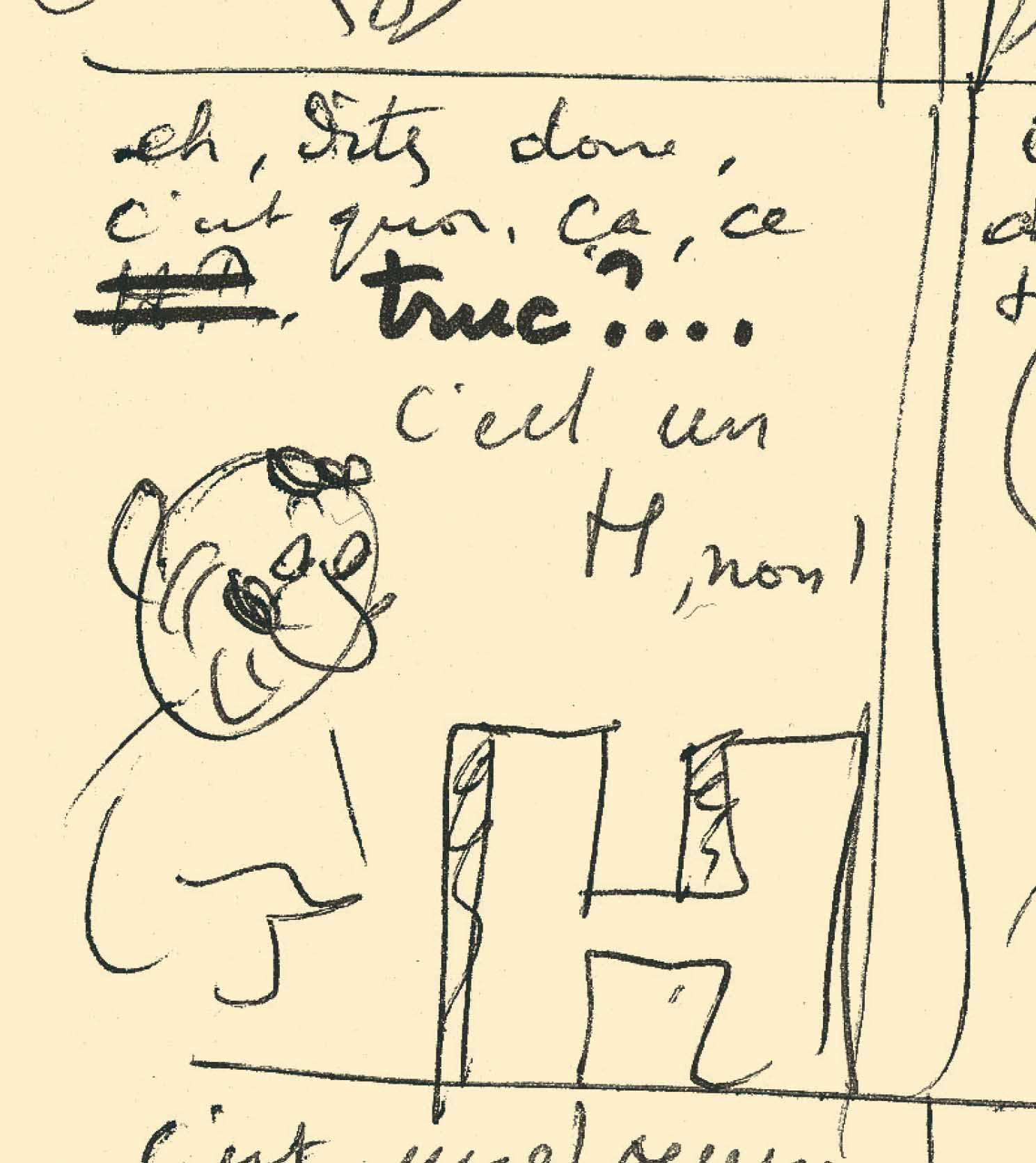
With his Alph-Art – in other words: alphabetic art – Ramo Nash diverts letters from their primary function to elevate them to the status of major works… uh, capital letters! Enlarged and staged like sacred relics, they thus become objects of exhibition, collection, and all kinds of attention.
Obviously, in this process of sacralization, they lose all utilitarian purpose. Deprived of their original reason for being, they only refer to themselves. They then cease to be a vehicle in the service of language, becoming an end in themselves, autonomous and reduced to their own form and materiality. In other words: beautiful “dead letters” that Nash gathers by the shovel to turn into art and cement his fame!
Reference letters?
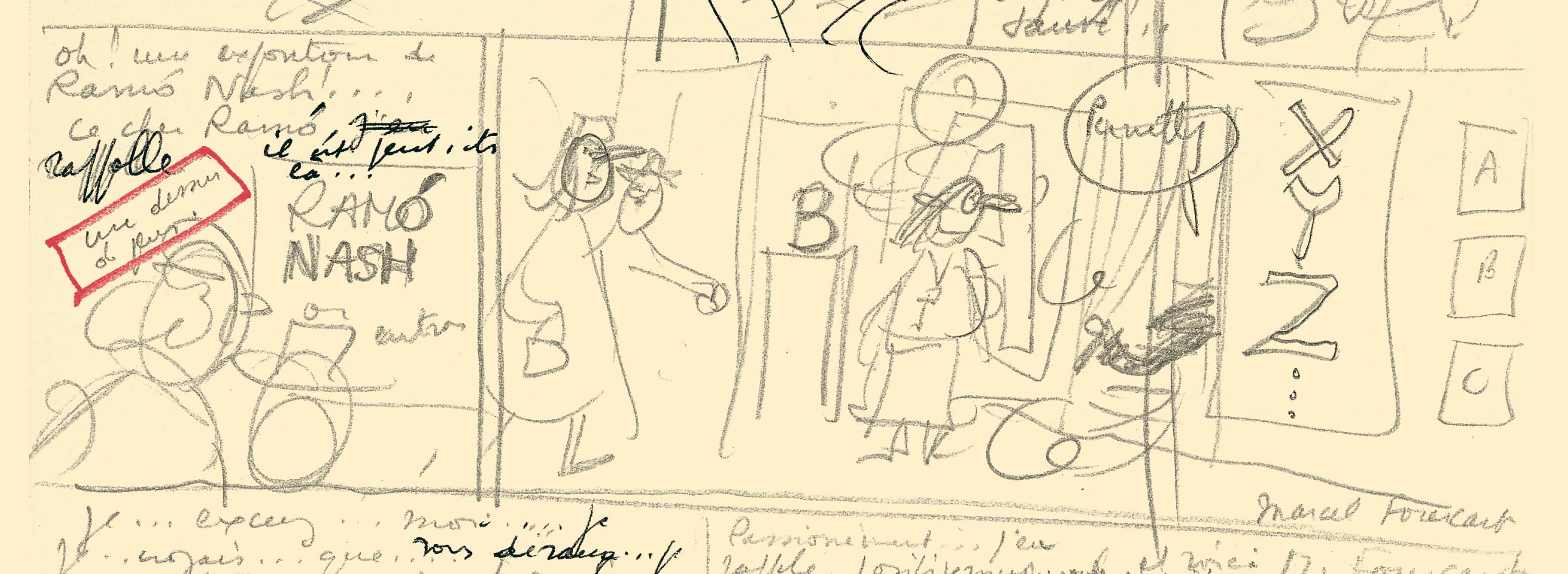
The exclusive use of letters logically invites one to relate Alph-Art to a very real artistic movement, founded by Isidore Isou, in the aftermath of the Second World War: Lettrism.
Convinced of the exhaustion of traditional artistic forms, Isou and his disciples called for a total break with inherited aesthetics, which they considered powerless and unsuitable for grasping post-war issues. These forms were therefore to be abandoned in favour of a completely renewed artistic language.
From this perspective, Lettrism encouraged artists to free themselves from the figurative and the abstract in order to develop an alternative aesthetic, based on the minimal unit of language, the letter. The aim, of course, was to "make people understand that letters have a different purpose than words" (quote taken from the Manifesto of Lettrist Poetry, written by Isidore Isou in 1942).
This fascination with the plasticity of the sign thus gave rise to hypergraphy (or metagraphy), an experimental practice situated at the crossroads of writing and visual arts. In these compositions, the letter is part of a coherent formal organisation but loses all meaning beyond the image thus created. So that the work no longer refers to a message to be deciphered, but to a pure visual experience…
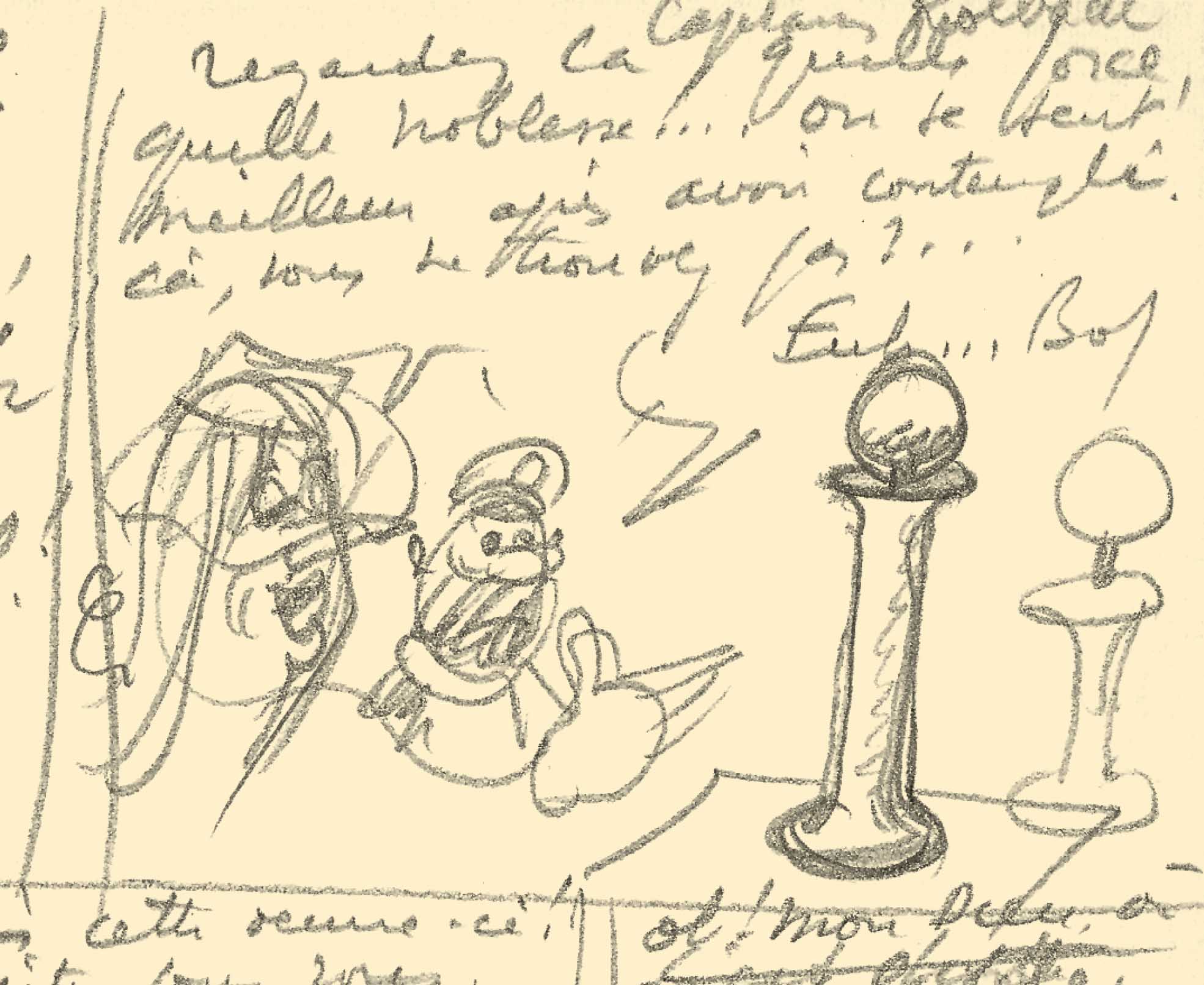
"Look at this, Captain Krapock! What strength, what nobility! You feel better after having contemplated that, don’t you?"
A satirical pretext
In reality, by inventing Alph-Art, Hergé is not trying to parody any particular artistic movement. He mainly uses it as a pretext to mock the contemporary art world of the 1970’s and 1980’s, which he frequents and knows.
At that time already, the art scene was perceived as closed off, speculative, dominated by critical discourse and games of symbolic power. And the scene where the captain is introduced to Castafiore as an art enthusiast sums up the situation quite well…
"You're interested in Alph-Art!... Well, I never would have believed that possible... That a simple fisherman, uneducated, could be passionate about art, it's astounding!... It proves that (Alph-Art), so simple and at the same time so rich, so noble and so elemental, can reach everyone... From the most uncultured man to the most... the most... Well, even people like us..."
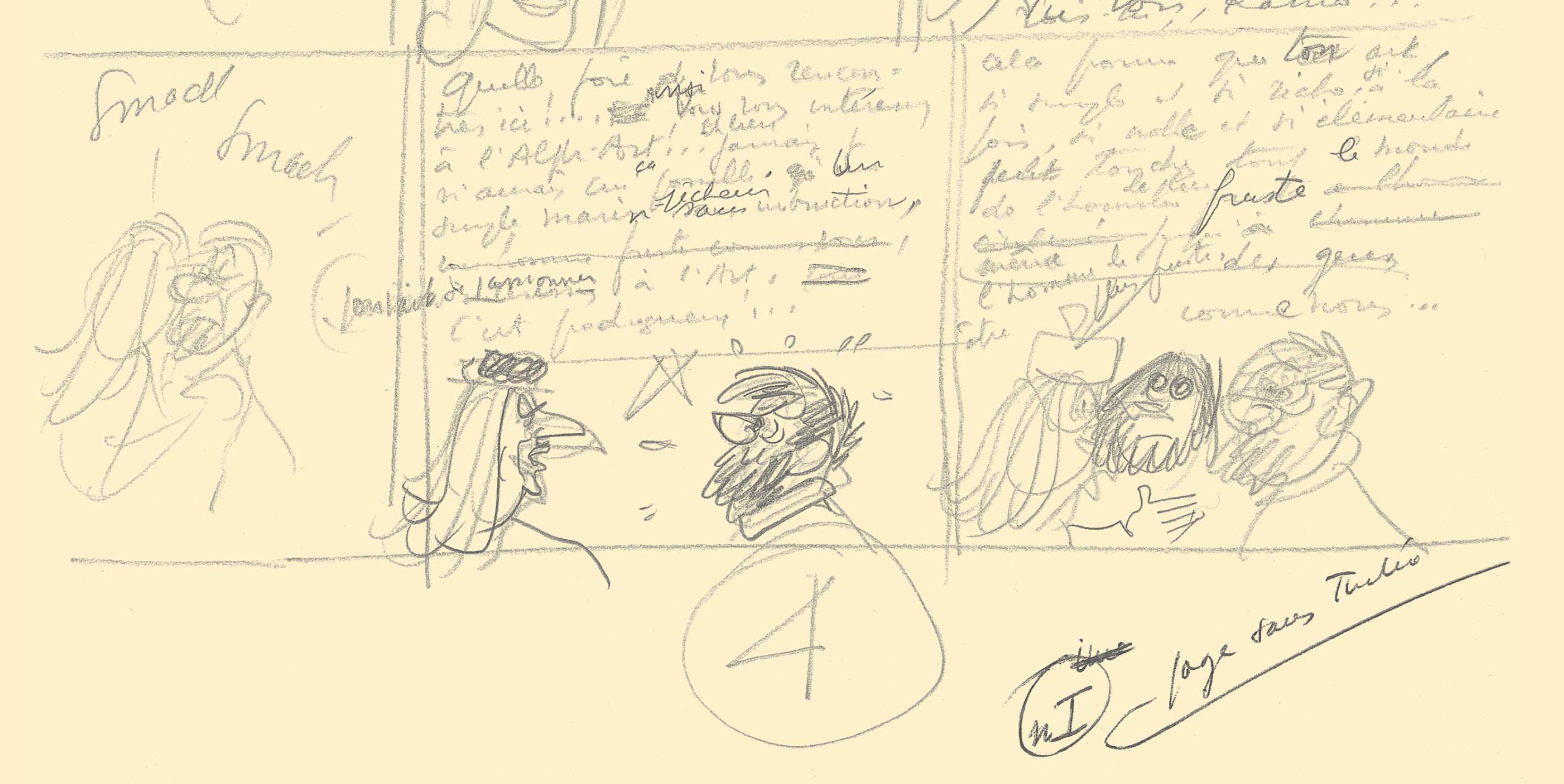
In the end, Alph-Art is less an artistic movement than a reflection of a system. A selective
microcosm where gallery owners, experts, collectors, gurus, forgers, and other impostors mingle, and where the value of a work does not depend on its sensory impact… but on the discourse surrounding it.
Texts and pictures © Hergé / Tintinimaginatio - 2026


