


 News
News Contest
 Forums
 Collectors
 Videos
 E-books
Hergé’s art in advertising
Before becoming world famous as the creator of Tintin, Hergé first made a name for himself as an advertising illustrator.
In the early 1930s, alongside his work for Le Vingtième Siècle and Le Petit Vingtième, he created posters, logos and advertising campaigns for various brands. In order to meet the growing demand for his services, he eventually founded his own studio, simply called Atelier Hergé, on 3rd January 1934.

He developed powerful and striking imagery, whose success was based on three key principles:
- clear, precise and immediately legible lines (the famous ‘clear line’ style)
- rigorous and balanced compositions, centred on the subject
- concise visual storytelling, both poetic and objective
It should be said right away that his compositions reflect a strong graphic modernity. And this clearly draws inspiration from the fine arts.
Receptive to the major aesthetic trends of his time, Hergé obviously nourished his style with the best and most innovative works of the 1920’s and 1930’s.
From Art Deco – which reached its peak around 1925 – he retained the stylisation of forms, decorative geometry and precision of line, which led him towards a controlled elegance and harmony.
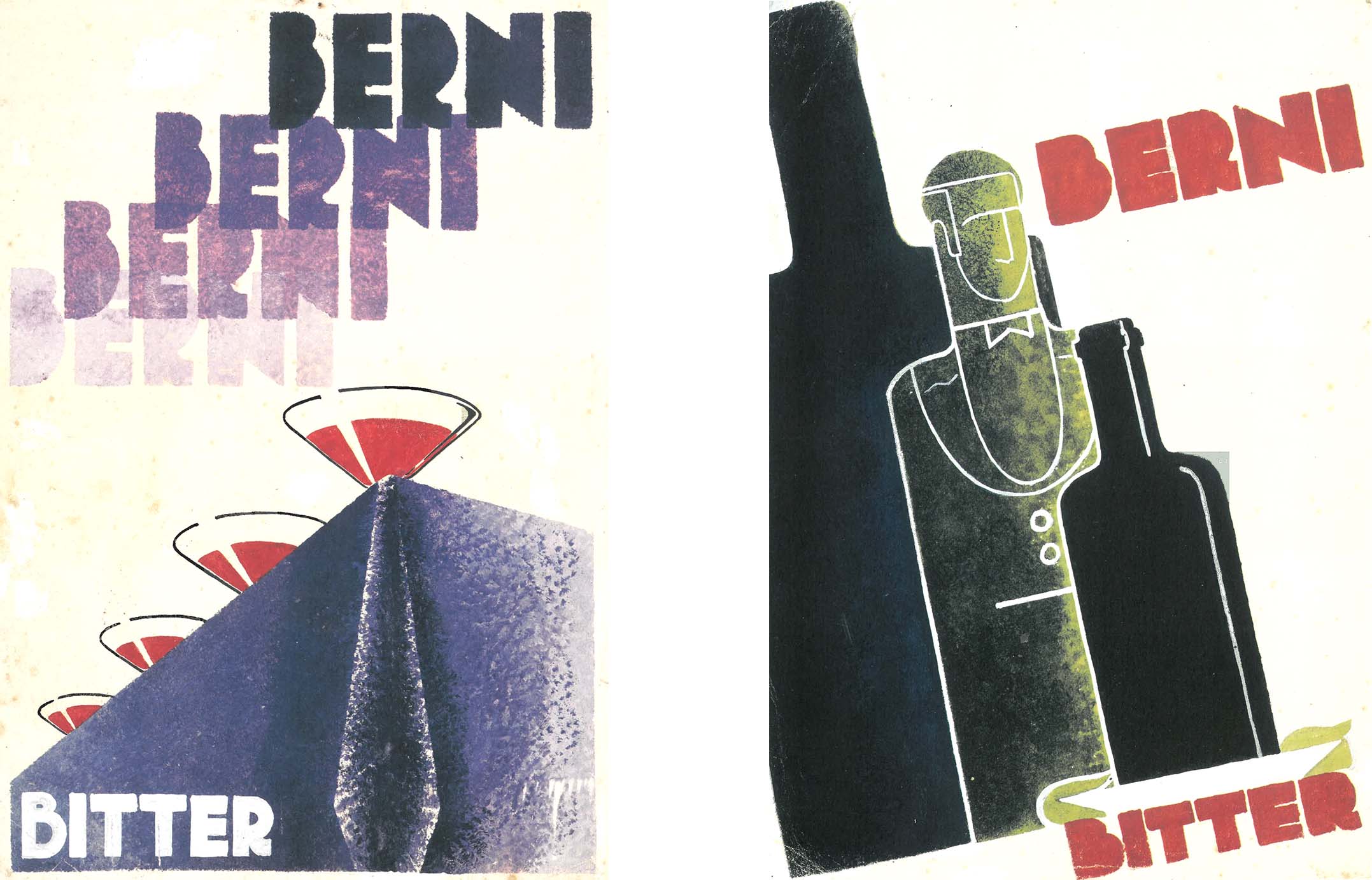
But it is undoubtedly from Purism – a movement theorised by Le Corbusier and Amédée Ozenfant – that he drew the most fruitful lessons, which would lead him to even greater visual effectiveness: the search for a perfect synthesis between geometry and figuration, extremely simplified forms, sharp contours, frontal compositions and flatness achieved through the use of flat areas of colour.
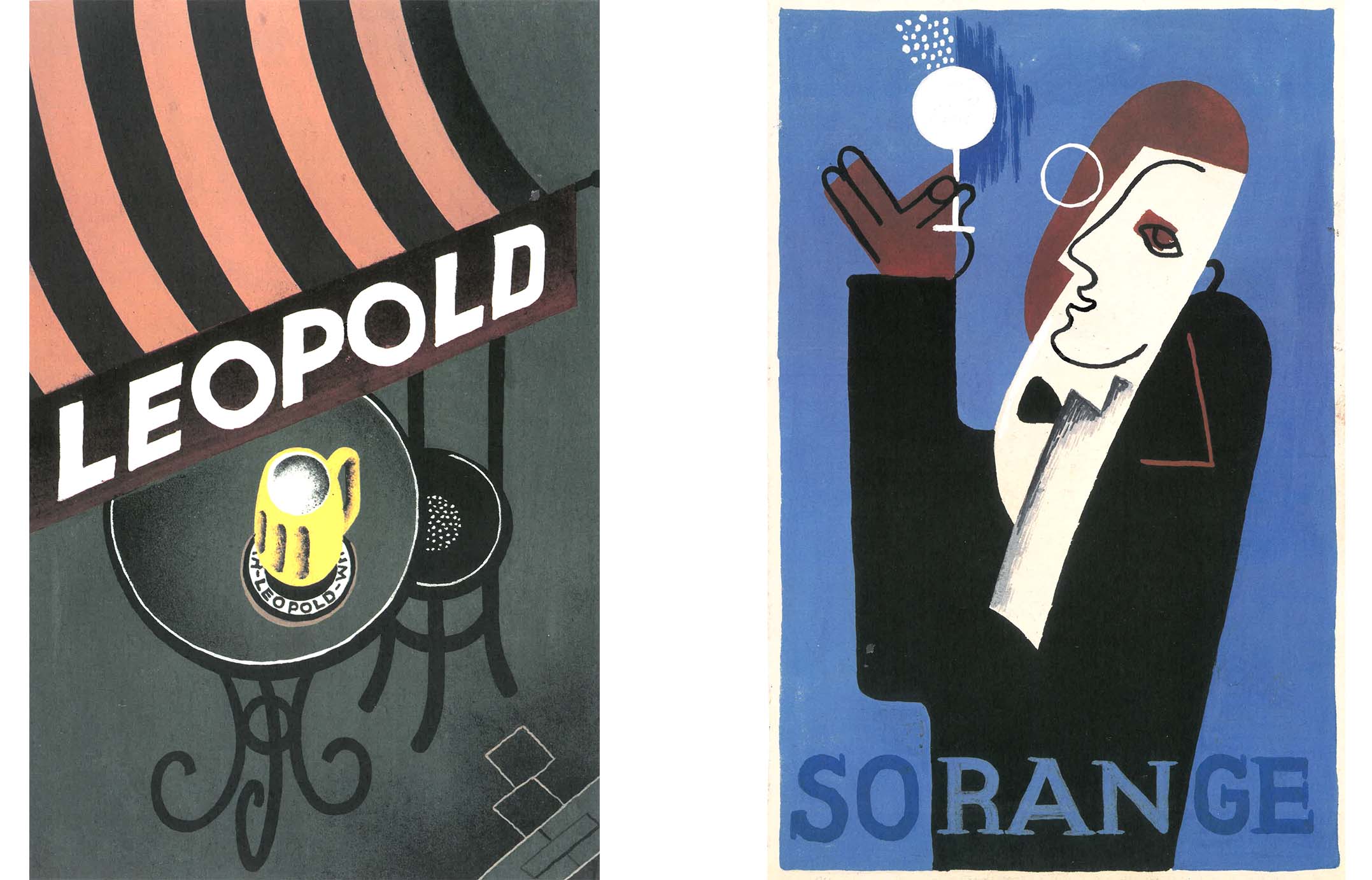
Without ever adopting the theoretical discourse of these two major movements of the 20th century, Hergé nevertheless assimilated their fundamental principles (clarity, order, formal synthesis) and put them to use in his own applied images.
This is why, thanks to this instinctive appropriation, his advertising work was so perfectly in tune with the spirit – and art – of his time.
Texts and pictures © Hergé / Tintinimaginatio - 2026


