News
News Contest
 Forums
 Collectors
 Videos
 E-books
When Mars attacks!
Flight 714 to Sydney is, at first glance, a classic adventure story about an aeronautical conference and supersonic aviation. Everything seems to fit into the theme of technical progress and the conquest of the skies – familiar themes in Hergé's universe.
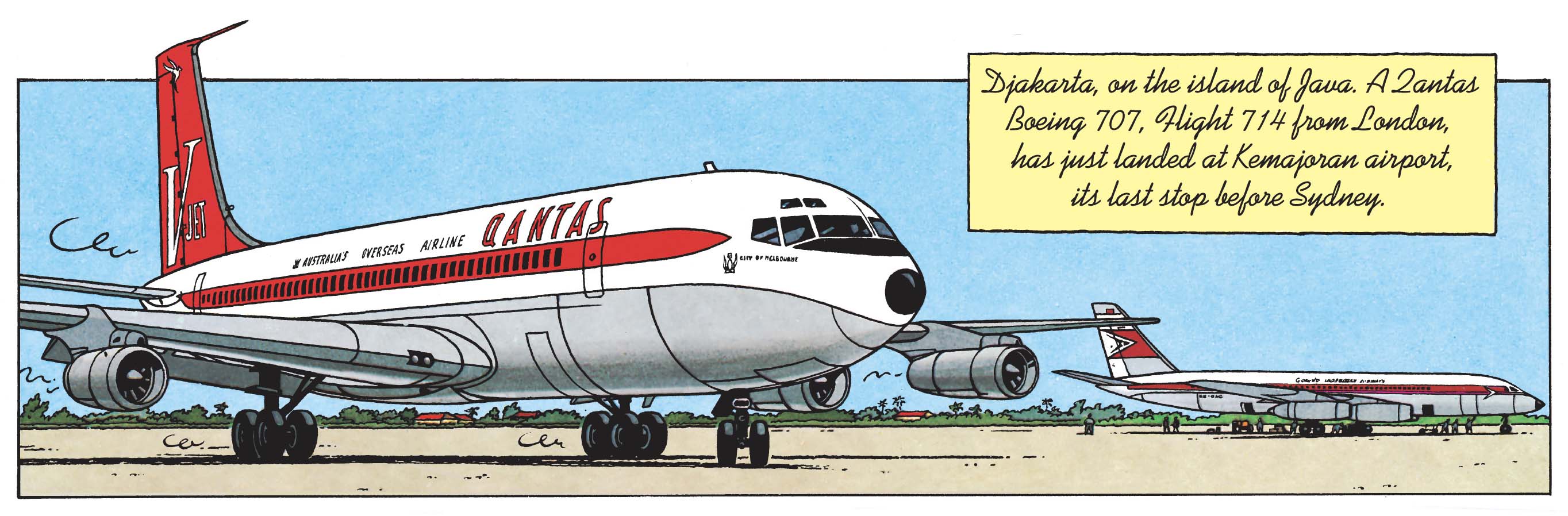
But very quickly, the story deviates from its initial flight plan. As a result, the adventure leaves the beaten track... or rather, the concrete runways, to land in the middle of nowhere. In this case: on the fictional volcanic island of Pulau-Pulau Bompa, lost in the Pacific.
Deserted? Not really. Because this little green oasis is already home to a figure well known to readers: Rastapopoulos. Of course, he has settled there with his cronies in order to plot another dirty trick. So they will be the ones to welcome the passengers as they disembark from the hijacked plane.
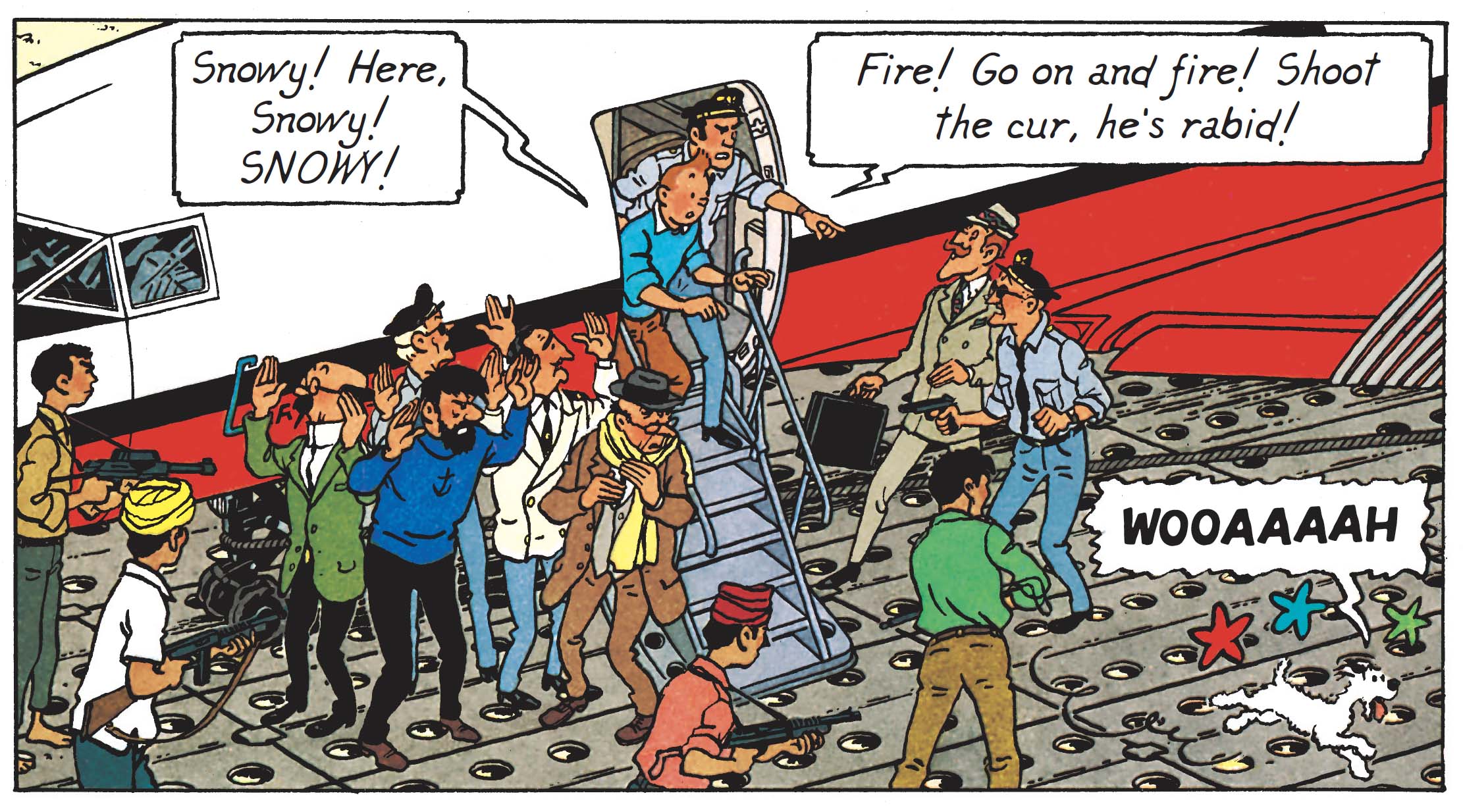
After that, the plot logically veers towards banditry, with Rastapopoulos wanting to win... or rather steal millions from Carreidas. At least, that's how it appears. But the adventure quickly takes a strange turn.
At the edge of reality
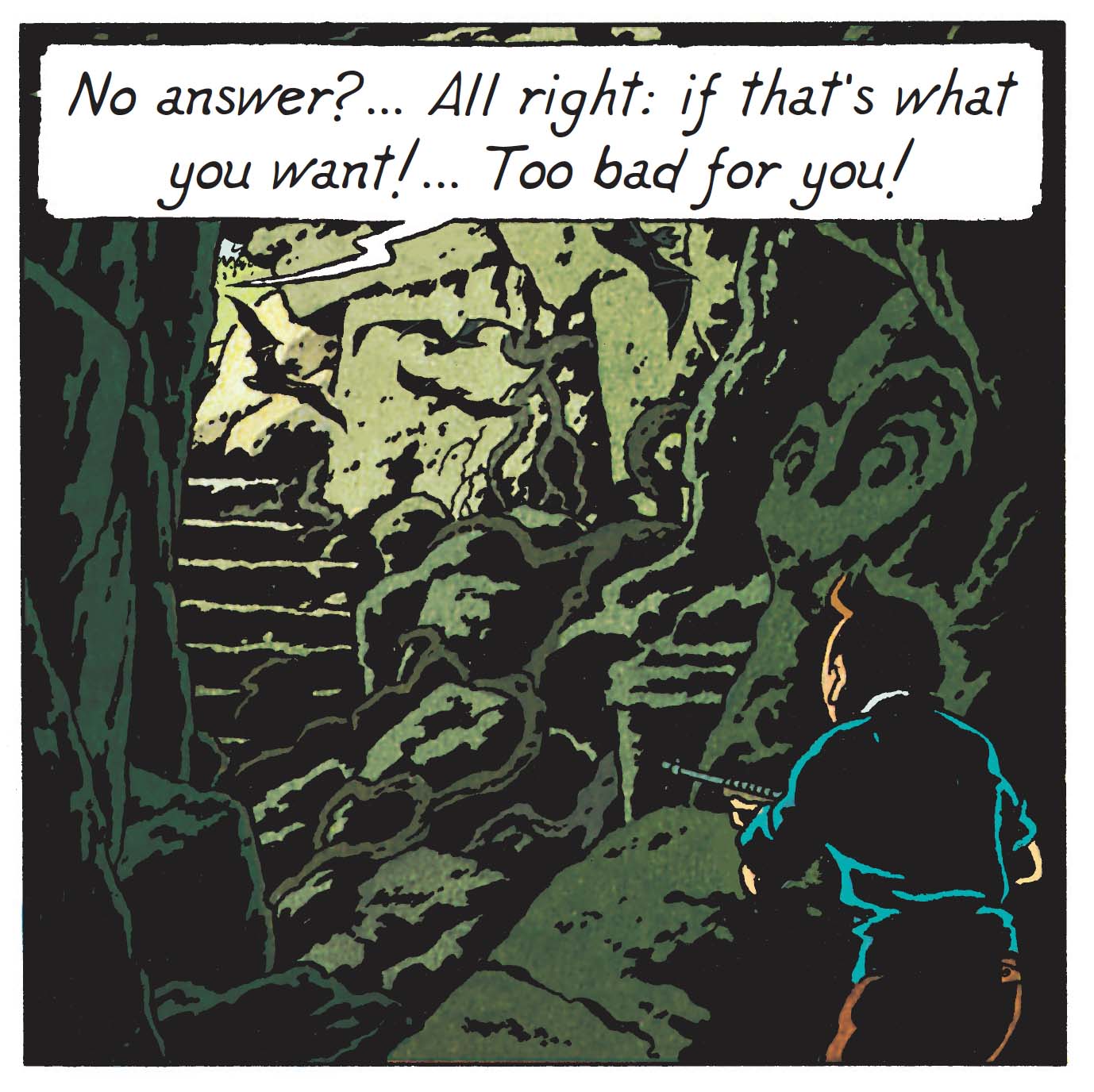
Tintin is the first to experience the inexplicable. In addition to his natural intuition and inner voice, he receives precise telepathic instructions that guide him through the jungle and its dangers. A sort of early version of a built-in GPS.
Is it a hidden native? A sophisticated ruse? Or is it the island itself communicating with him as a conscious entity?

In any case, this shift is decisive: for the first time in the saga, the young reporter is no longer confronted solely with human conspiracies. He is the recipient of invisible messages from elsewhere. Here, he leaves the realm of the rational to venture into the paranormal and the obscure.
Encounter with a strange character
The rest of the story takes our heroes into an underground world consisting of an antechamber serving as a refuge for bats, labyrinthine corridors and secret rooms. So far, nothing out of the ordinary: exoticism and mystery are an integral part of the series.
But let it be said: ‘the truth is out there’ (to quote the famous phrase popularised by the television series The X-Files). Because, according to the locals, the place is inhabited by ‘gods who came from the sky in their chariots of fire’. Moreover, the protagonists quickly come across a room (the one featured on the book cover) where huge ‘guardians of the temple’ stand. In other words: large statues with bulging, disproportionate eyes – strangely modern in their antiquity.
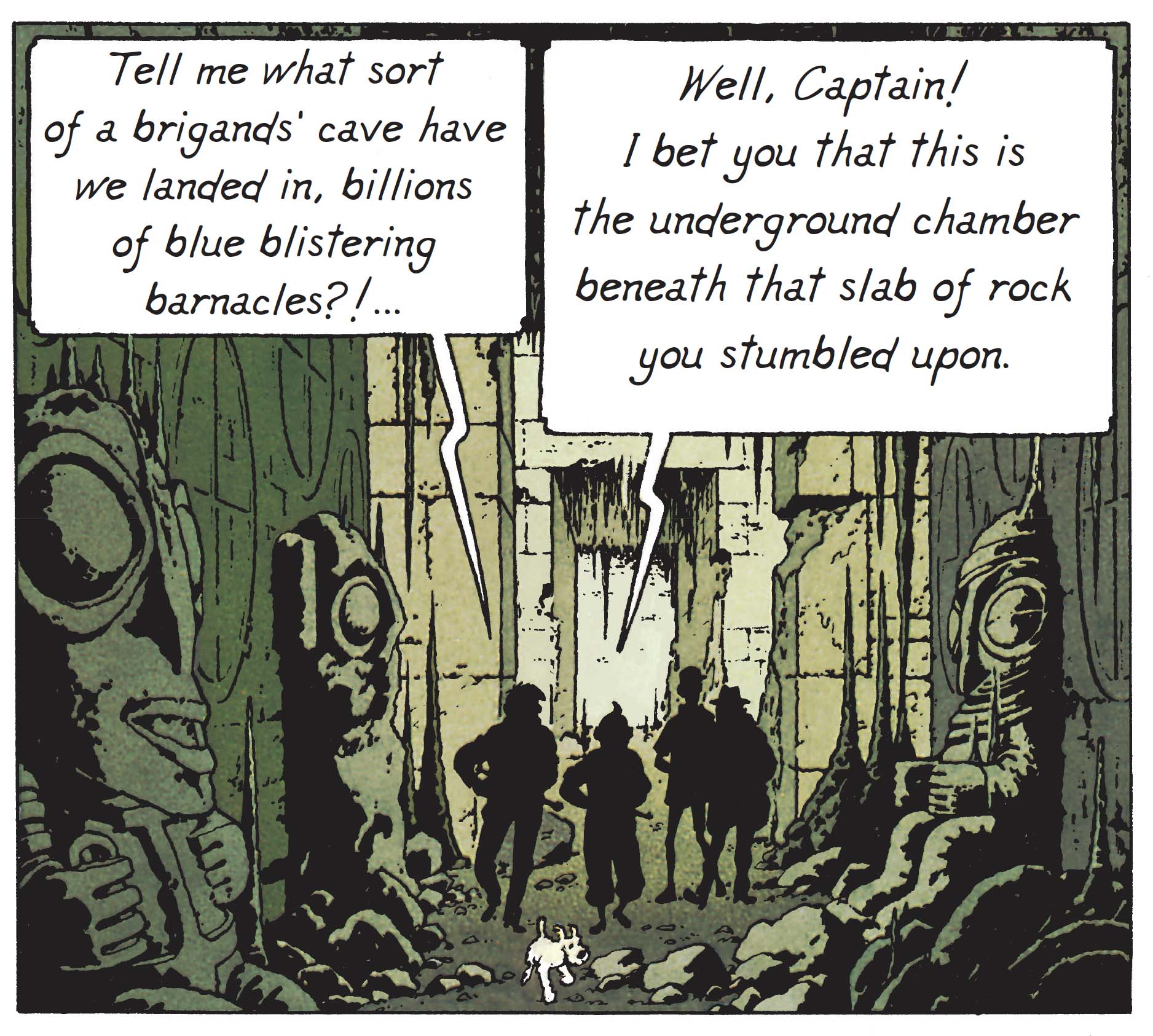
The scene is skilfully set for magic and the unreal to work their spell. It is within these walls that Tintin, Haddock and their companions meet a strange character: a certain Mik Kanrokitoff.
This man is strange, but perfectly human, after all. He introduces himself to them as a liaison officer whose ‘role’ – as he explains himself with a drawling accent – is to ‘keep extraterrestrials informed about human activities in all areas’.
These statements are beyond comprehension, of course. Especially for the captain, who is usually rather down-to-earth. But, contrary to all expectations, the vehement sailor welcomes these revelations with moderate scepticism. So there are no swear words or invectives when Kanrokitoff shows him tangible and irrefutable proof of the existence of his extraterrestrial interlocutors...
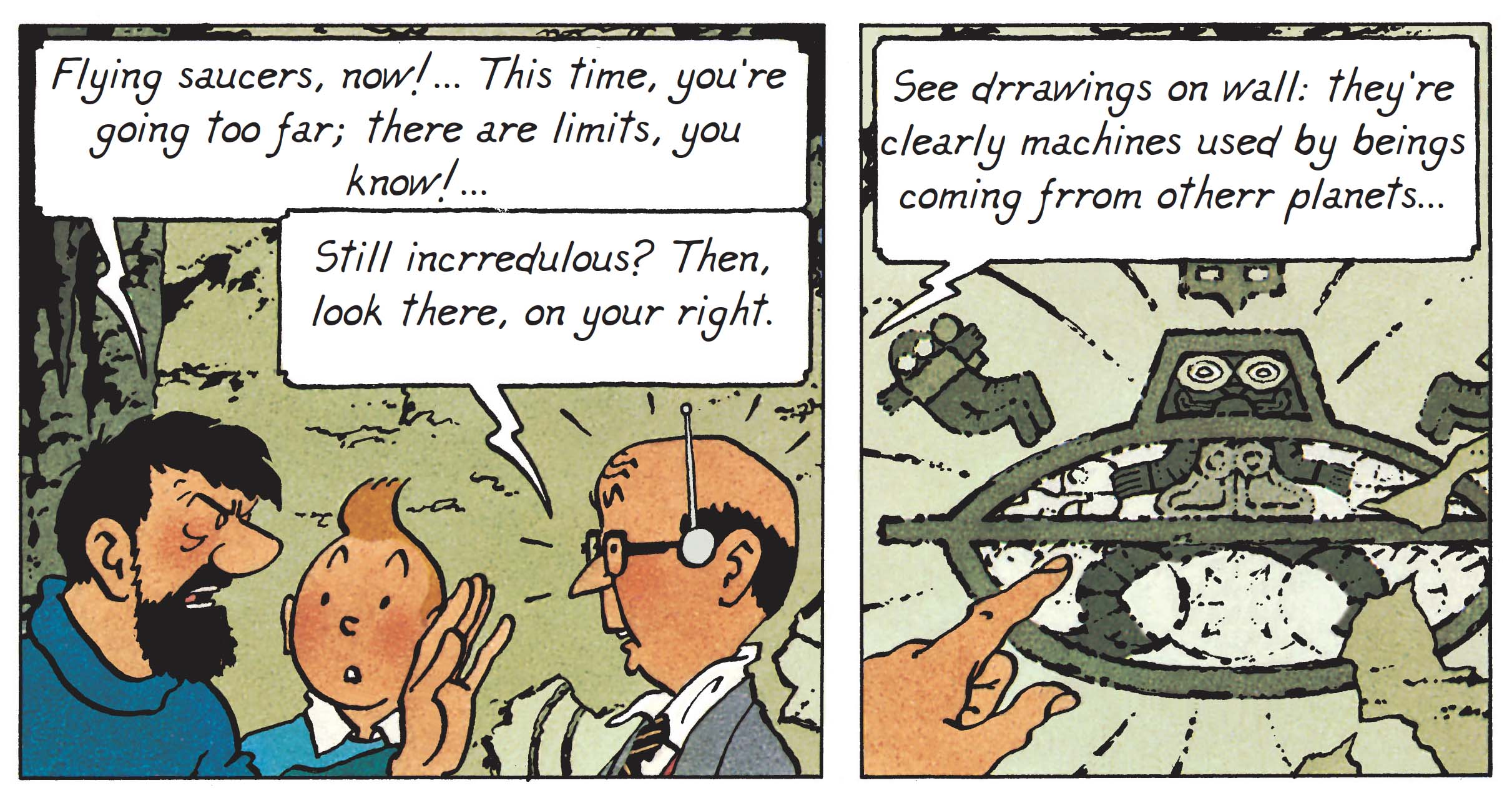
We are not alone
There can be no doubt: myth and technology overlap.The ‘gods’ of yesterday are indeed the extraterrestrials of today. And for Hergé, this is the perfect opportunity to make an unprecedented foray into the realms of science fiction, a field he had previously only touched upon.
It must also be said that the context was particularly conducive to this. Since the 1950’s, people have been fascinated by space and its mysteries: the race to the Moon, the proliferation of reports of unidentified flying objects and so on. The collective imagination was therefore logically saturated with special spacecraft and little green men.
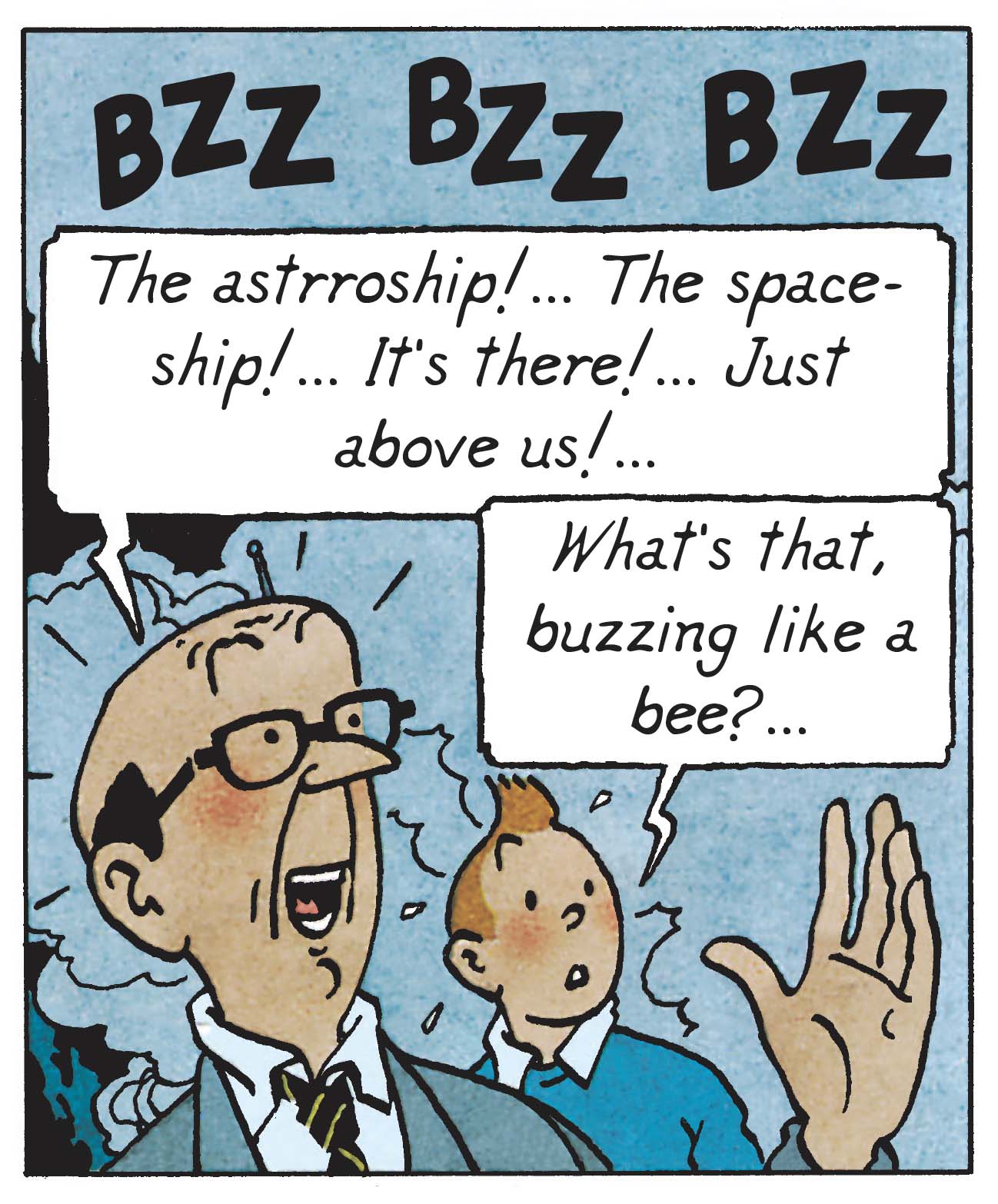
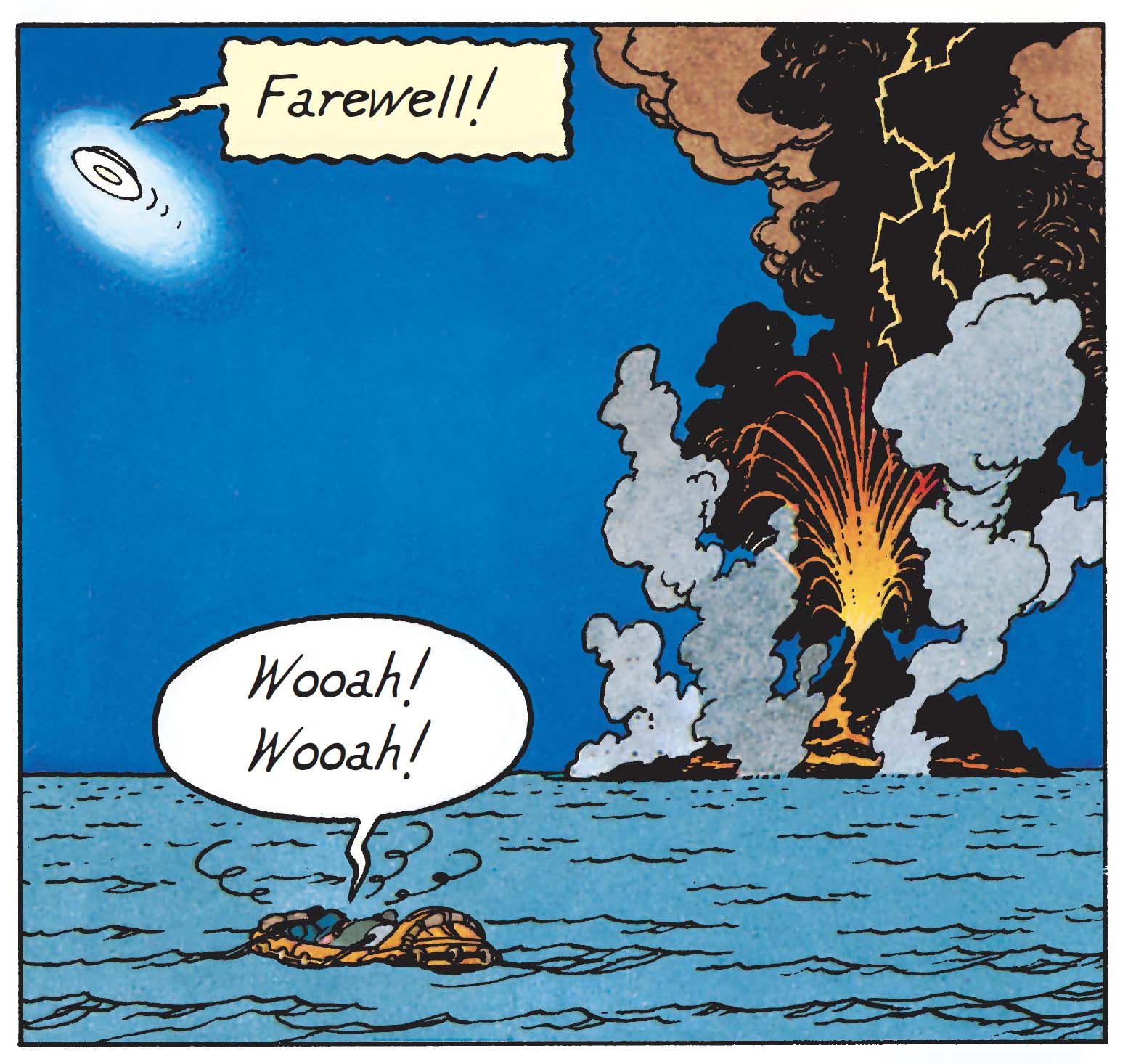
Of course, in the end, the ultimate – and long-awaited – encounter does indeed take place. For the occasion, Tintin and his friends even treat themselves to a rather exceptional maiden flight: a trip aboard a flying saucer. But, true to the ambiguity that runs through the adventure, this extraordinary experience takes place... under hypnosis. So much so that once back on Earth and in reality, none of them retain any conscious memory of this brief sidereal escapade.
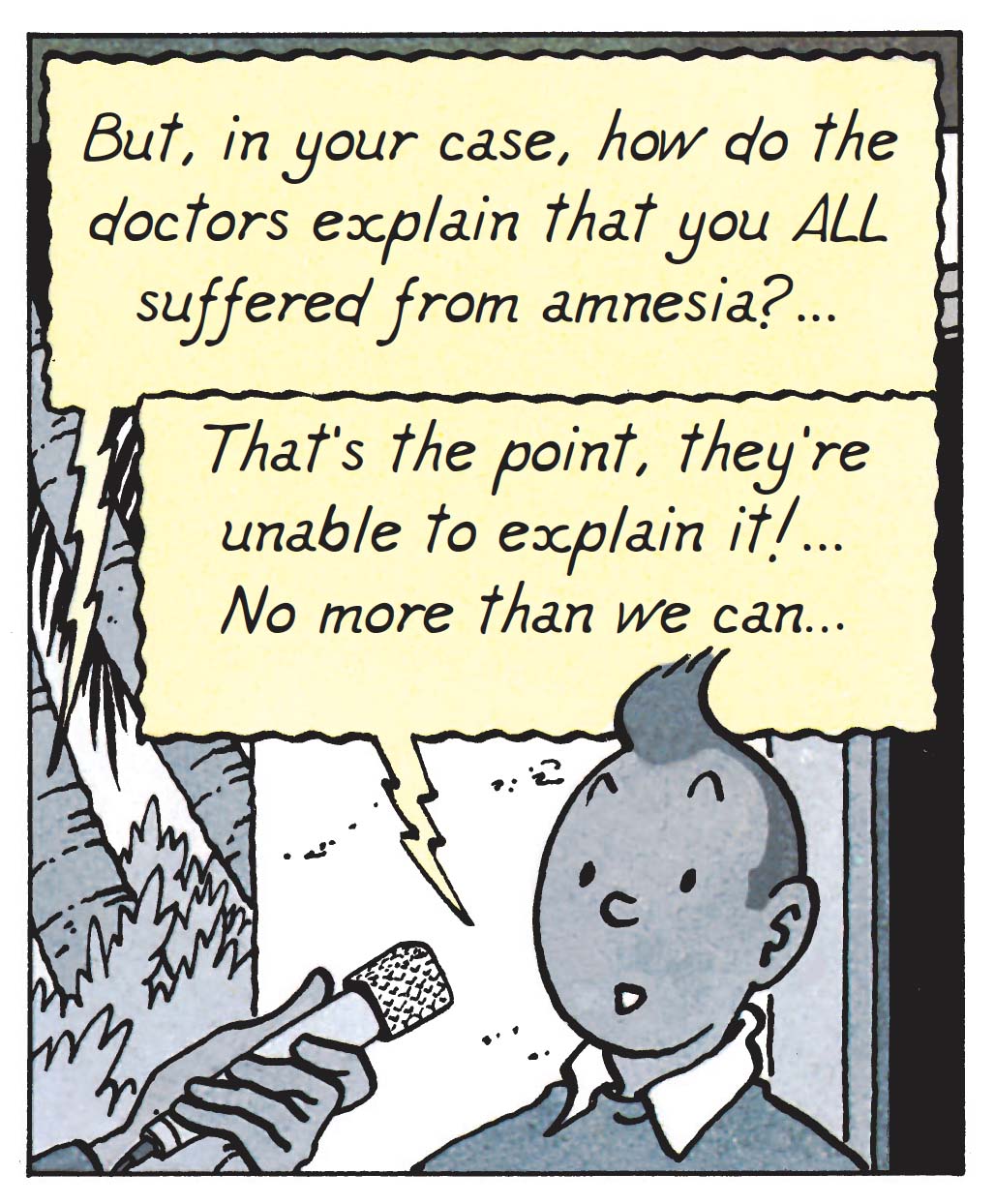
A perplexing conclusion, much like the adventure itself, which leaves readers in a troubling limbo. The event did indeed take place, but it is impossible to prove. It is as if Hergé had chosen to leave the door open between reality and the inexplicable.
Texts and pictures © Hergé / Tintinimaginatio - 2026