News
News Contest
 Forums
 Collectors
 Videos
 E-books
Haddock: A Stockpile of Anger
Have you ever seen Captain Haddock angry? The question hardly needs asking, since outbursts are part of his very nature, as much as the beard, the cap, and that very personal way he has of letting pressure build until it explodes.
But in The Red Sea Shark, our captain does not merely grumble in passing. He deploys a whole spectrum: from annoyance to wrath, from irritation to fury, from simmering exasperation to full-blown rage, the kind that no longer simply makes us laugh but begins to say something more serious...
When events conspire against him, Haddock inevitably flies off the handle, sees red, loses his temper, fumes, rants, boils over, or, depending on his mood, bites his tongue before finally letting loose. In this feature, we follow the album from beginning to end to observe Hergé’s skill in staging a face that shifts from sulky to startled, from piqued to openly indignant, a face that quite literally goes « through every shade. »
Sleight of Hand
It all begins with a twist of fate that borders on destiny: Tintin and Haddock run into General Alcazar… and lose him just as quickly. Was it really him? Why all the mystery? The affair already feels like a trick, and we know how much Haddock hates being played for a fool.
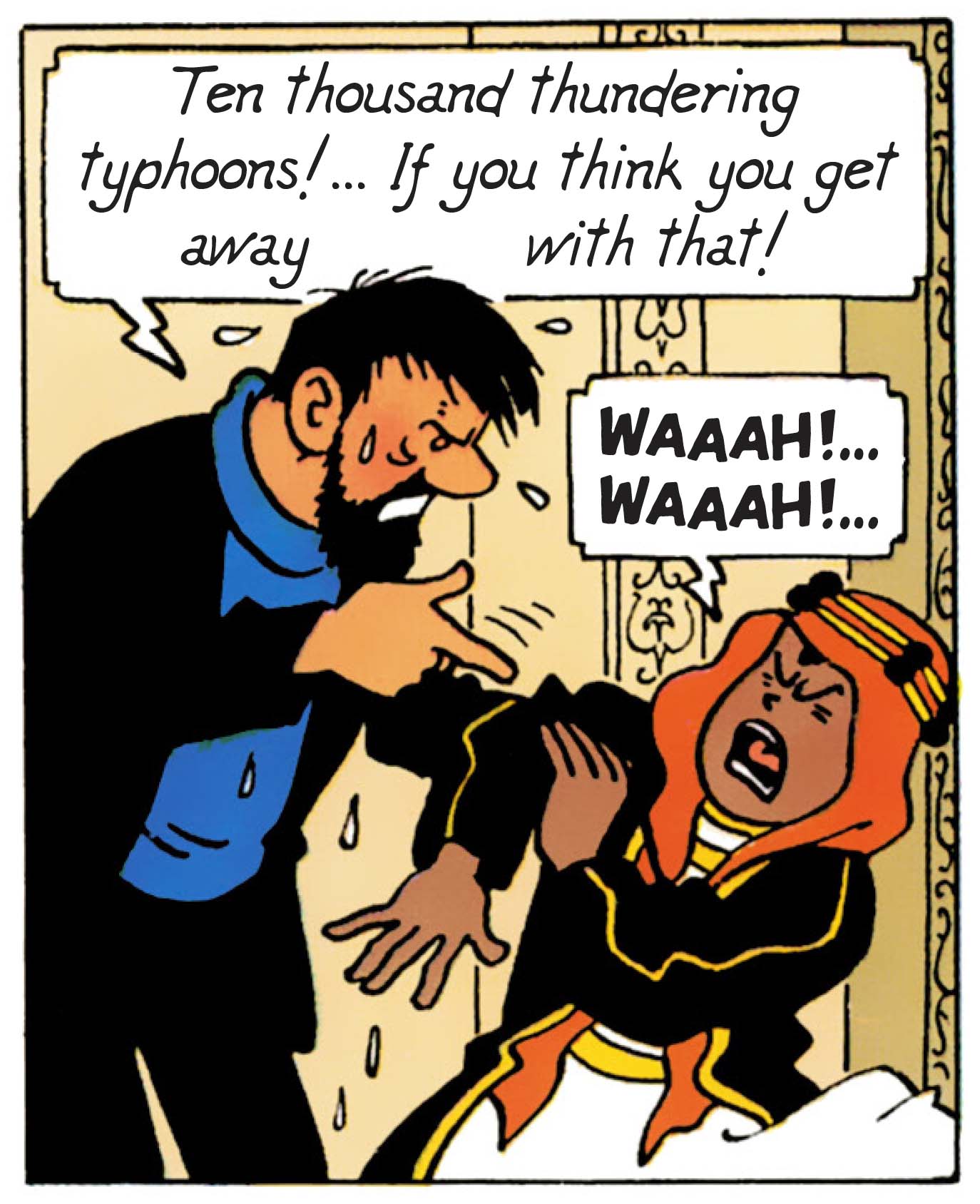
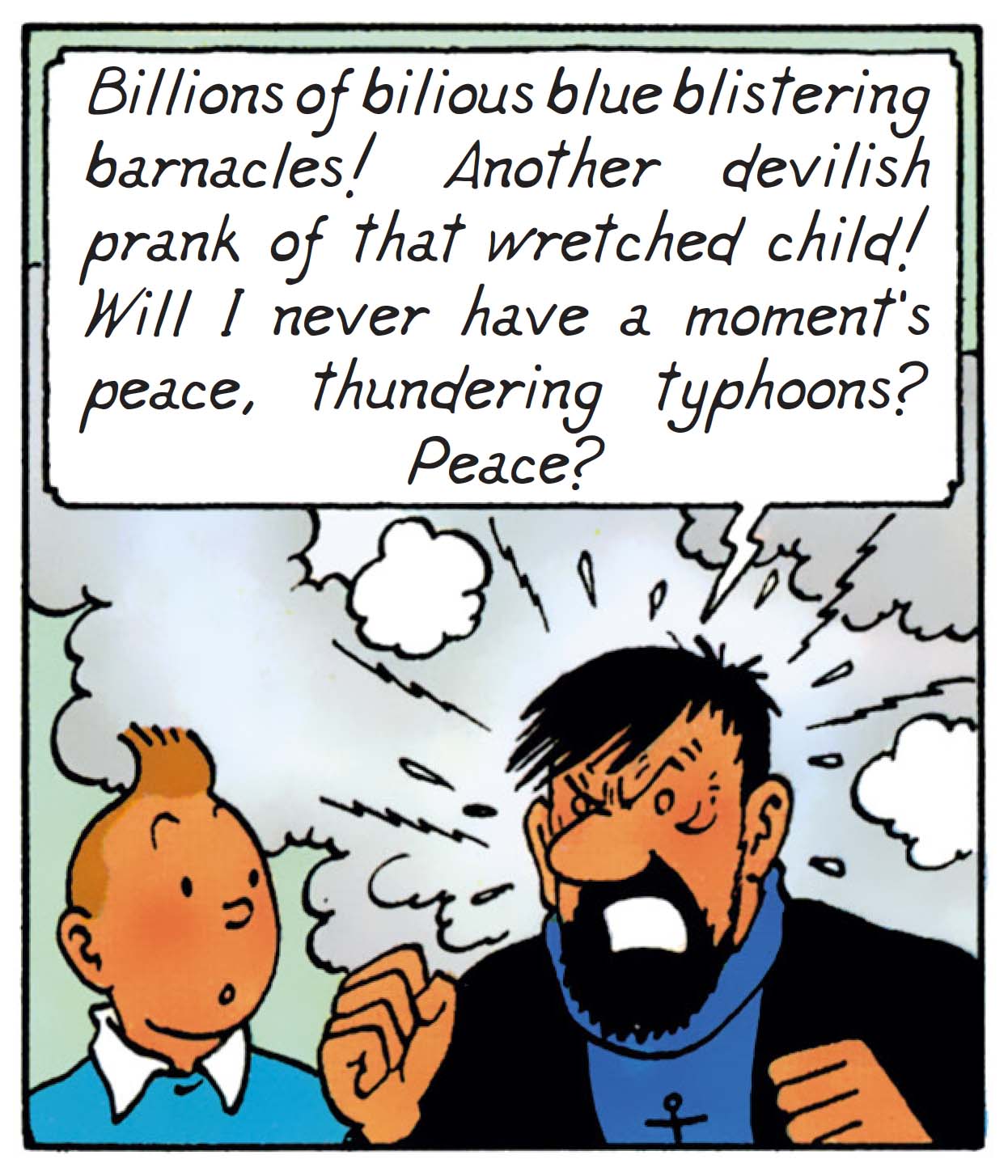
Back at Moulinsart, another storm breaks: Abdallah. The return of the little demon, already encountered in Land of Black Gold, is enough to send Haddock’s temper soaring. He tries to hold back, to grit his teeth, to keep up appearances (after all, one does not « discipline » an emir’s son), but annoyance swiftly becomes exasperation, then outright irritation. One senses he is only a hair’s breadth from exploding, or committing an irreversible act upon princely offspring.
As if that were not enough, trouble returns in pairs: the detectives. Interrupted at the worst possible moment, Haddock once again boils inwardly. Nothing drives him up the wall faster than interruption, clumsiness, insistence, everything that turns a simple annoyance into rage whipped into a froth.
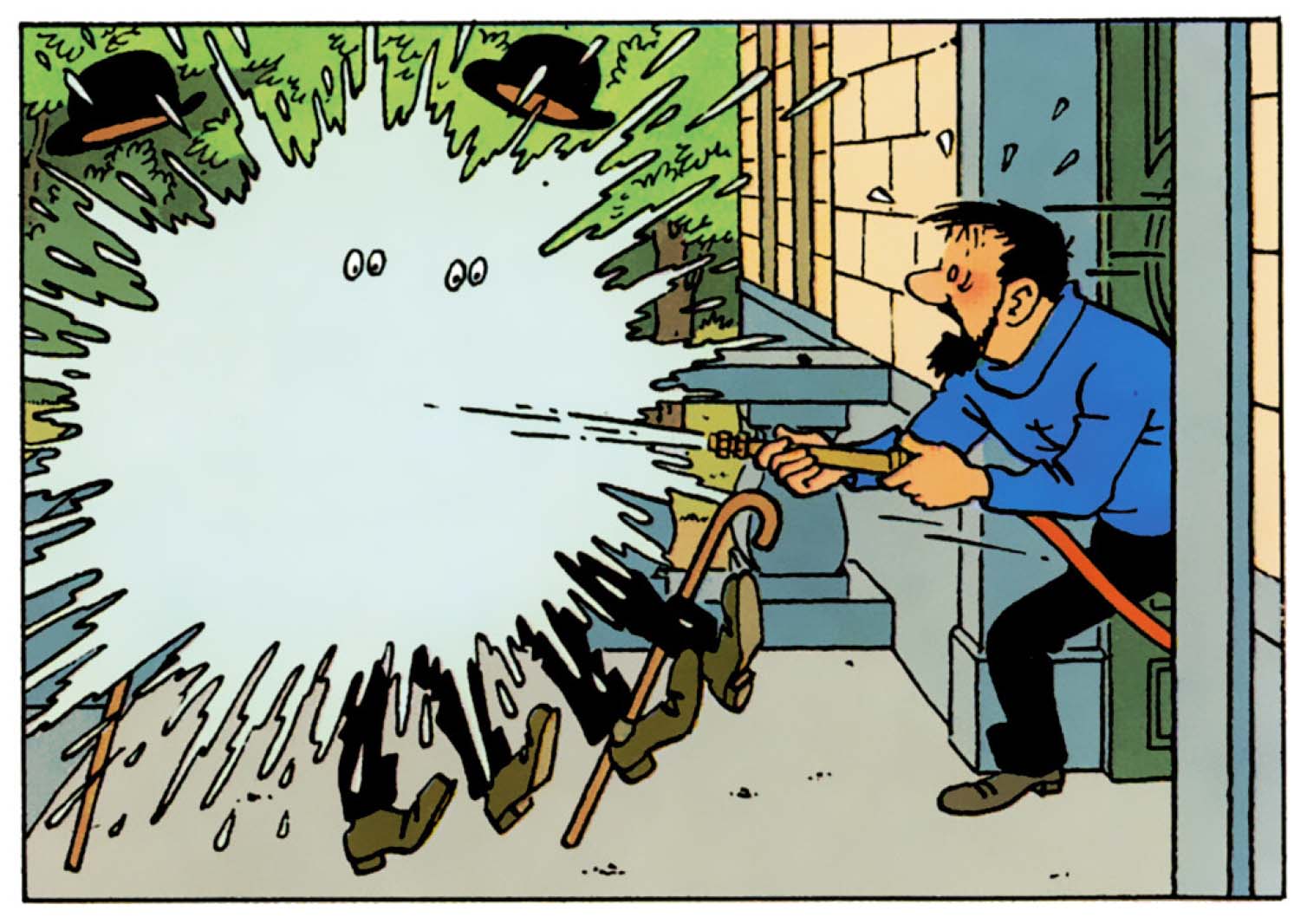
Yet the album does not remain in farce. The investigation resumes, and events in Khemed take a dramatic turn. Coup d’état, maneuvering, trafficking, pressure… the fuse is lit. Haddock may thunder « Blistering barnacles! » but this time it is not merely a catchphrase. It signals an inevitable chain reaction that might well end in a forced dousing.
Gathering Storm
Once the decision to depart is made, the album piles on setbacks with almost cruel regularity. No sooner have they arrived than they are turned away and summarily expelled. Haddock is denied even the comfort of settling into a steady rage; events force him onward without pause.
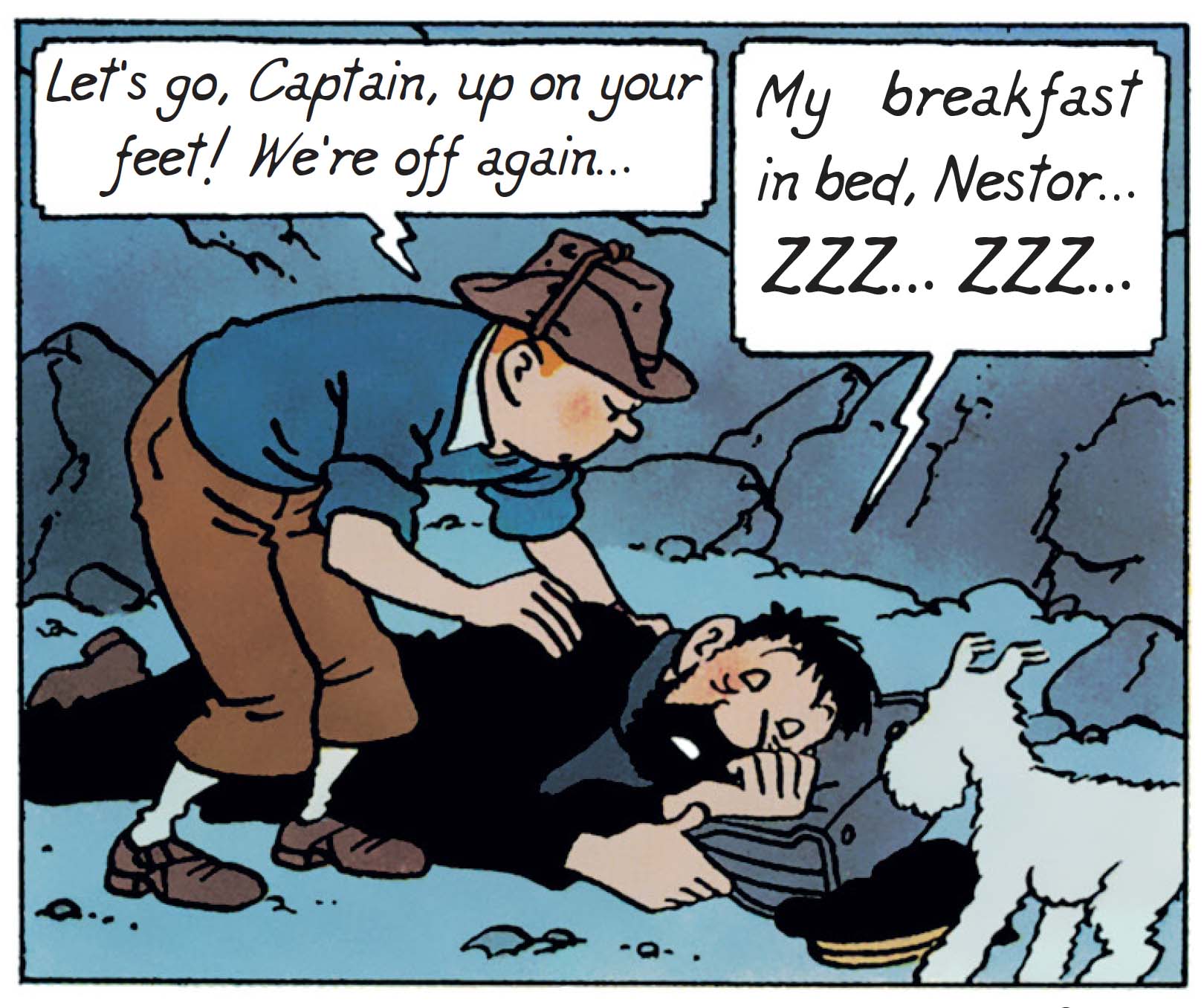
Then the trap snaps shut. Sent off in a rickety aircraft, the plane itself becomes a threat. Tension rises, visible on his face; curses act as pressure valves. Haddock flares up, regains control, flares up again. This is no longer a single outburst but a succession of charges, constantly reloaded. Eventually it is not anger that overwhelms him but exhaustion. Sleep intervenes like an unexpected referee, cutting short the old sea dog’s exertions.
In the Arms of Morpheus
A difficult awakening, nerves frayed. Haddock alternates between growling and pressing on, between foul temper and stubborn resolve. Irritation remains constant, like embers beneath ash.
Oliveira da Figueira appears, roused in the middle of the night and loyal as ever. Hergé has fun here: the captain strives to preserve his dignity in circumstances that steadily undermine it. Disguises, misunderstandings, absurd detours, all combine to make him peevish, prickly, sometimes downright abusive.
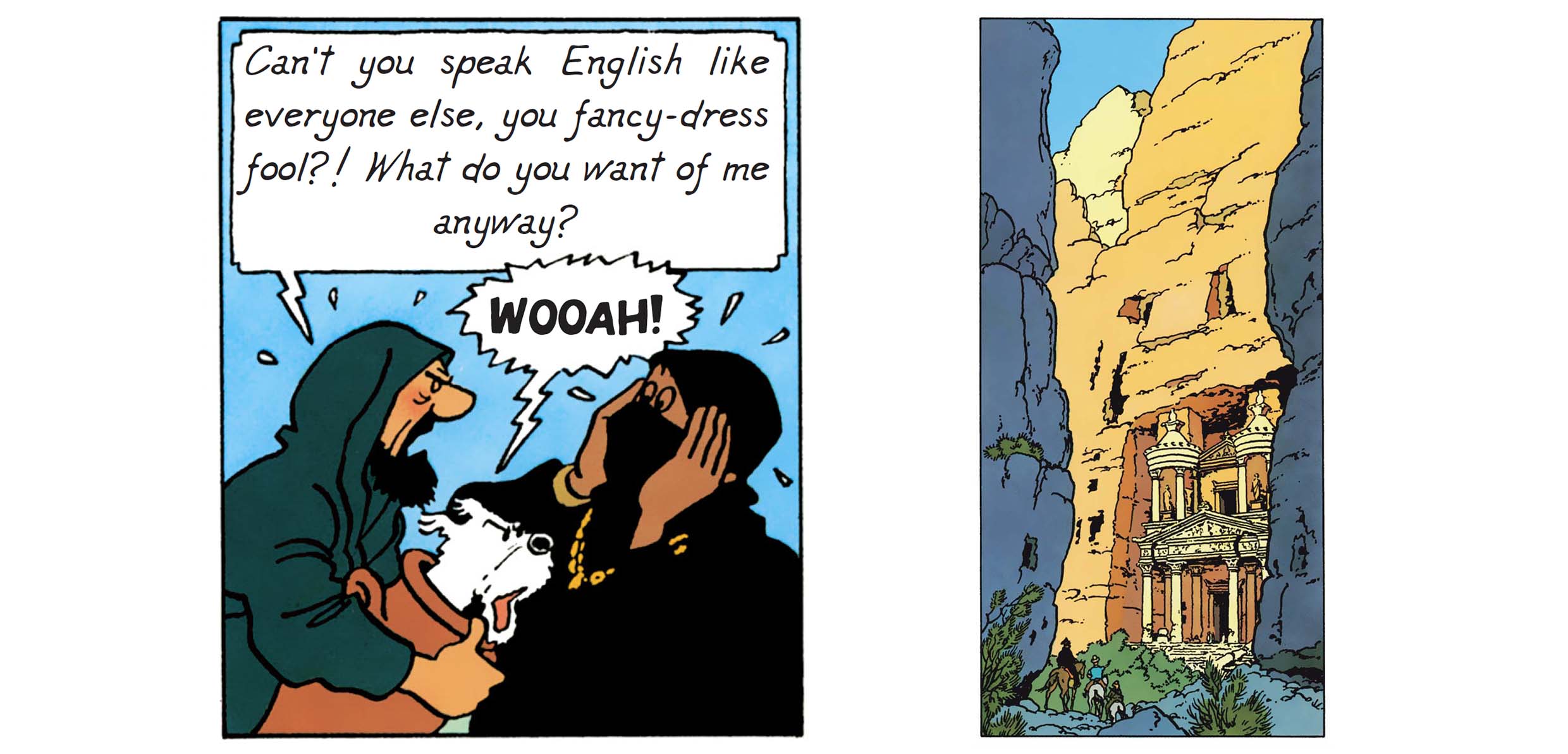
Under improvised attire, Haddock begins to fume. Insults fly, his voice rises, his tone hardens, less from caprice than from frustration at not being understood. Meanwhile, the setting evokes Petra. Hergé’s eye for detail ensures that exoticism never degenerates into mere cardboard scenery.
Back at Moulinsart, Abdallah continues his mischief. But that, as always, is best left to the reader; some pranks are savored better in the album itself than in summary.
High-Seas Pursuit
After the desert comes the sea. Paradoxically, Haddock breathes again. The maritime element restores his assurance, his instinct, his competence, dulled by the sands of Khemed. His anger shifts register, less petulant, more vigilant. He ceases to be merely irascible and becomes fully captain once more. Aboard a traditional Red Sea sambouk, Tintin and Haddock resume their course. The crossing seems almost peaceful, but in Hergé’s world calm rarely lasts.
Trouble quickly resumes. An attack from the air leads to shipwreck and an unexpected confrontation with a pilot whose very name provokes a sharp remark. Haddock mocks, then bristles again, as though he always requires some outlet to relieve the strain. The pilot is Piotr Szut, an Estonian airman in the service of Khemed, shot down by Tintin before being pulled from the sea and spared.
Soon Tintin, Haddock, and Szut find themselves crowded onto a fragile raft. Only a forced plunge would complete the picture. The captain stands on the brink of perpetual explosion, blood boiling, nerves raw, patience worn thin.
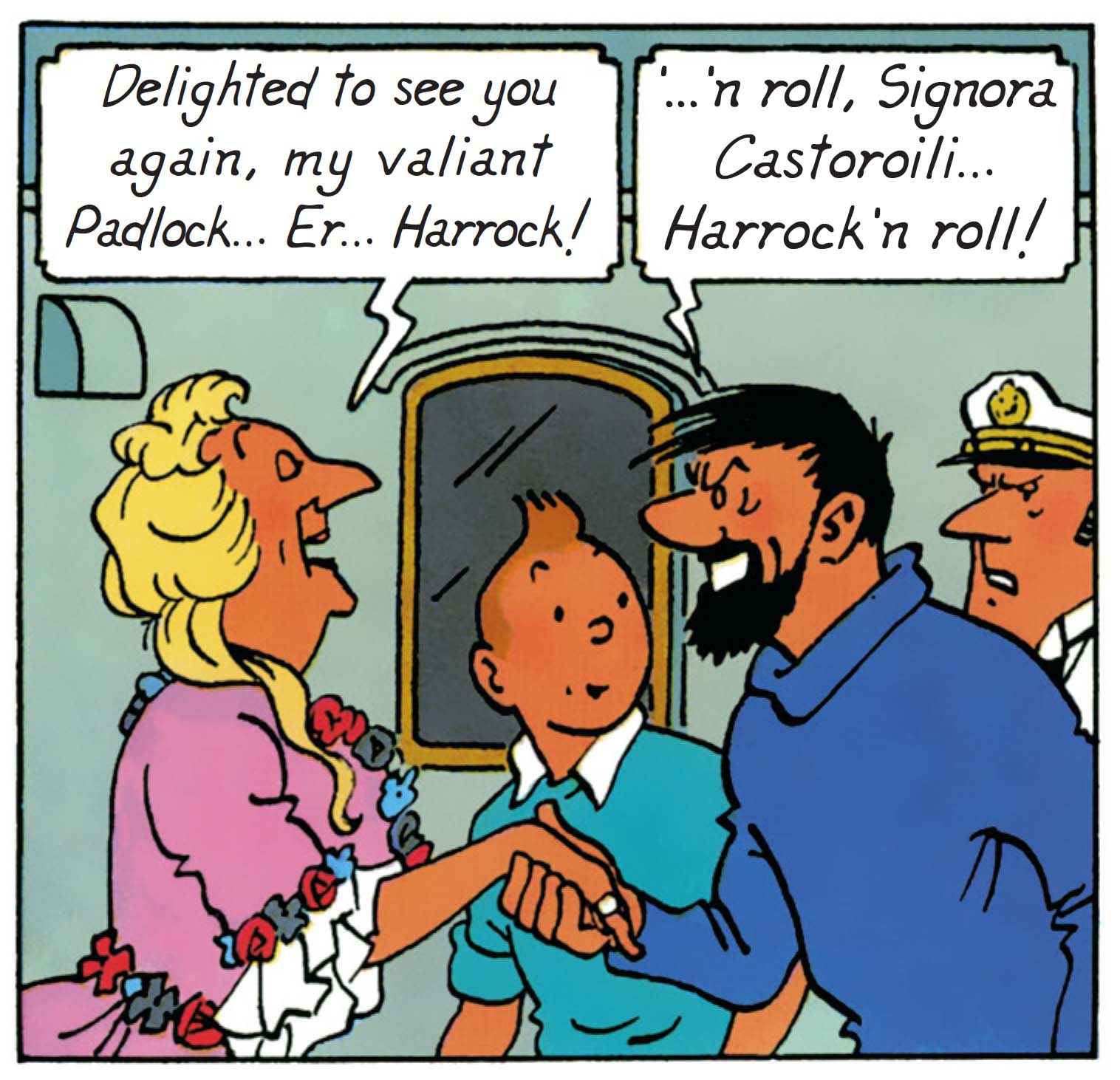
Rescue comes in the form of a yacht. The diva reappears and, true to form, mangles the captain’s name. « Harrock…? », and Haddock, at the end of his tether, replies, « Harrock’n roll. »
A Black Rage
But The Red Sea Shark is not merely an album of inconveniences. It tightens the screw and turns toward something darker. Here Haddock’s anger becomes truly compelling, because it ceases to be merely comic.
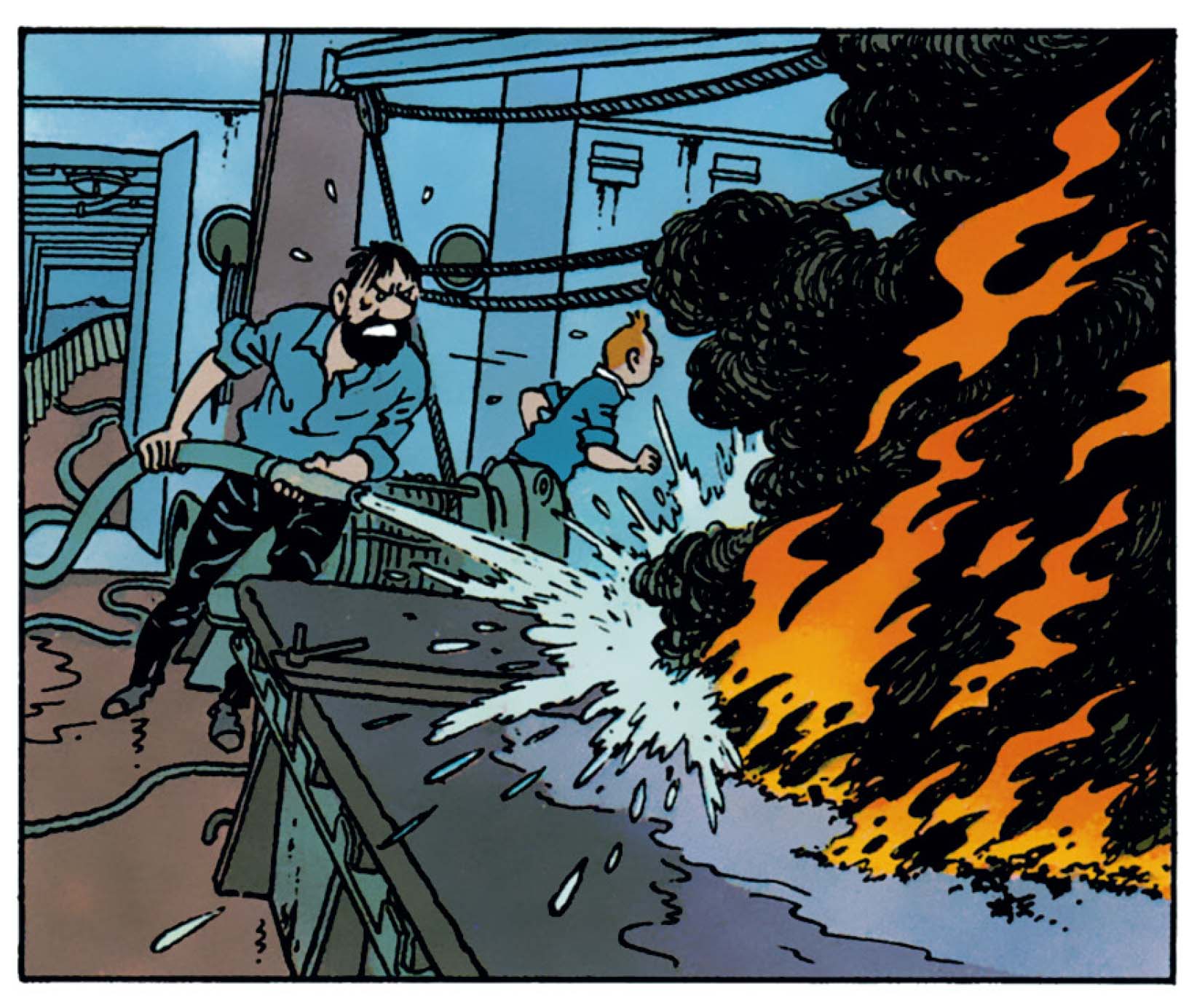
On the cargo ship, night brings not only darkness but betrayal and fire, courtesy of a familiar henchman. Roused abruptly and abandoned by a crew that has sabotaged the vessel, Tintin and Haddock must retake control and prevent disaster. The captain no longer rages for show; anger becomes energy. You cannot fool Haddock now. He commands with firm authority.
Then comes the discovery of the hold. In the gloom are Africans, crammed together, deceived under the pretext of pilgrimage and destined to be sold as slaves. The album’s title suddenly reveals its full meaning.
The captain’s reaction shifts in nature. This is no passing mood nor habitual irritation. He sees red not from petulance but from moral outrage. When one of the men, still caught between fear and false hope, considers continuing toward the promised destination, Haddock erupts. He speaks loudly, insists, refuses to let them return to those who exploit them. His anger is not directed at these men but at the system that ensnares them. The clowning vanishes before such infamy.
When the slaver boards the ship to reclaim his « cargo », fury finds a new target. Haddock no longer rails at petty annoyances but at injustice itself, which, regrettably, remains all too current. In these panels, his anger changes in both aim and substance. It no longer strikes at the nearest nuisance; it rises against wrongdoing. As the trafficker persists, insults burst forth in rapid fire, like a machine gun at close range, each word cracking like a shot.
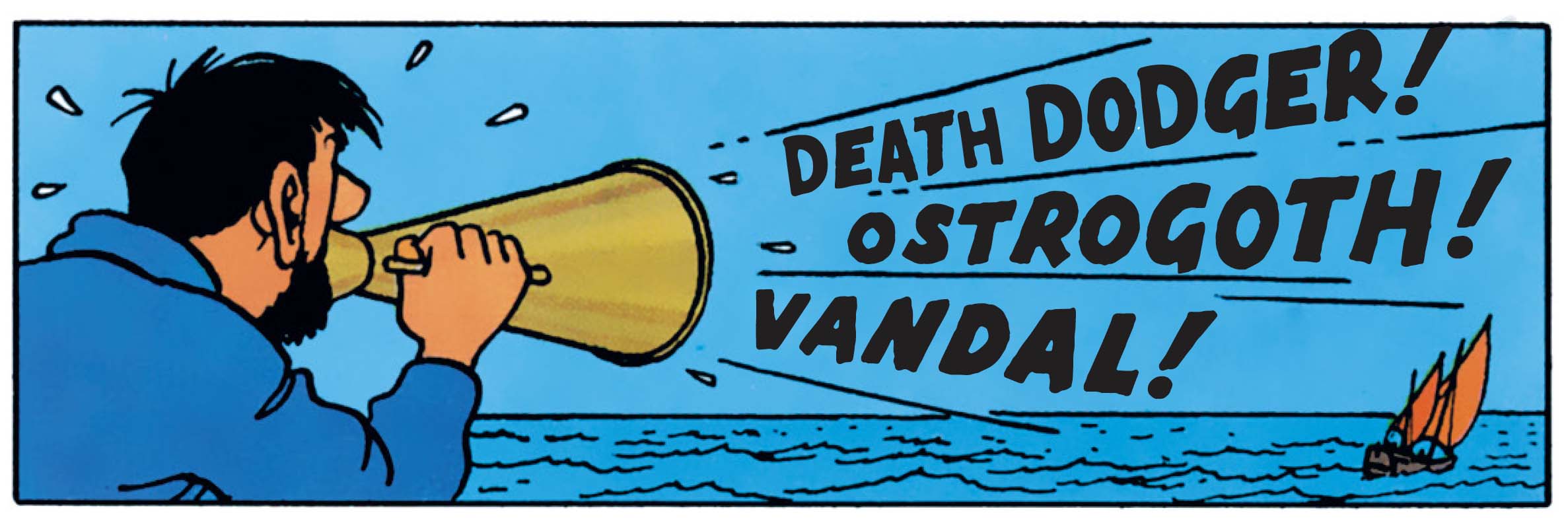
This torrent ranges from erudite insult to blunt slang, from invented patois to epithet that lands like a punch. One could fill a dictionary: bashi-bazouk, blistering barnacle, nitwit, scoundrel, pirate, vandal, anthropophagus, iconoclast, platypus, sea slug, and more besides. The list grows, and the captain does not hold back.
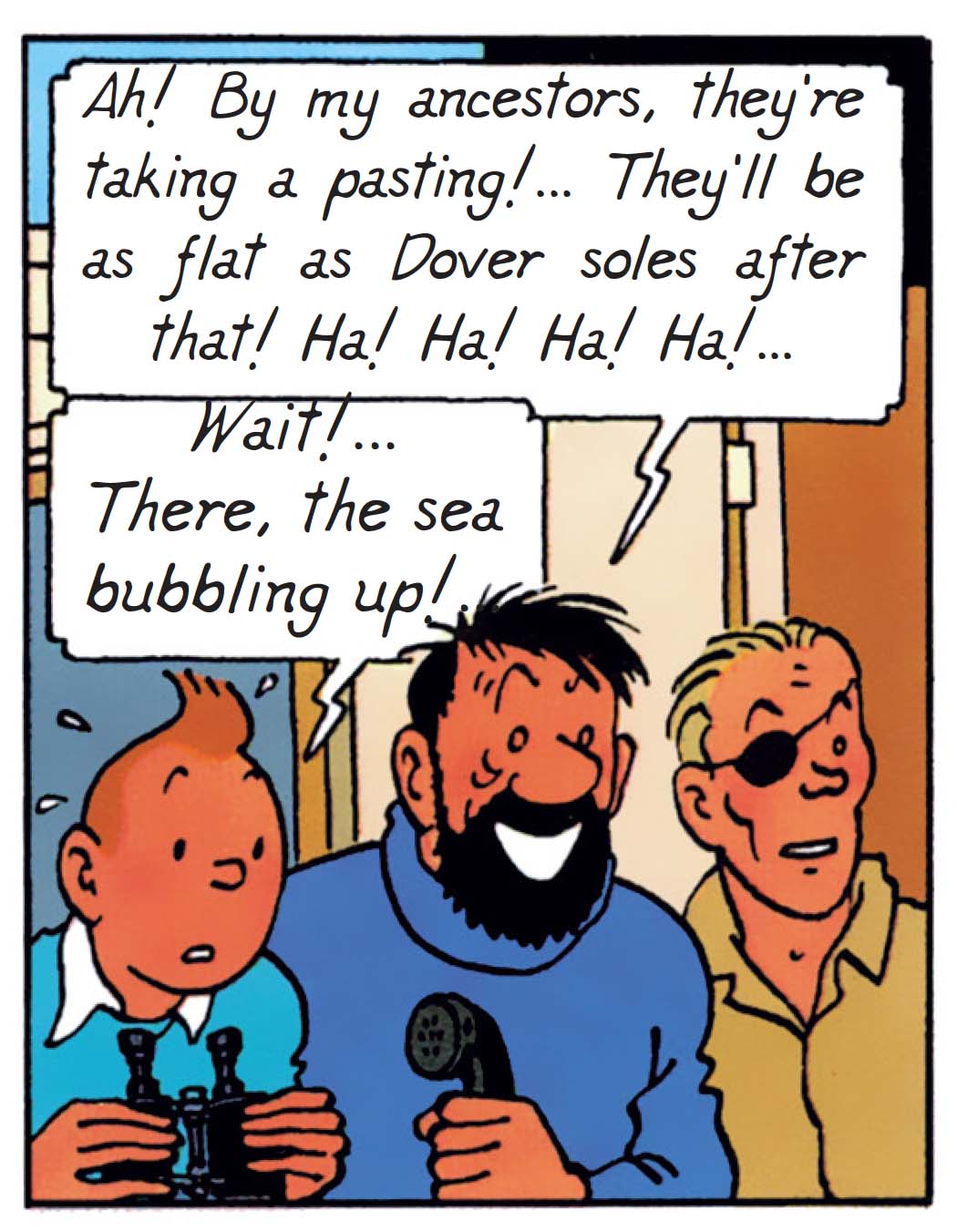
The album delights in chains of cause and effect, in threats emerging one after another, culminating in the periscope slicing through the surface where least expected. So tension mounts. Haddock moves from shock to fury, from fury to action. At the height of the assault, in a surge of brute resolve, he tears the engine-order telegraph free, as though even machinery must yield to his determination. Anger becomes gesture, gesture becomes retaliation, and then comes that fierce relief bordering on exhilaration.
Even in that moment, Haddock keeps fire in his eyes.
Conclusion
Back at Moulinsart at last. The armchair, calm, peace? Of course not. Abdallah has left his mark, and Séraphin Lampion arrives unannounced to disturb the captain’s hard-won composure. One final spark is enough to rekindle the blaze and remind us that, even when a great affair has been settled, Haddock remains Haddock: a man who longs for rest but whom the universe steadfastly denies that luxury.
And you? Have you pieced together the threads of the plot? Did this article give you enough clues without spoon-feeding you? If not, there is only one remedy: reread The Red Sea Shark. There you will find the keystone, the detail that changes everything, and above all what this feature set out to trace, Haddock’s expressive face, his journey from irritation to outrage, from grumbling to moral indignation, from the joke that makes us laugh to the anger that accuses.
One last question, just for sport: have you counted his invectives? If anyone knows the exact number, leave it in the comments, and explain how you survived so many "blistering barnacles" without losing your own temper.
Texts and pictures © Hergé / Tintinimaginatio - 2026