


 News
News Contest
 Forums
 Collectors
 Videos
 E-books
Dances with Tintin
For an entire generation, playing cowboys and Indians was anything but trivial. This theatre of childhood carried with it a whole imaginary world of adventure, vast landscapes and free peoples.
When he sends his dashing reporter to the United States, Hergé is therefore doing more than simply giving in to the western craze, he is rekindling an old dream nourished during his scouting years.

In the land of the Redskins
Long before drawing Tintin face to face with the Redskins in Tintin in America, Hergé had already developed a passion for the Plains Indians. In the 1920s, while he was a boy scout, he went through what he would later call his own « Indianist period ». Fascinated by the Sioux and the Cheyenne, he notably read Mœurs et Histoire des Peaux-Rouges by Paul Coze, and he would retain a lasting admiration from that time. « I too was a ‘Redskin enthusiast’ at a time when scouts took the North American Indians as their models », he later explained.
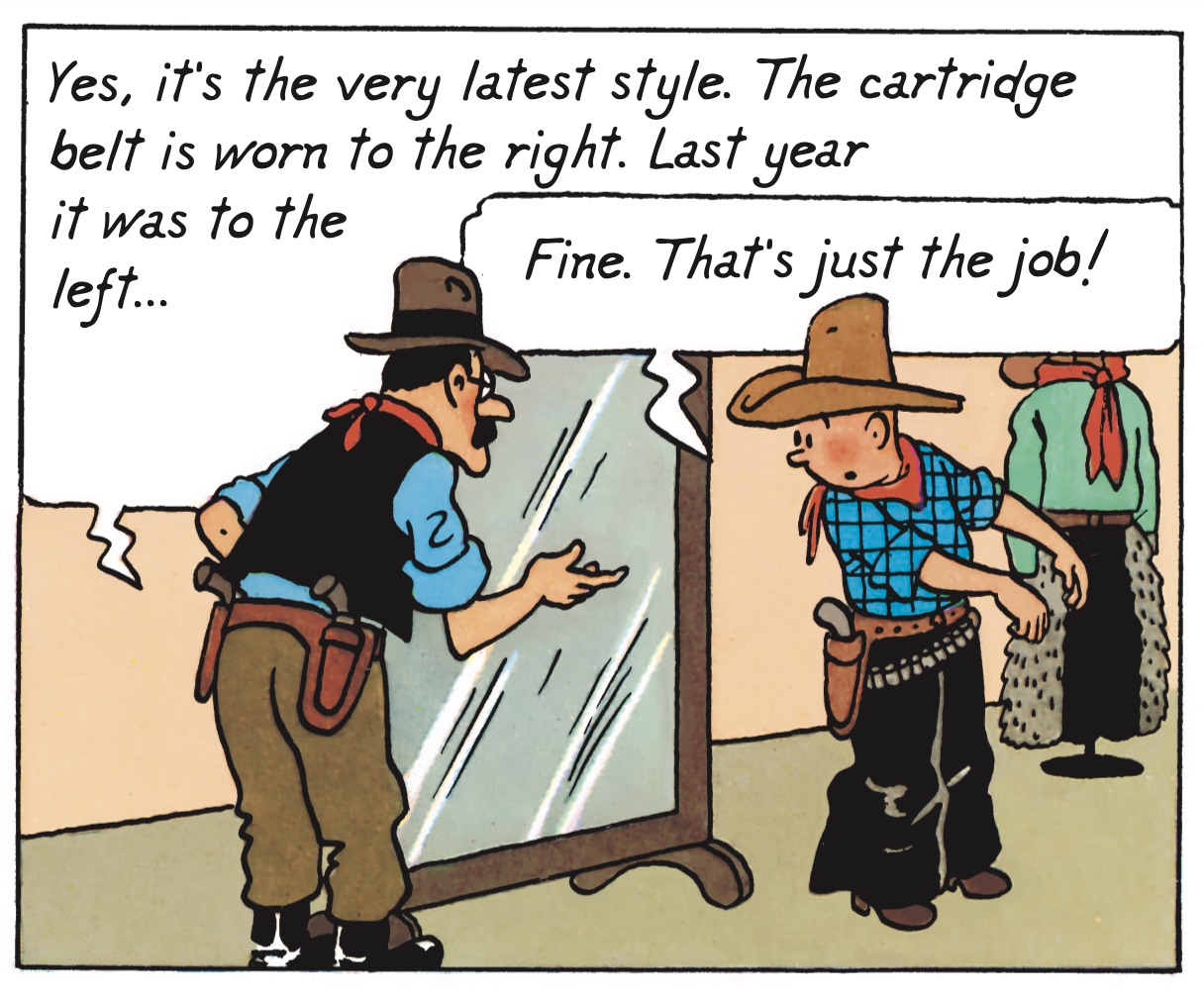
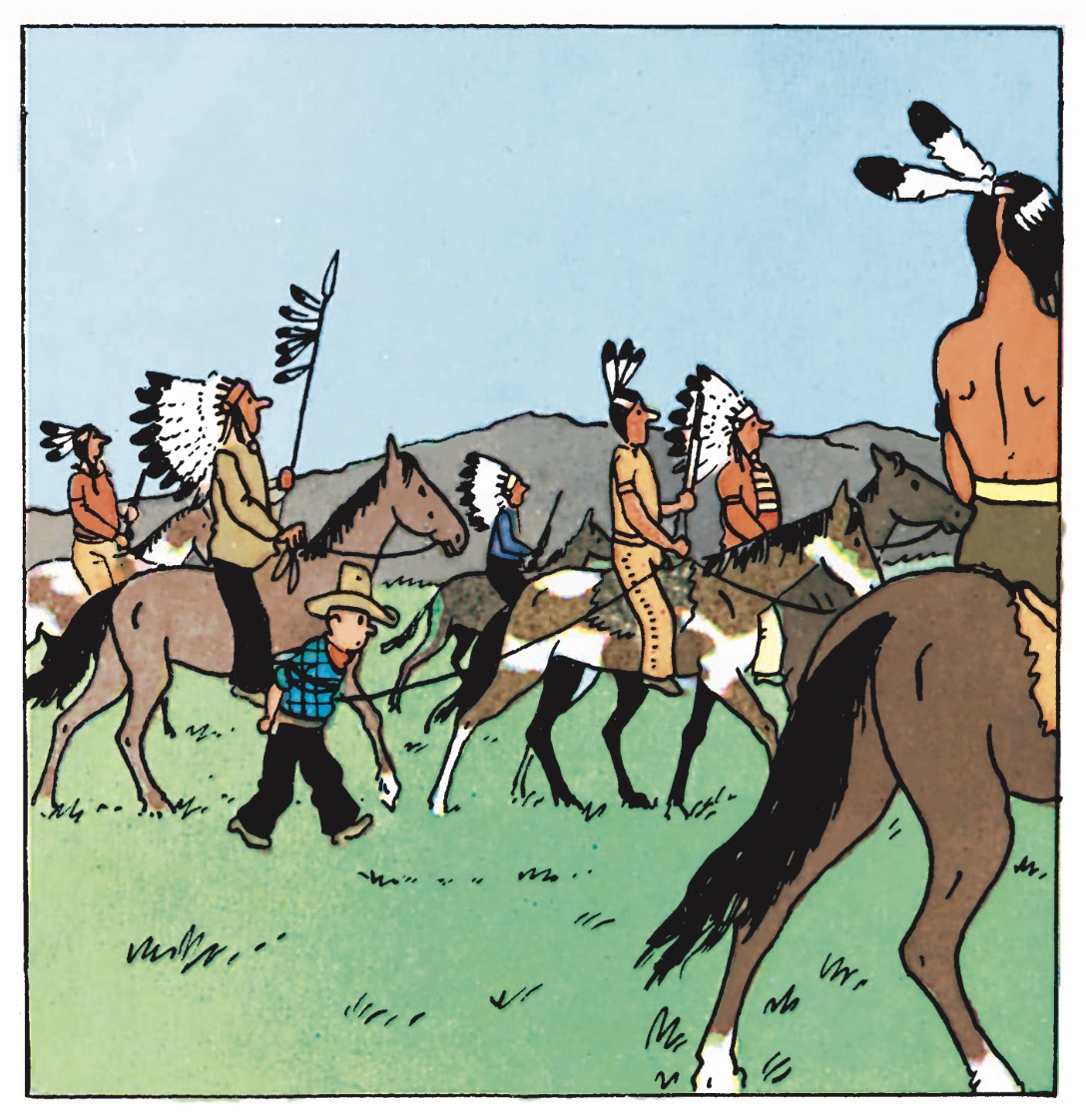
This fascination flows directly into Tintin in America. When the young reporter (appropriately dressed for the occasion) crosses paths with Native Americans, Hergé first summons all the familiar elements of the Far West that fuelled the European imagination at the time: camps, tipis, a tribal chief, capture and the threat of the stake. The artist draws here on a popular mythology that was as familiar to his readers as it was to himself.
When oil drives out the tipis
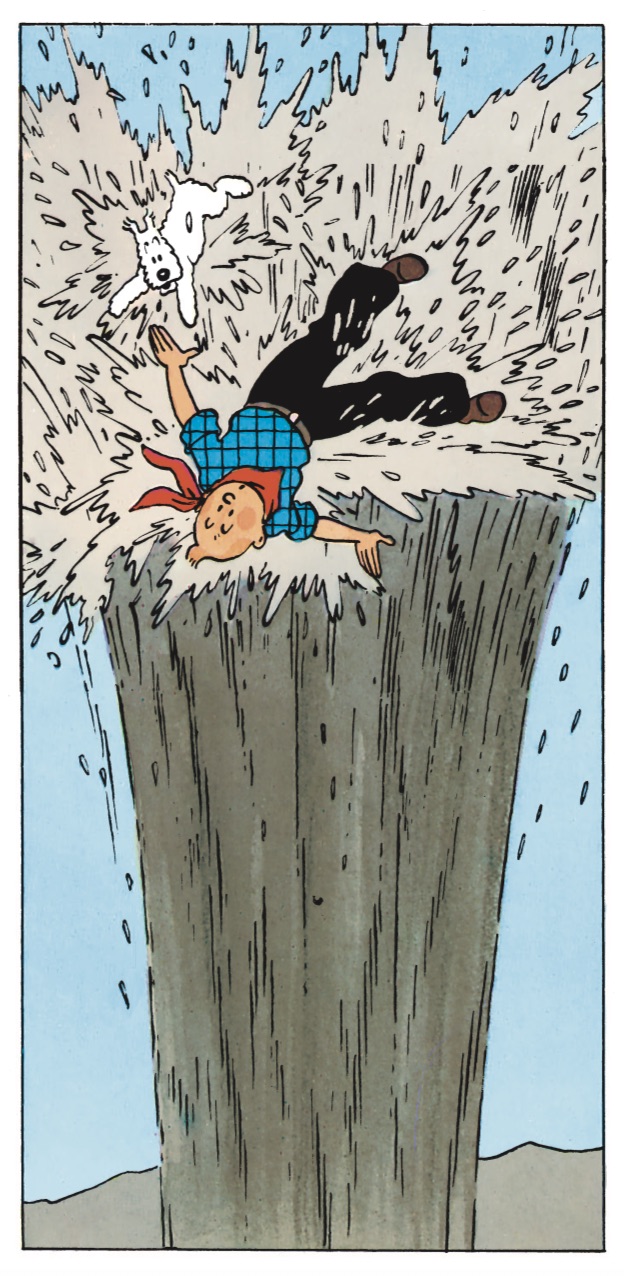
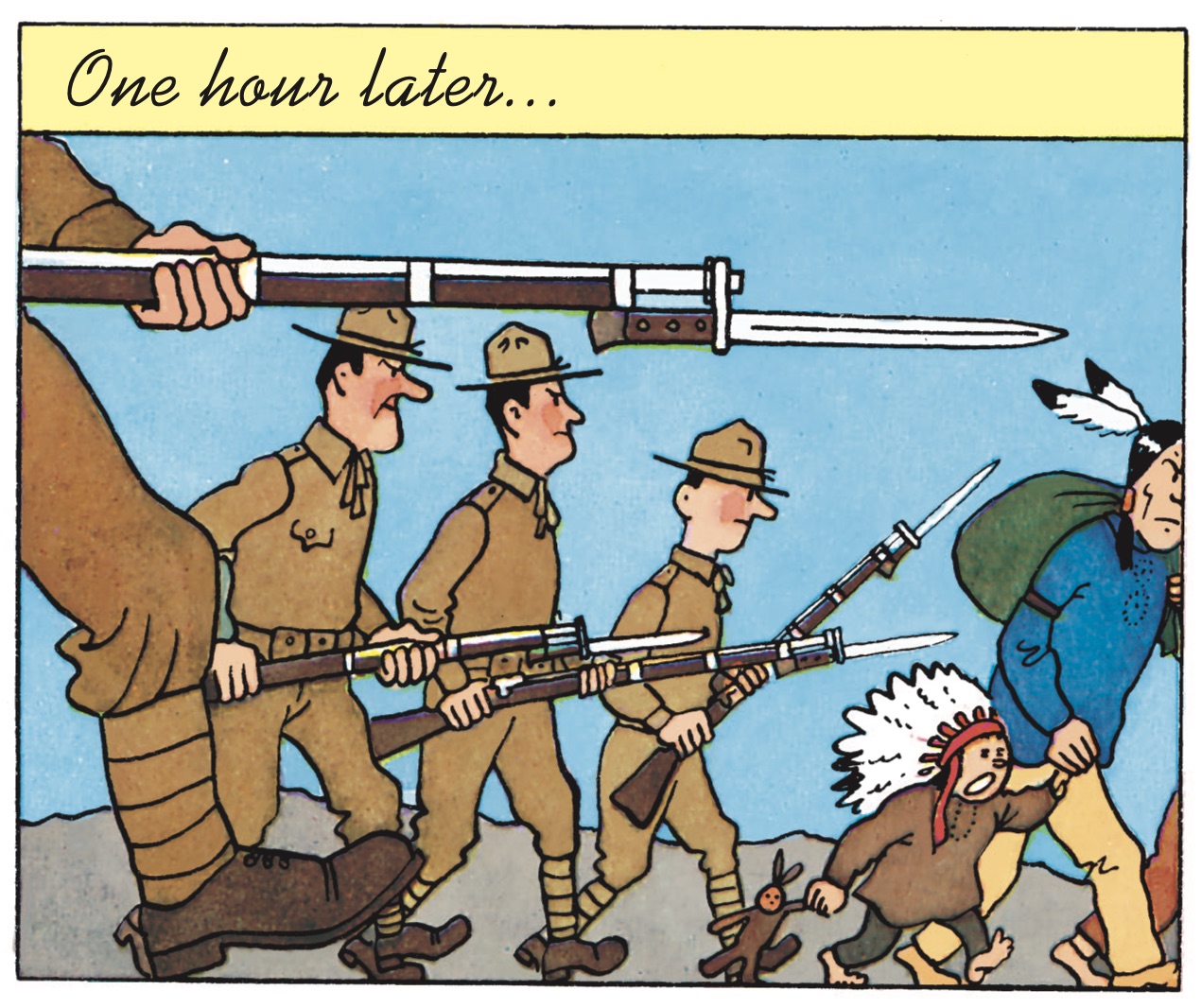
But the album does not stop at this imagery. Behind the western backdrop, another reality soon emerges. With the discovery of an oil deposit on the reservation’s land, the adventure abruptly shifts in tone. Trapped in a cave after one of Bobby Smiles’ dirty tricks, Tintin blows up the rock that imprisons him… and unwittingly releases a gusher of oil. Speculation immediately takes hold, settlers rush in, the army intervenes, and the Indians are driven away. In just a few pages, Hergé moves his story from folklore to dispossession.
This is perhaps where the true singularity of this episode lies. The Redskins of Tintin in America are born from a childhood imaginary, yet they also become witnesses to a very real history. In Hergé’s work, the dream of the Far West already carries within it a critique of the modern world, one where oil, money and speed end up sweeping everything aside.
For a handful of dollars
Although the Indians ultimately occupy only a brief part of the album, their presence remains significant. Hergé would in fact have liked to devote a larger portion of the story to them. But in the popular imagination of the early 1930s, Chicago’s gangsters were just as fascinating as the tribes of the Far West, and criminal adventures appeared to offer a more effective narrative engine.
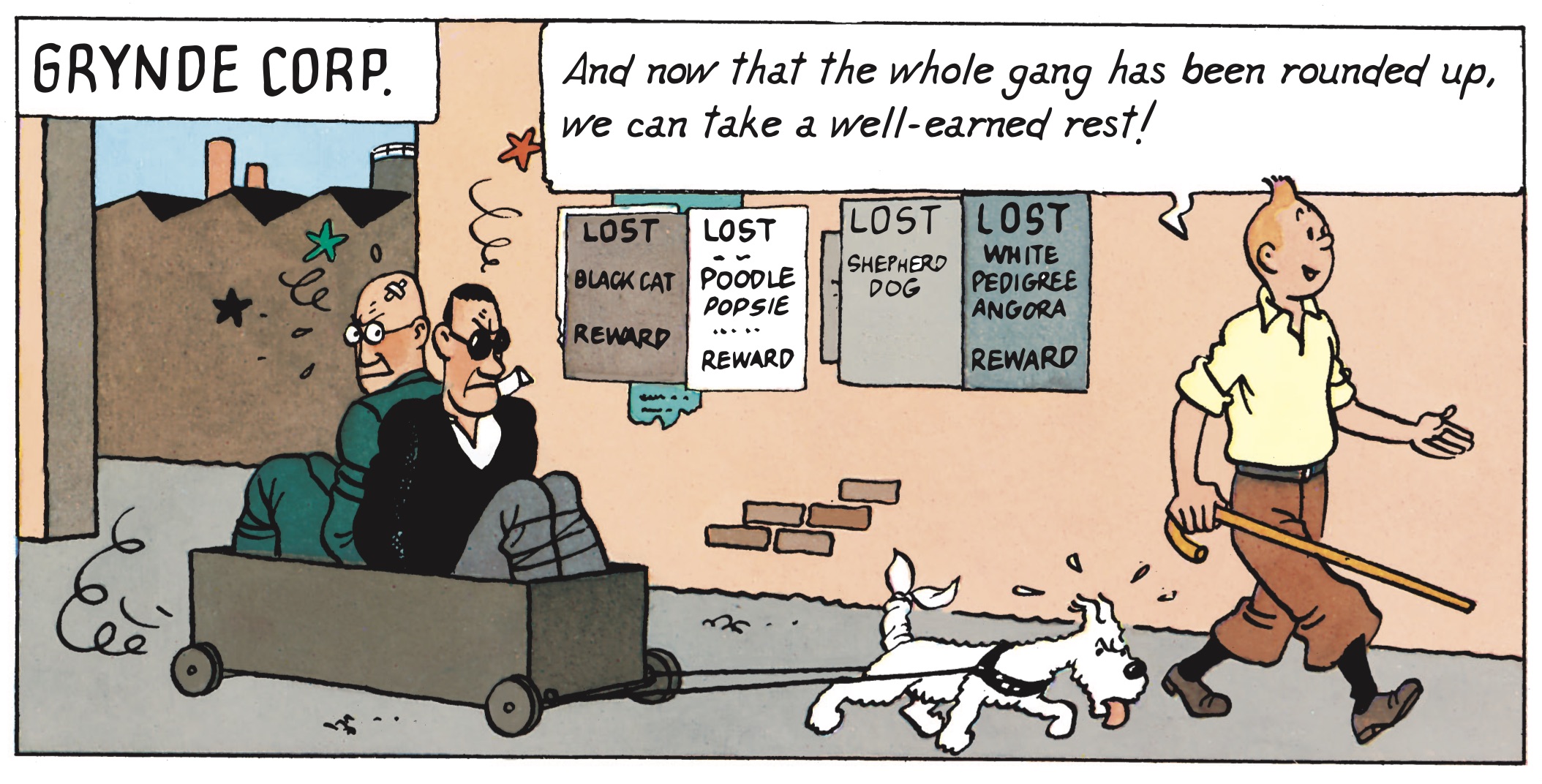
Tintin in America thus oscillates between two contemporary mythologies: that of the Redskins, inherited from adventure stories and scouting, and that of American organized crime, dominated… by the very real figure of Al Capone.
All the same, the album remains strikingly relevant today, and the brave Redskins hold a place of honour within it.
Texts and pictures © Hergé / Tintinimaginatio - 2026


