


 News
News Contest
 Forums
 Collectors
 Videos
 E-books
Hergé, explained: The Crafting of Reality
The return of sunlight in recent days naturally leads us to Prisoners of the Sun, an album in which the sun, both an object of worship and a key element of the resolution, asserts itself with striking clarity throughout the imagery. But where do these vertiginous landscapes come from, these suspension bridges hanging over the void, these stone cities clinging to the mountainside?
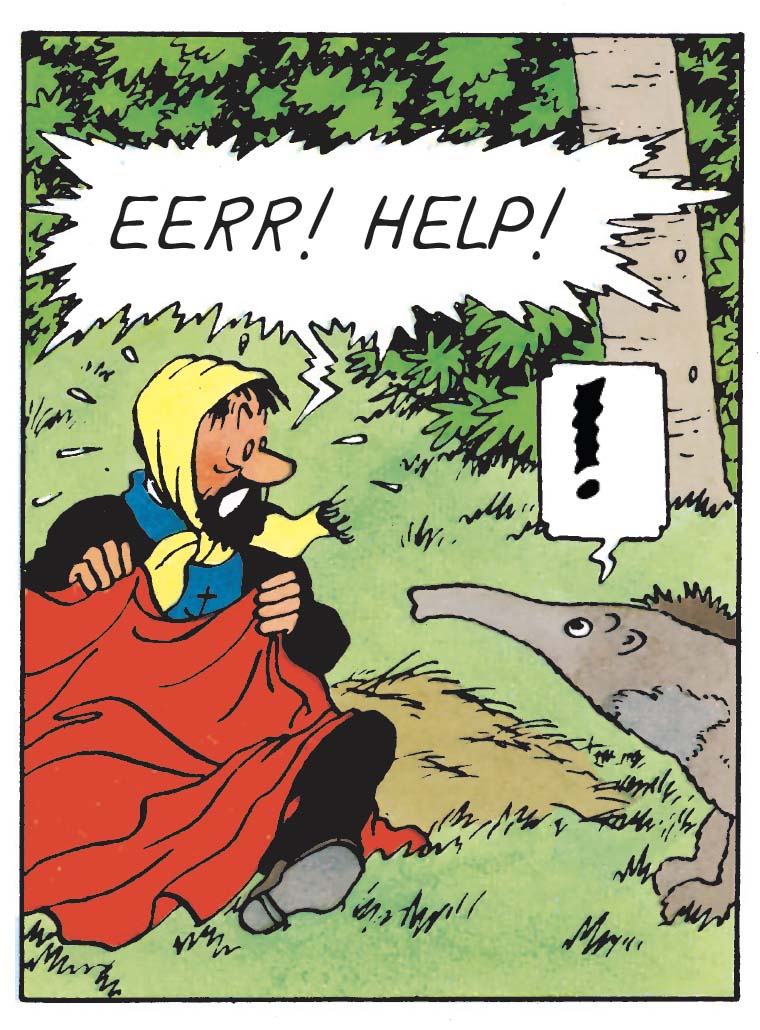
Everything feels so accurate, so precise that one might think it was drawn from a travel sketchbook on the spot. And yet, behind this impression of authenticity, there is no expedition, no fieldwork, only a meticulous process of selecting and recomposing documentation through Hergé’s sharp eye. Every effort has been made in this long journey, filled with obstacles, avalanches, reptiles and even tapirs ready to make Captain Haddock jump. Everything serves to fuel the reader’s imagination.
With this album, Tintin’s creator pushes further than ever an ambition already present in his earlier albums, giving the reader the feeling of a world that is real and tangible. This time, he does not simply invent an exotic setting, he constructs it patiently, piece by piece, from a wealth of documentation. Engravings, photographs, specialized articles, issues of National Geographic, notably those from 1938 devoted to pre-Columbian cultures, as well as Charles Wiener’s Pérou et Bolivie, from which he borrows several engravings almost line for line.
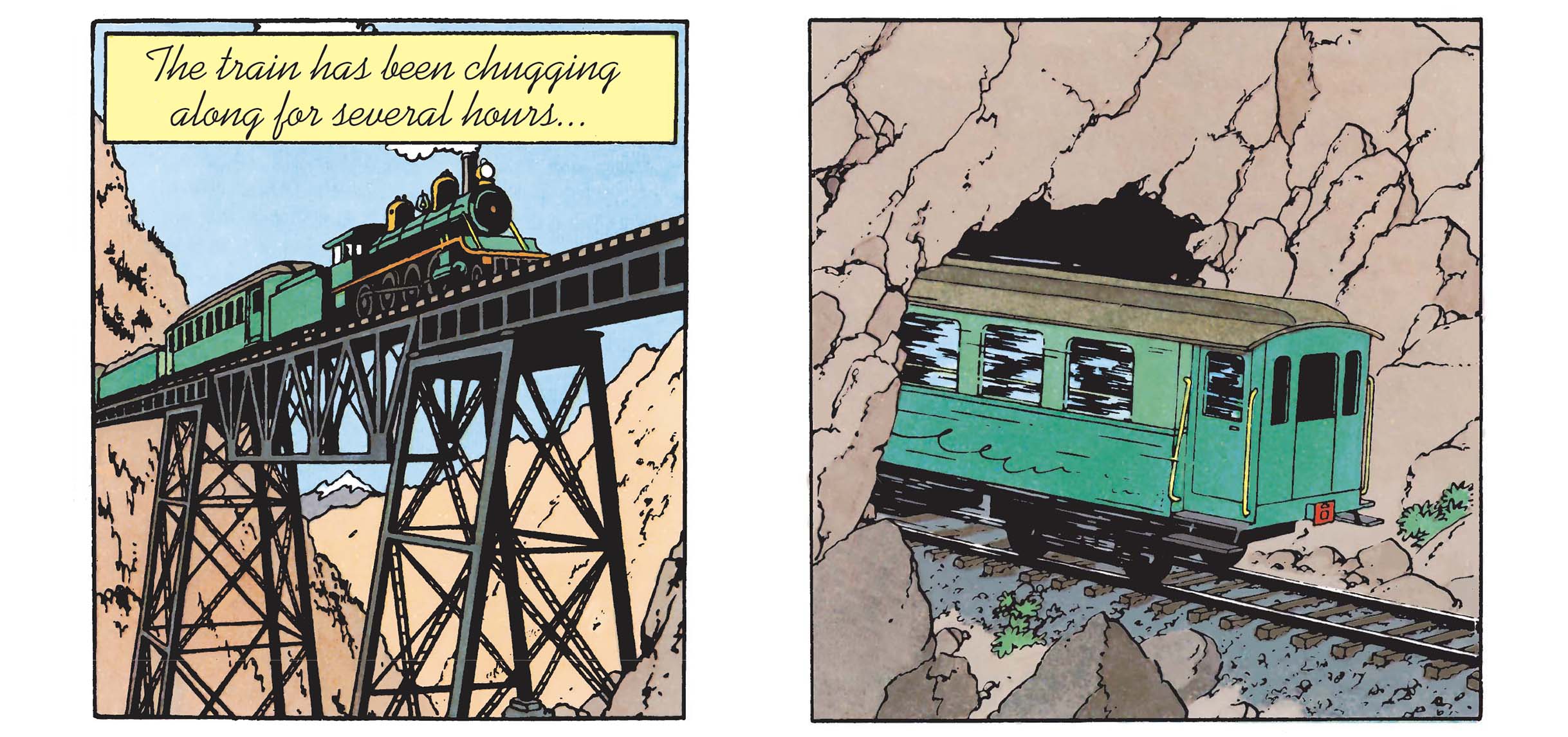
Some images are even reproduced almost identically, the La Galera tunnel, a suspension bridge over the Río Rímac, or the terraces inspired by Machu Picchu. But this is not the realism of a historian. Hergé is, above all, an exceptional storyteller who composes from real elements, reconstructing a Peru that does not entirely exist. Cities shift, landscapes overlap, cultures blend together.
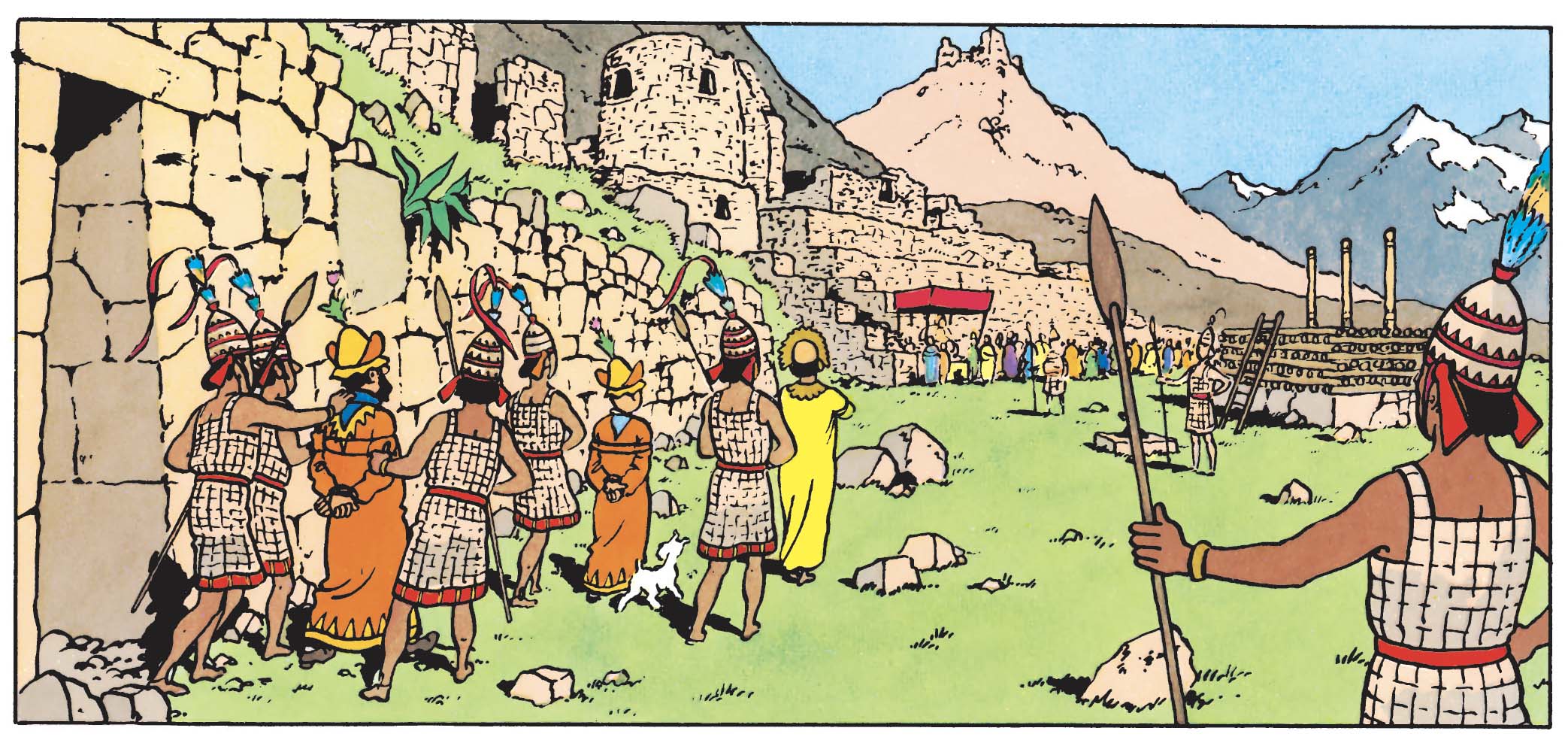
If you are familiar with Andean civilizations, you may have noticed one or two amalgams that raise an eyebrow, a wall from Cusco appears in Jauga (cf. Jauja), A Mochica ceramic finds its way into an Inca tomb, and certain figures bring together, within a single motif, elements drawn from different cultures. Nothing is incoherent, everything is recomposed.
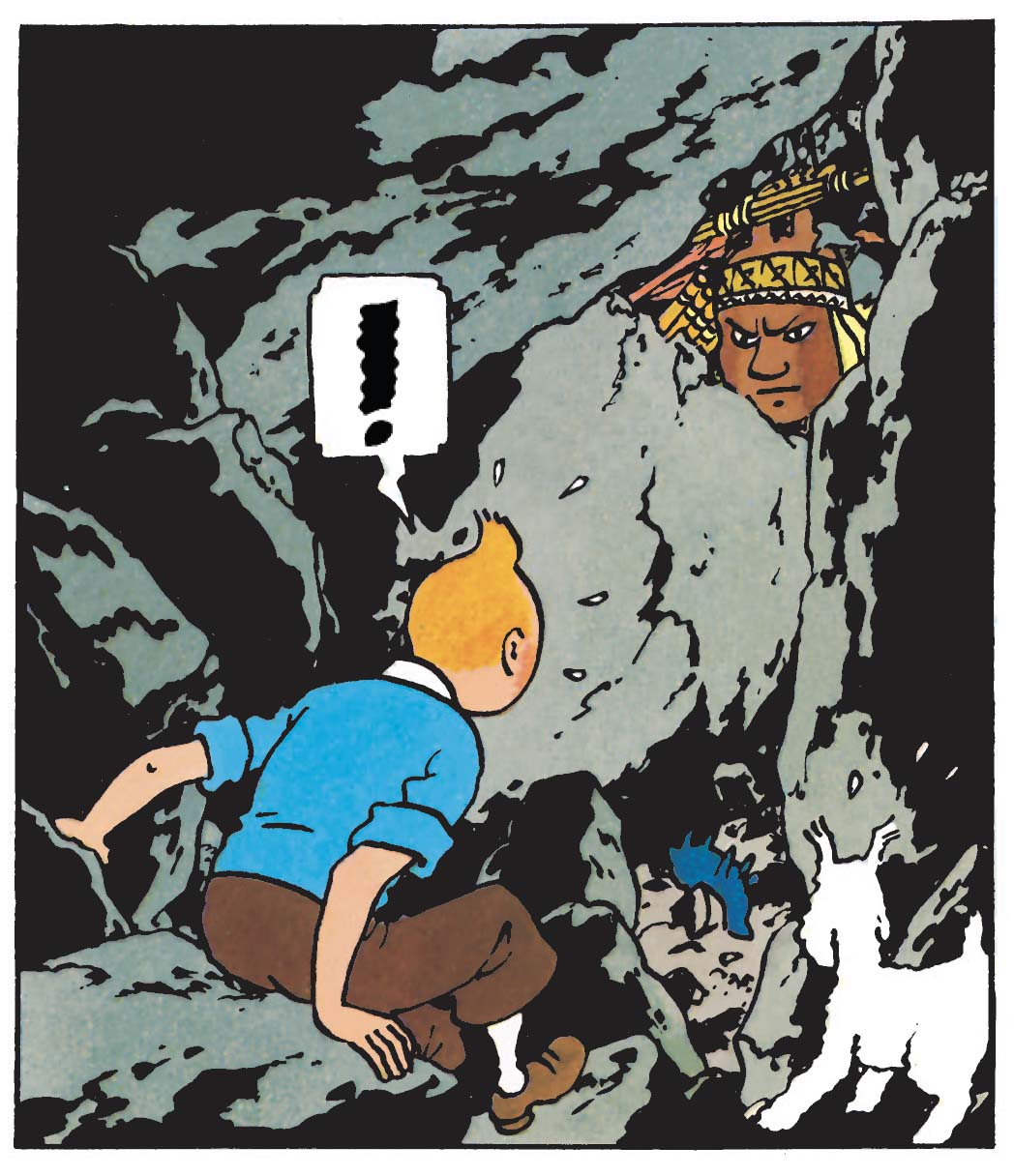
This is Hergé’s method, transforming reality to make it readable. One has to imagine the sheer volume of documentation he handles, sorting, reframing and assembling it to achieve a coherent image. Every detail is selected, simplified and integrated into a composition that is clear, efficient and immediately understandable.
This approach becomes a narrative tool, a way of reinforcing credibility without ever weighing down the story. Even the inaccuracies, such as a reversed eclipse, a North American bear wandering into the Andes, or certain recomposed costumes, go unnoticed, as the whole holds together seamlessly.
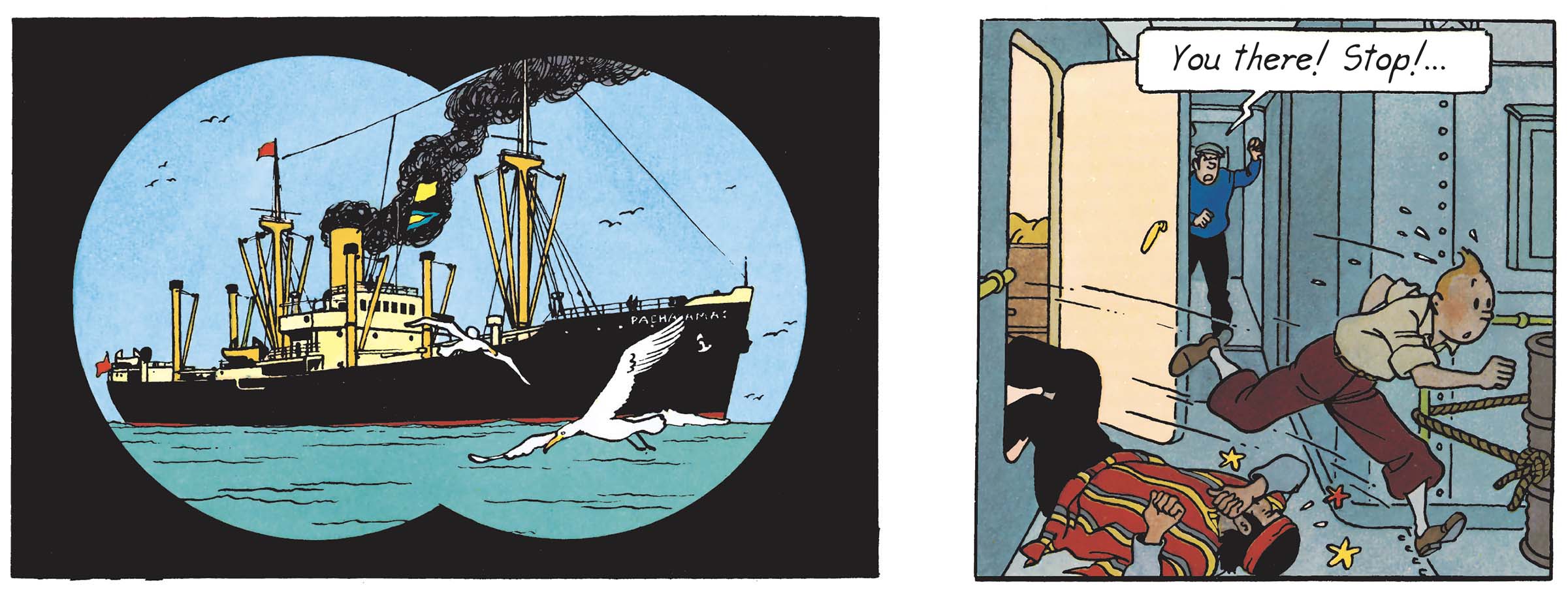
This attention to detail extends even to aspects invisible to the reader. To draw the cargo ship Pachacamac, Hergé obtained the plans of a real vessel, the S.S. Égypte, built in Antwerp (Belgium) after the war, and studied its structure to make Tintin’s movements on board believable. It is not just a matter of drawing a ship, but of understanding how one moves within it, where the holds are, the passageways and the access points.
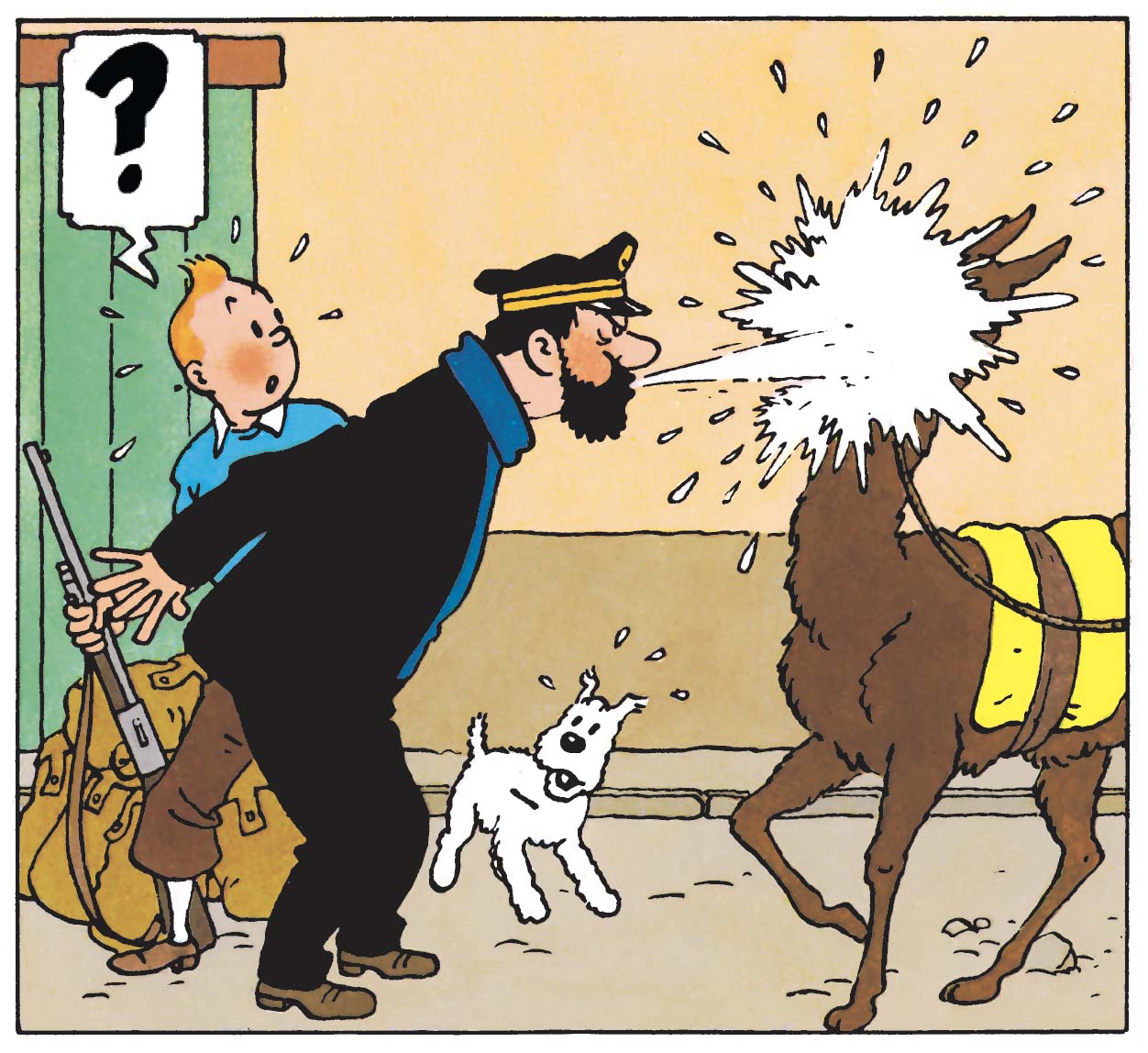
The next time you read Prisoners of the Sun, look at the settings differently. A bridge, a façade, a staircase, everything seems self-evident. The elements hold together, even when they come from different sources or have been relocated. The whole works without revealing its seams. As for the legend of the llama that spits at you, Captain Haddock, for his part, did not wait to find out whether it was realistic.
Texts and pictures © Hergé / Tintinimaginatio - 2026


