


 News
News Contest
 Forums
 Collectors
 Videos
 E-books
The Speaking Vignette: Tintin in the Shadow of the Chinese Mountains
Imagine you are standing at the foot of this mountain, lost in a vast landscape, in the company of Tintin and Tchang, while a world under tension quietly unfolds in the background. We are still in the first half of the twentieth century, a time when China remained largely unknown to most Western audiences. And yet, without realizing it, you are looking at the inspiration for something far older. Once again, Hergé’s magic is at work!
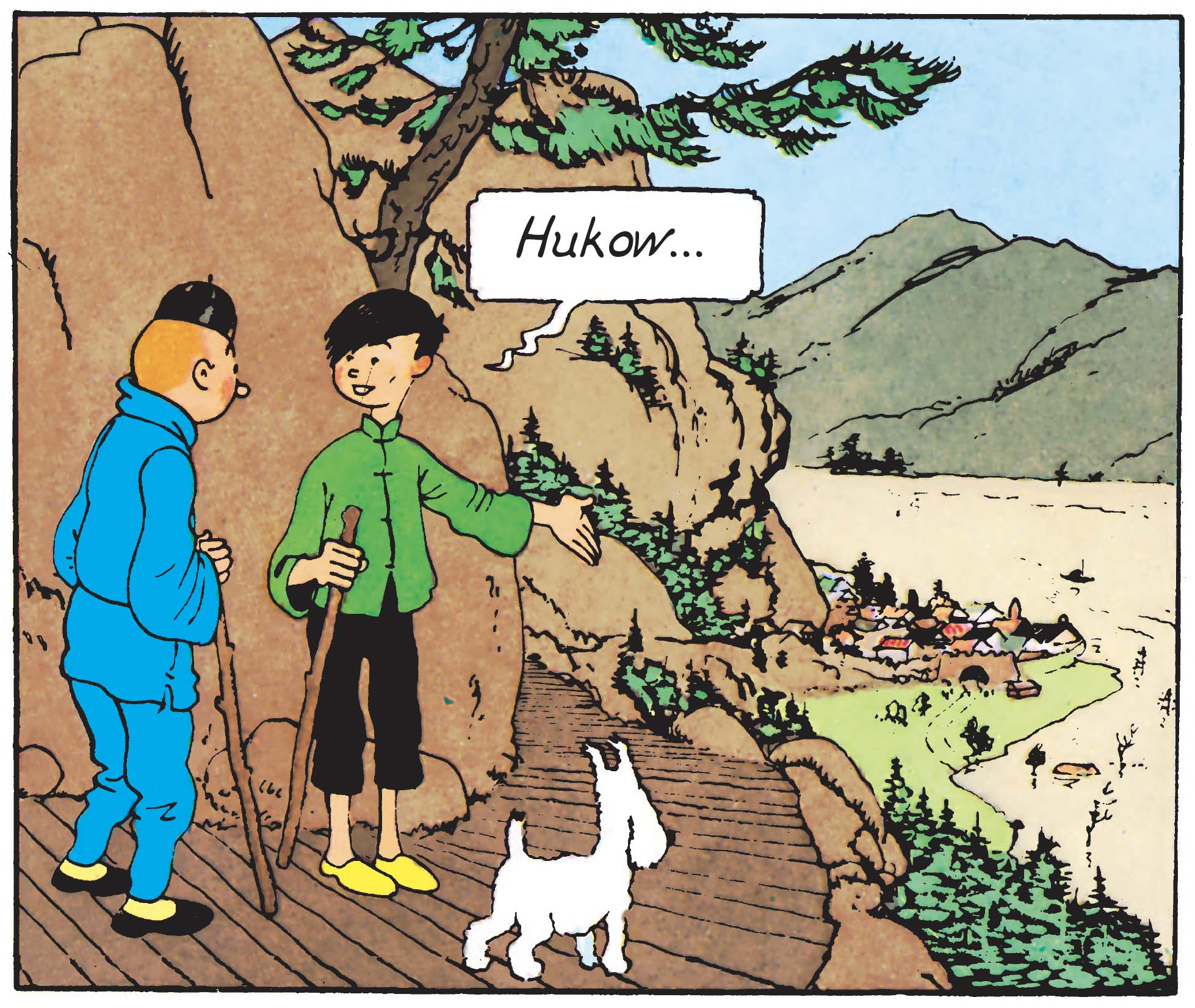
These few vignettes, which might seem like a simple pause between two action scenes, serve no purpose if we strictly follow the progression of the story. Tintin has just saved Tchang from drowning, and the two continue their journey toward Hukow, a fictional village inspired by traditional China.
In this journey, where friendship is woven both in reality and in fiction, Tintin and his new companion lead us into a lesser-known chapter of history. Because what you are looking at is not merely a vignette from The Blue Lotus, but the echo of a real artwork titled Travelers Among Mountains and Streams, painted in the 11th century by Fan Kuan.
This towering mountain and the winding river are not just a tribute to that painting. Hergé reshapes the composition, retains its structural lines, and distills it into a refined image in which a striking idea remains: man is no longer at the center, but becomes a mere element within the landscape.
This encounter with Chinese art is no coincidence. It comes through one man, Tchang Tchong-jen, an art student Hergé met in Brussels, who would profoundly transform the way he drew. More than an advisor, he became a bridge between cultures, providing manuals, introducing brush techniques, revealing the flexibility of line, and above all, teaching the art of suggestion rather than description. As critic Pierre Sterckx points out, the « ligne claire » itself is transformed, becoming less rigid, less harsh, almost breathing.
There is, in this vignette, a striking economy of means. Few elements, few details, nothing superfluous. Hergé keeps only what is essential, remaining faithful to a logic found throughout the album, where every object has a purpose, and where the setting is never there to fill space, but to convey meaning.
In this album, Benoît Peeters speaks of a remarkable work of stylization, where elegance and clarity come together, while Philippe Goddin sees it as a peak, a moment when the influence of Chinese art leads Hergé toward a level of refinement he would never quite reach again.
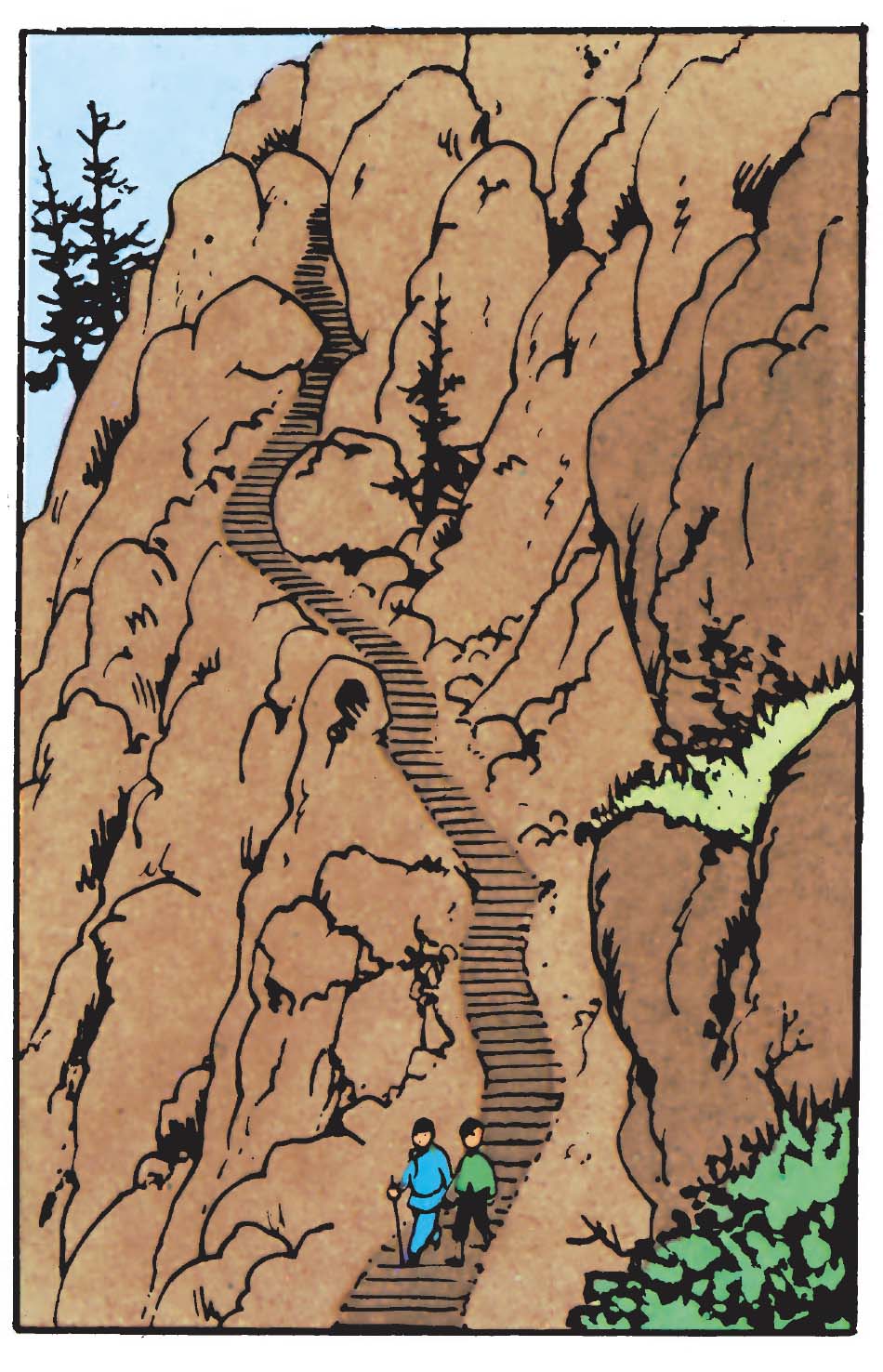
We have already touched upon Hergé’s relentless work ethic, the extensive documentation he gathered, and the meticulous care he devoted to every detail. What this image introduces, almost without our noticing, is another way of seeing the beauty of the world. The shanshui style, this form of landscape art that emphasizes the insignificance of human beings within the vastness of the cosmos. Here, Tintin is no longer a hero in action, but a presence among others, barely visible, almost dissolved into space, as can be seen in the adjacent vignette.
With Tchang, the adventure is no longer a Western projection onto an exotic setting; it becomes a discovery and an attempt at understanding. China is no longer a backdrop, but a culture, with its codes, its symbols, and its own way of conceiving the relationship between humanity and nature.
Hergé no longer simply tells a story; he allows another tradition, another perspective, almost another philosophy to enter his drawing. And while Tintin learns to become more discreet, quite literally blending into the landscape, Thomson and Thompson reappear almost immediately in the city, extravagantly costumed, creating a striking contrast.
Texts and pictures © Hergé / Tintinimaginatio - 2026


