News
News Contest
 Forums
 Collectors
 Videos
 E-books
Tintin Under the Scorching Sun
As a wave of heat sweeps across our latitudes, it becomes difficult not to think of certain Tintin albums where the crushing sun seems to weigh upon the shoulders of the characters themselves. Blazing deserts, shirts soaked with sweat, empty canteens abandoned in the sand, suffocating jungles and… Haddock’s hallucinations!
Throughout Tintin’s adventures, where distant journeys regularly replace the rain-soaked climates of our temperate regions, heat often becomes a genuine physical ordeal. Beneath this blazing sun, bodies bend under exhaustion, footsteps grow heavier, and even the most enchanting landscapes suddenly take on hostile overtones.
One of Hergé’s greatest strengths lies precisely in his ability to convey heat and physical exhaustion amidst chases, gunfire, survival sequences and even a supposed champagne bottle shaped like Tintin himself… but we shall return to that later. A few yellow tones and a deep blue sky are often enough to make the reader understand that Tintin has entered a world dominated by a hostile nature, where light itself begins to feel threatening.
From the Sahara to tropical jungles, from burning desert tracks to sacred temples, Hergé constructs a true geography of extreme climates, and that is precisely what we shall explore in this exclusive feature.
The Desert or Absolute Exhaustion
It is impossible to discuss heat in Tintin without beginning with the great desert crossings imagined by Hergé. In several albums, the desert becomes an almost impassable barrier where landmarks, physical strength and sometimes even reason itself gradually disappear.
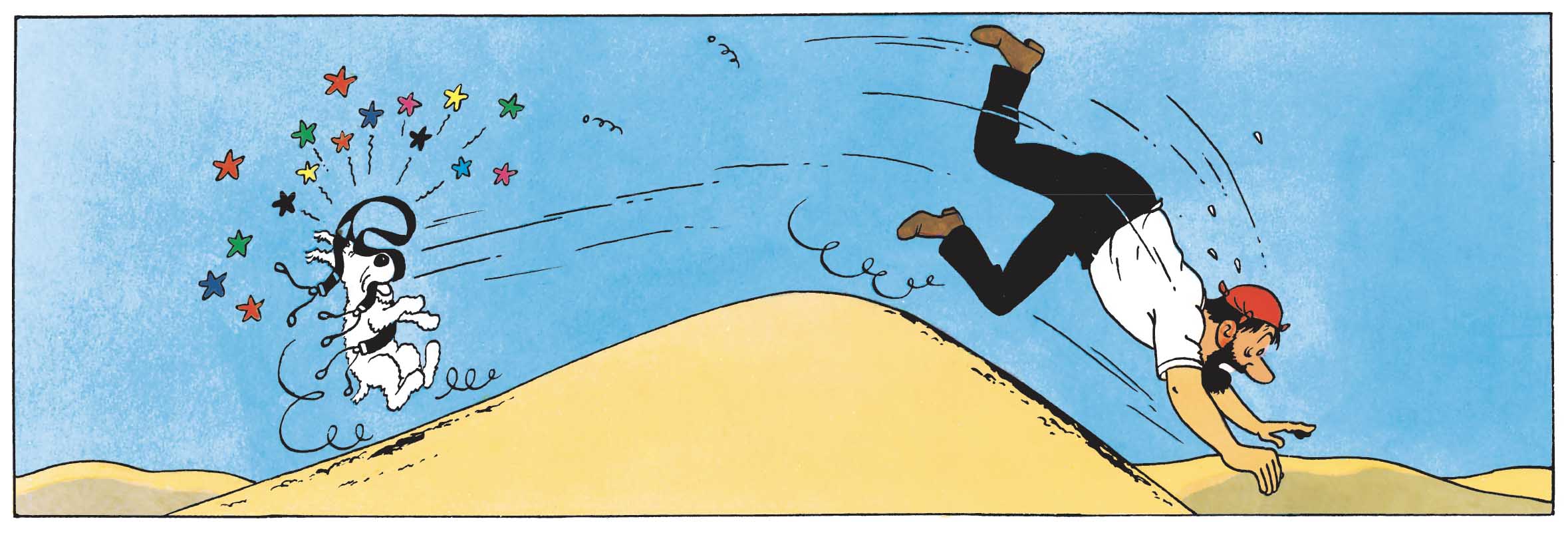
The Crab with the Golden Claws is undoubtedly the most striking example. After their crash in the Sahara, Tintin and Captain Haddock are forced to move forward beneath a merciless furnace across almost empty mineral landscapes. Hergé strips the scenery down to its essentials: sand, sky, light and exhausted silhouettes.
« The land of thirst », grumbles the captain while Tintin presses onward with determination. Faces become distorted by fatigue and hope itself begins to dry up. Even Haddock, usually associated with explosive energy, appears progressively crushed by his surroundings.
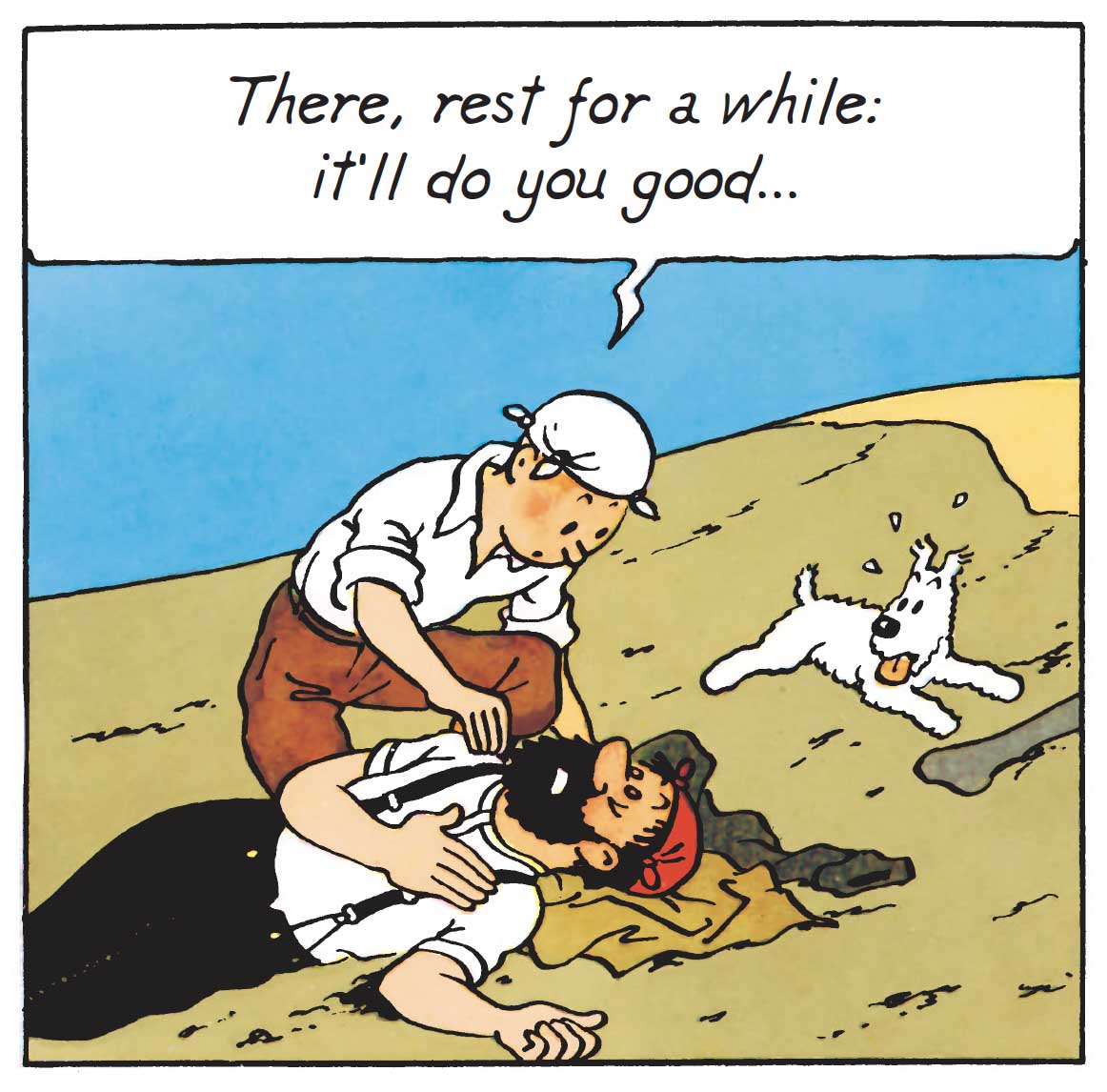
It is also within these scenes that the captain’s famous hallucinations emerge. Convinced he sees bottles and absurd visions in the desert, Hergé transforms heat itself into a form of mental disturbance. In his delirium, Haddock even mistakes Tintin’s head for a gigantic champagne bottle, and the young reporter is saved only thanks to one of Snowy’s bones striking the captain.
Tintin himself eventually begins to suffer nightmares from the ordeal. Unlike many authors who might have relied on spectacular effects, Hergé instead uses emptiness. The vast desert panels reinforce feelings of isolation and vulnerability. One can almost feel the burning stillness of the Sahara.
Khemed and the Burning Landscapes of Oil
With Land of Black Gold and later The Red Sea Sharks, Hergé deepens this representation of the desert world even further. Khemed appears as a territory dominated by dust, rocky tracks, overheated engines and endless expanses scorched by the sun. Even mirages seem to play tricks upon the famous detectives themselves.
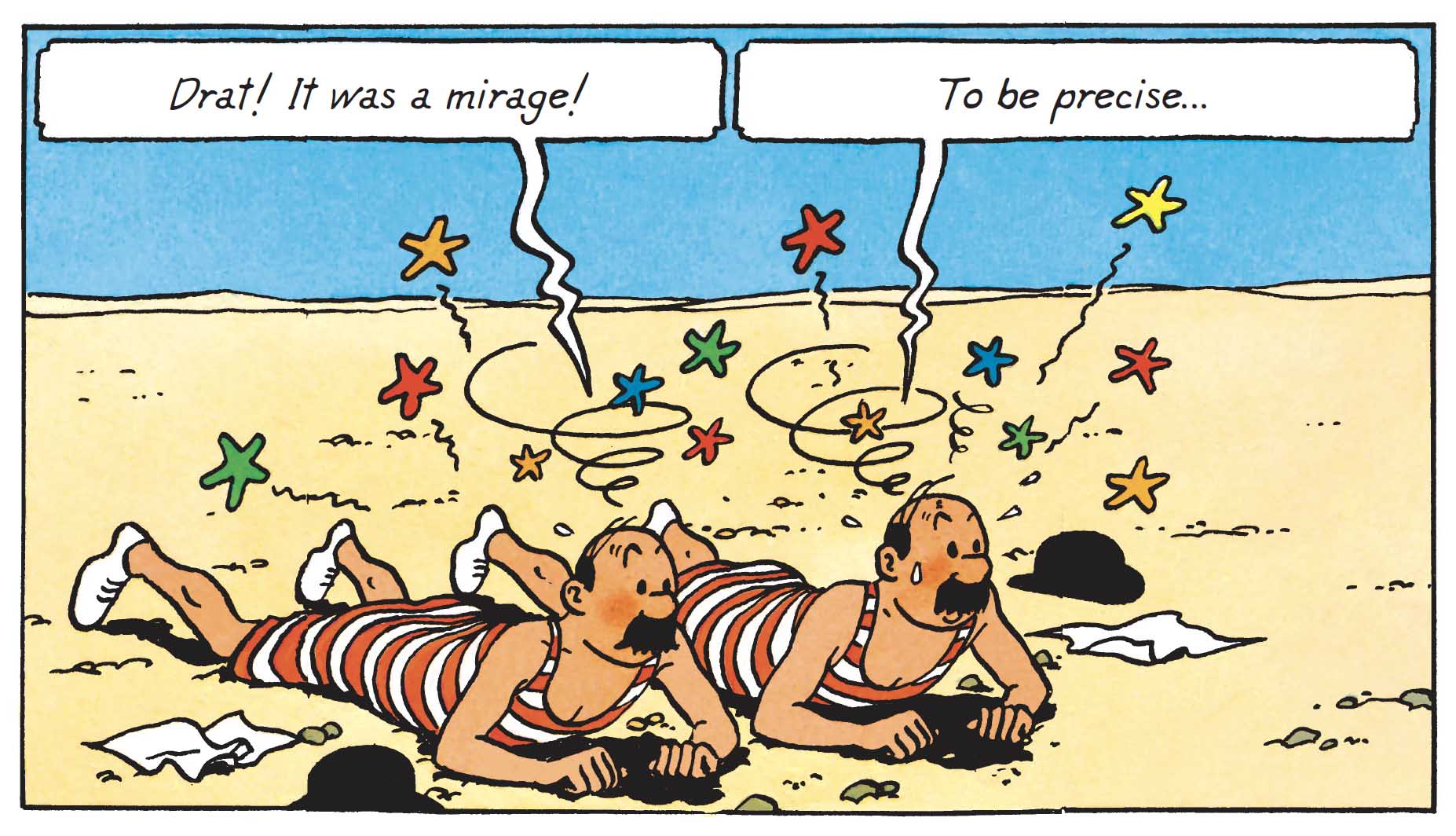
Once again, heat directly influences the action. Travel becomes difficult, vehicles suffer beneath the climate and the characters remain constantly exposed to a hostile environment.
In Land of Black Gold, Hergé multiplies scenes where light itself seems to crush the scenery. Desert roads appear endless, while rocks take on bright yellow and ochre hues, subtle visual details reinforcing the suffocating sensation of heat. Oil itself contributes to this atmosphere. Flaming pipelines and industrial installations accentuate the impression of a dry, mechanical and burning world.
The album goes even further: several scenes show Tintin, mistreated by his captors, abandoned in the desert and advancing until total exhaustion before collapsing beneath the heat. He must also endure the effects of the khamsin, a violent sandstorm. Between unbearable travel conditions, thirst and blindness amidst endless clouds of sand, Tintin survives only thanks to a well-timed rifle shot used to reveal his position and allow the detectives to rescue him.
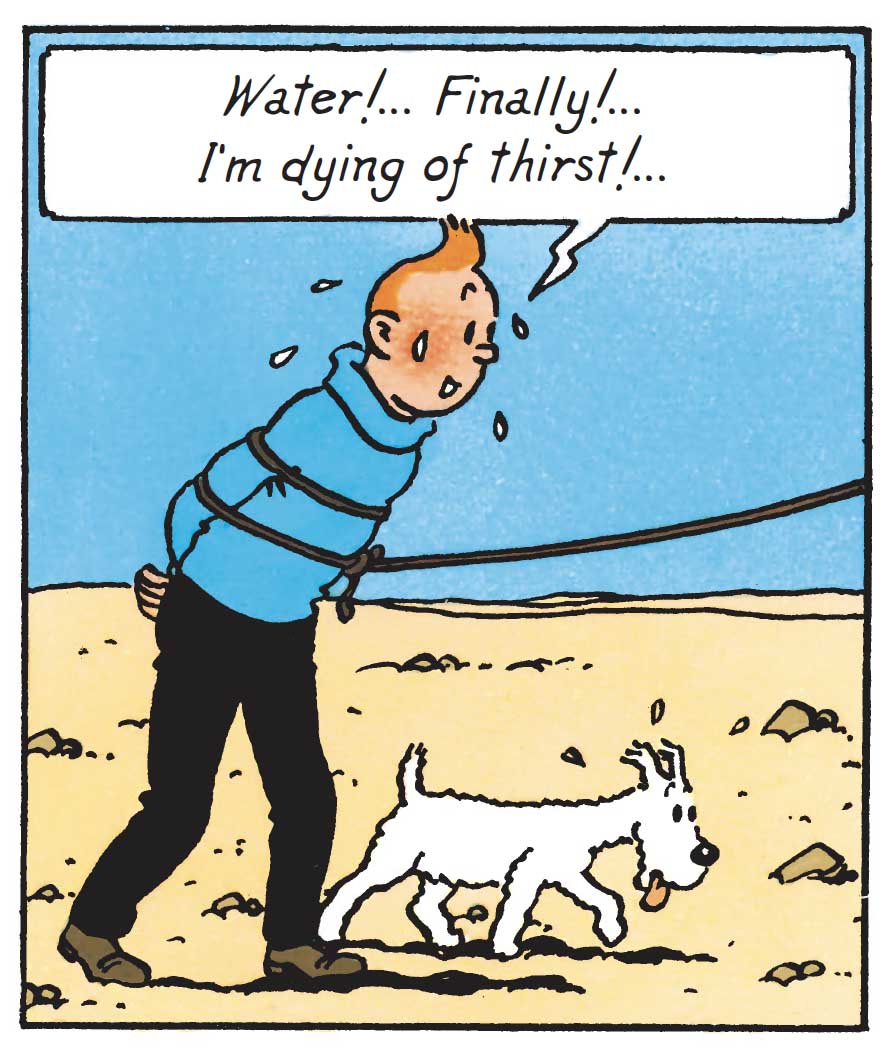
The Red Sea Sharks continues this atmosphere by shifting part of the action toward the Red Sea, even passing through Petra itself. Yet even at sea, heat remains omnipresent. Cargo decks seem stifling, raft sequences beneath the blazing sun become exhausting and the characters’ fatigue gradually accumulates throughout the breathless narrative.
Jungles and Tropical Heat
In contrast to the desert, several albums portray a humid, heavy and almost suffocating form of heat. This time, danger no longer comes from emptiness, but from excessive vegetation, humidity and density.
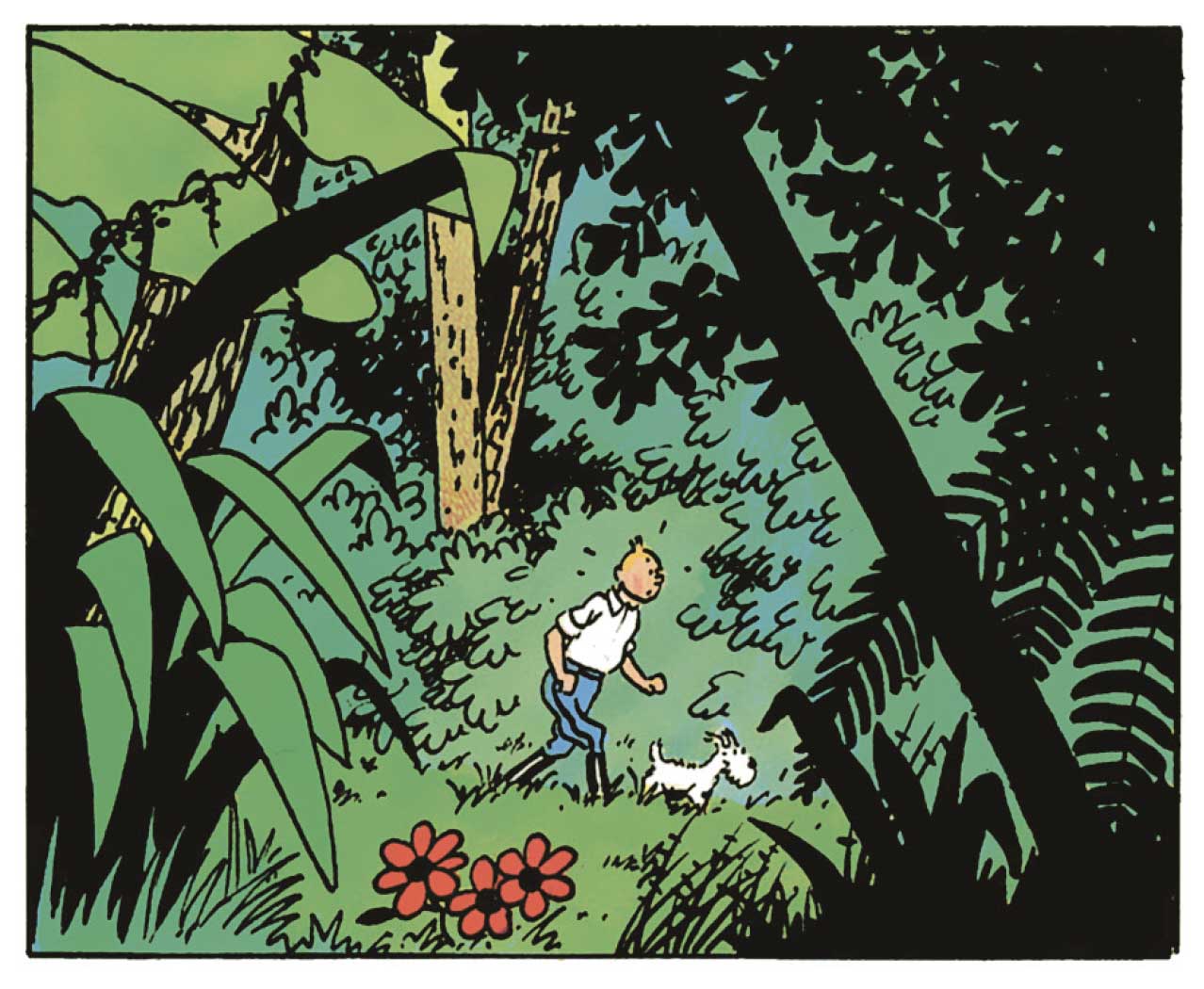
The Broken Ear is probably one of the finest examples of this oppressive tropical heat. As soon as the story enters the jungle, Hergé profoundly alters the atmosphere of his artwork: the scenery becomes denser, foliage invades the panels and the characters themselves appear slowed by their environment. Our explorers cross marshlands, confront wild animals, piranhas and indigenous tribes while struggling through jungles so dense that the vegetation itself seems determined to close around them.
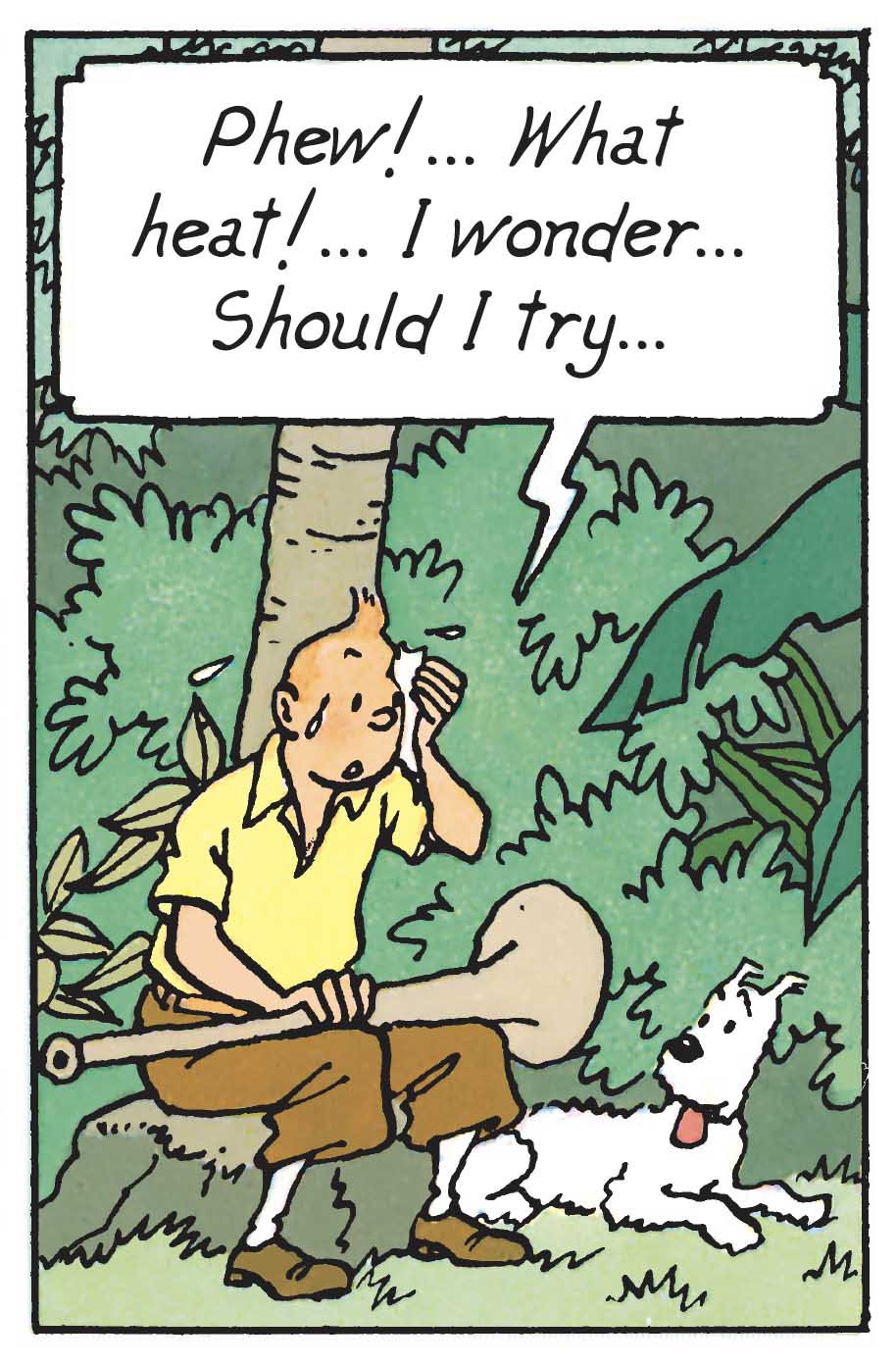
Unlike the desert, where the horizon remains immense despite the heat, the jungle constantly reduces visibility and traps the characters within a humid and oppressive world. Readers themselves share this sensation of confinement, reinforced by dark greens, dense scenery and thick vegetation.
Years later, Hergé would revisit some of these elements in Flight 714 to Sydney, whose isolated tropical island also bathes in a heavy and humid atmosphere where dense vegetation directly contributes to the album’s strangeness.
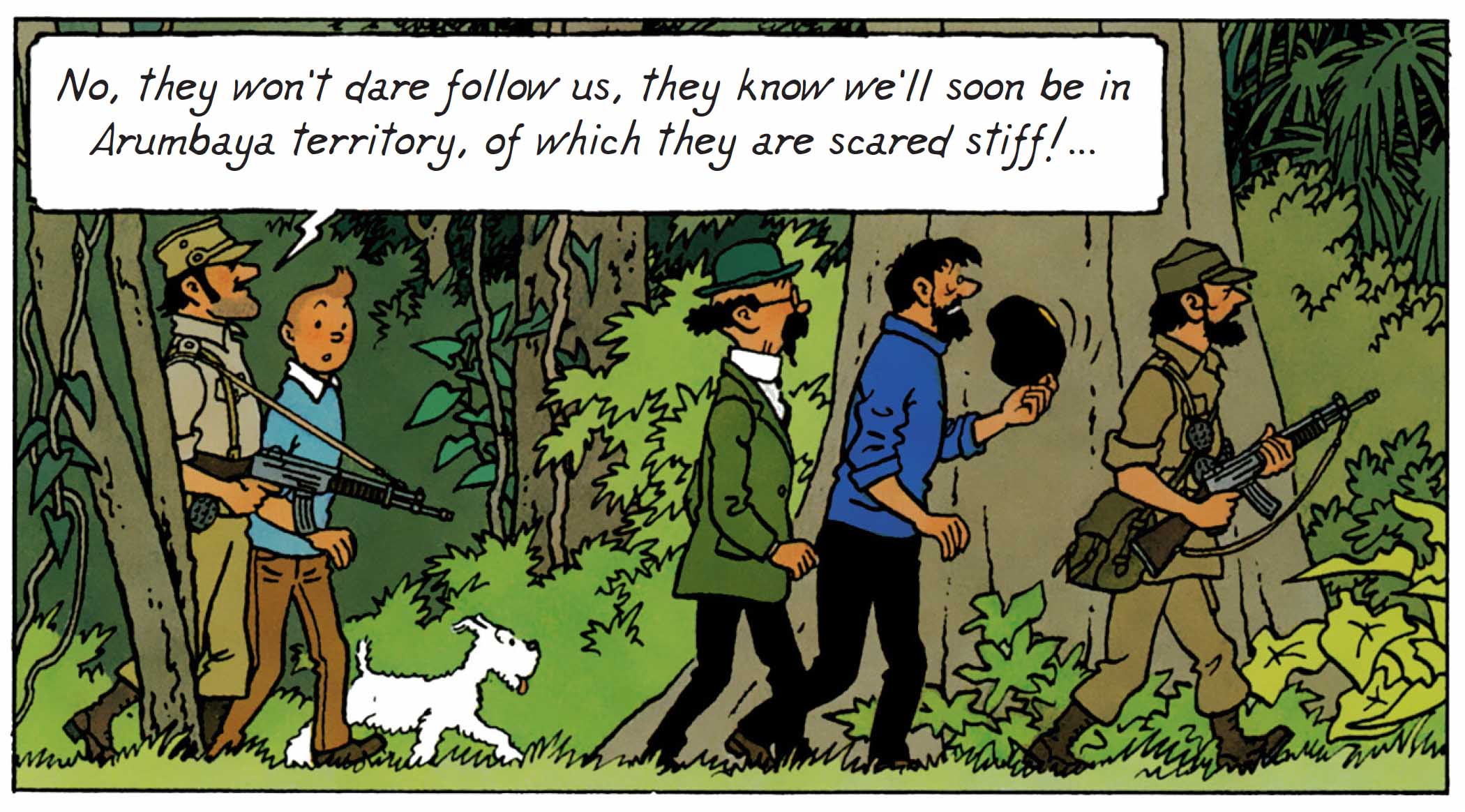
Later still, in Tintin and the Picaros, the jungle of San Theodoros appears equally heavy, humid and exhausting. Alcazar’s guerrillas live numbed by heat, humidity and alcoholism, as though the tropical vegetation itself were gradually contributing to both their physical and moral decline.
The Sun as Sacred Power
We already witnessed this fascination in the earliest albums. In Cigars of the Pharaoh, for instance, Hergé alternates between several forms of heat, moving from burning deserts to suffocating oriental cities before plunging Tintin into more tropical sequences in India. Yet behind these various atmospheres, one final element still remained: the one that would ultimately decide the fate of our heroes themselves.
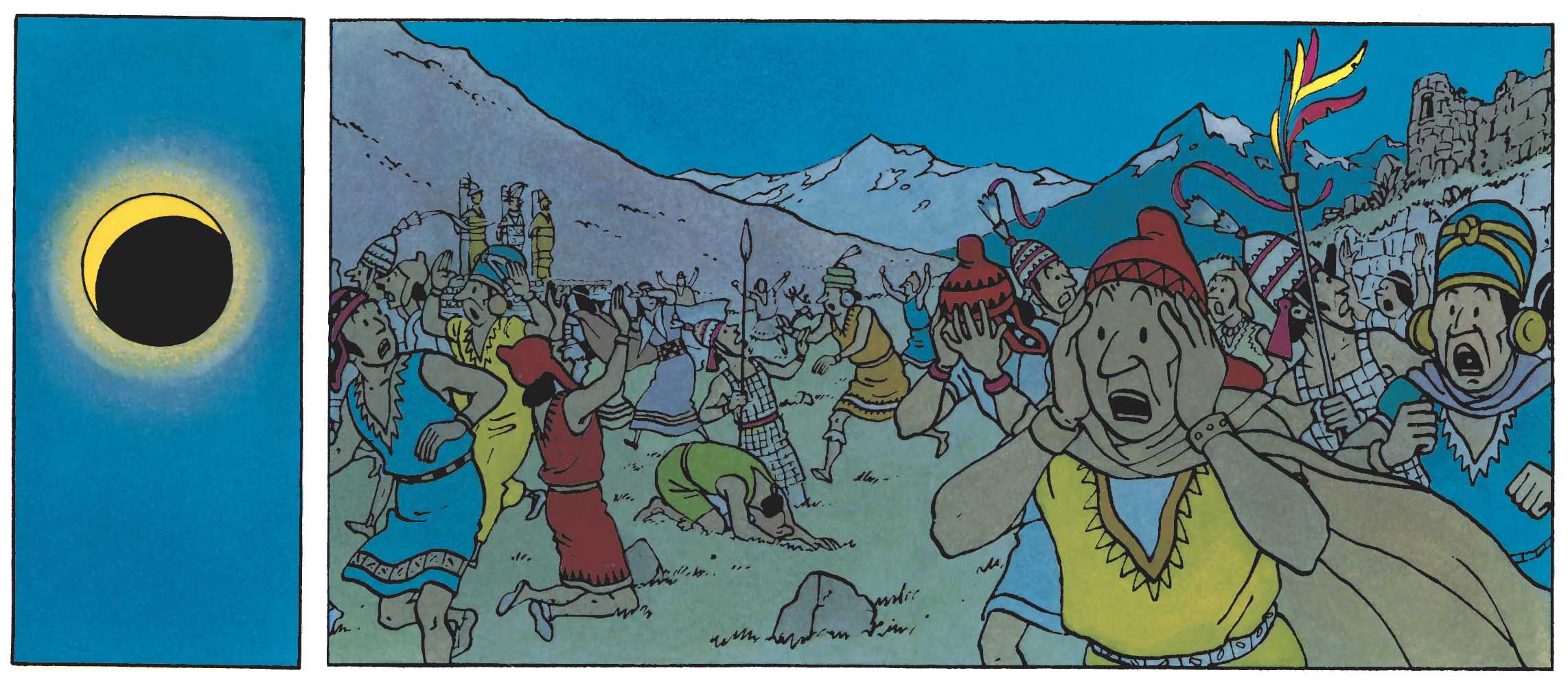
For there is one album we have not yet discussed, and it is precisely there that the sun, or more accurately its disappearance, becomes the very element capable of saving our heroes. In Prisoners of the Sun, the solar star becomes a sacred force around which the entire Inca civilisation imagined by Hergé is organised. Temples open toward the sky, ceremonies and vast luminous scenes give the sun an almost permanent presence throughout the album.
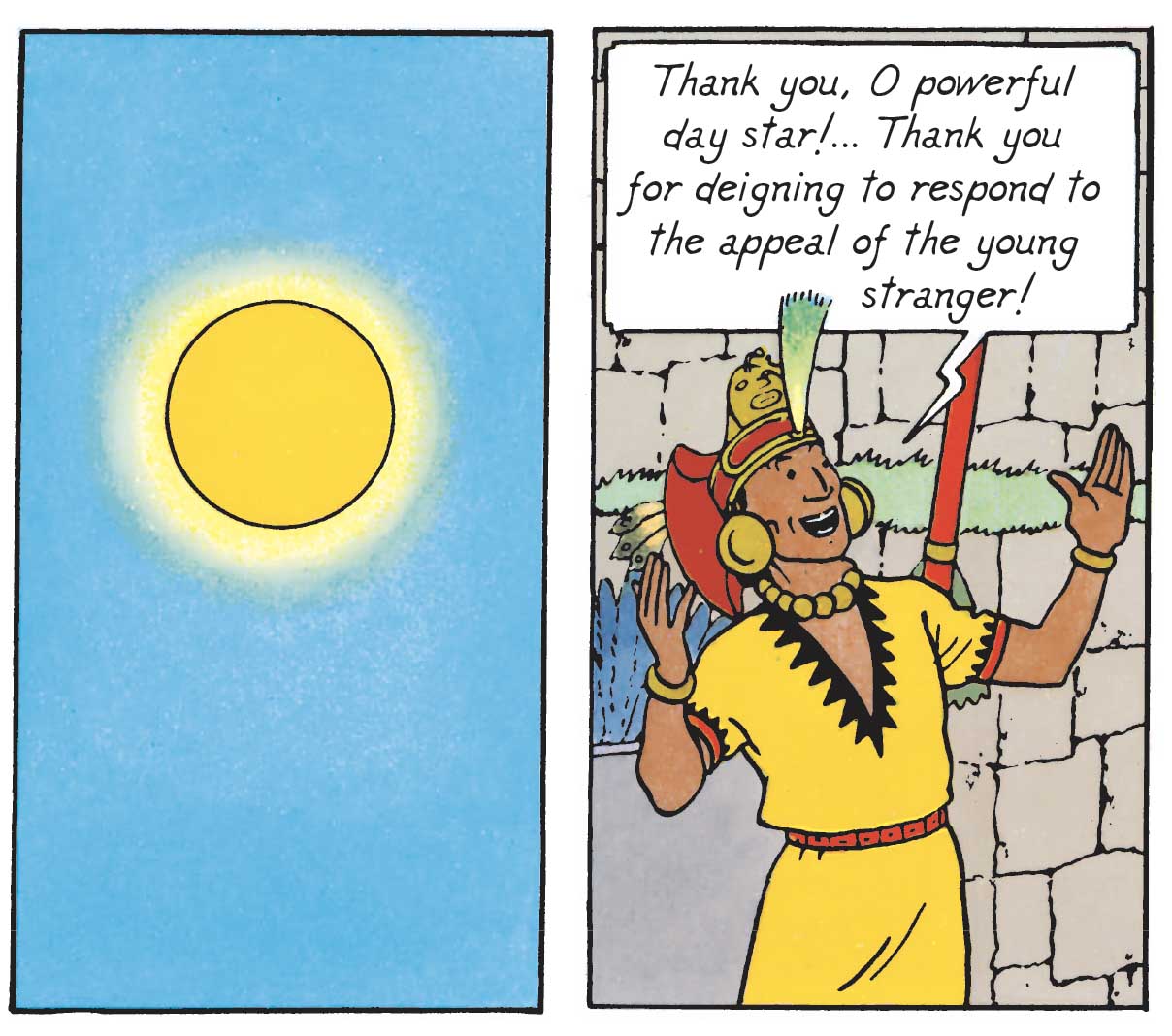
The climax, of course, remains the announced sacrifice of Tintin and Haddock. The entire tension of the sequence rests upon the sun itself and the gradual progression of the eclipse. The final eclipse transforms the celestial body into an instrument of power, Tintin using his astronomical knowledge to convince the Incas that he himself commands the sun. An unexpected triumph for our heroes.
A Physical Adventure Above All
Revisiting the albums today reveals just how much Tintin’s adventures rely upon a deeply physical confrontation between our quiff-haired hero and his environment, itself becoming a silent secondary character hidden within the « ligne claire ».
Mountains, snow, storms, oceans, jungles and deserts are never mere exotic scenery. Hergé constantly transforms these settings into real obstacles capable of exhausting, slowing or endangering his characters. One need only observe Haddock’s furious outbursts, the detectives’ absurd remarks or Tintin’s unwavering courage in the face of such adversity.
And heat, for its part, holds a unique place, as it adds a deeply physical dimension to the sense of adventure. Perhaps this is precisely where part of Hergé's genius lies: with just a few lines and a handful of colors, he manages to make millions of readers around the world feel both the scorching furnace of the desert and the clinging humidity of the tropical green hells.
Texts and pictures © Hergé / Tintinimaginatio - 2026