


 News
News Contest
 Forums
 Collectors
 Videos
 E-books
A signature hairstyle
An oval face, two dots for the eyes, a circle for the nose. Nothing suggested that Tintin would become – graphically speaking – a hero who stands out from the crowd. And yet…
Because he’s worth it
At the start of his first adventure, the trainee journalist sports a… ‘Boy Scout’ haircut. It is, indeed, a very ‘conventional' style. It’s short, classic and, above all, easy to maintain. The hair is slicked back and combed forward to form a discreet tuft just above the forehead. In short, a model hairstyle that must have been approved by all the mothers of the time.
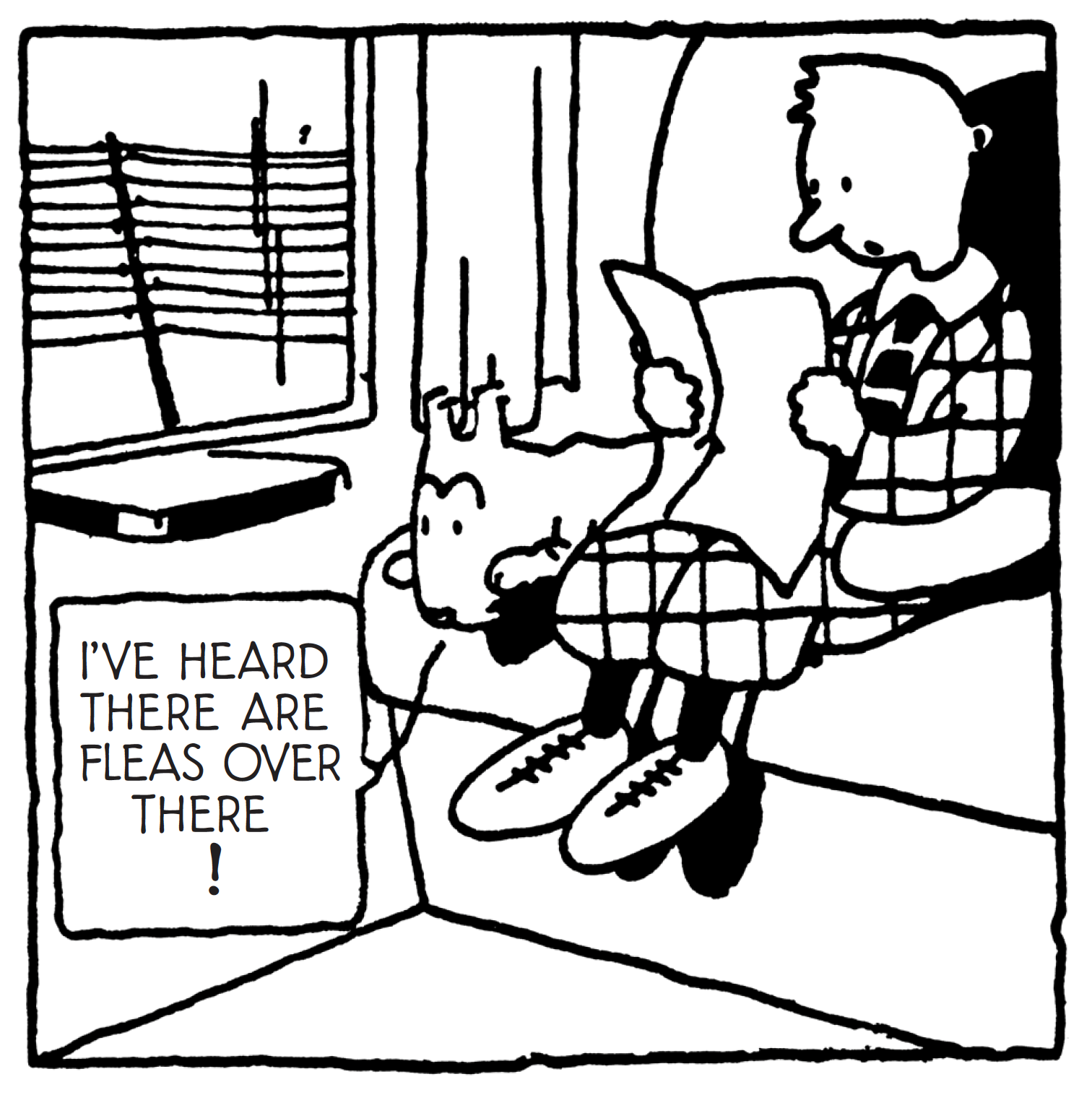
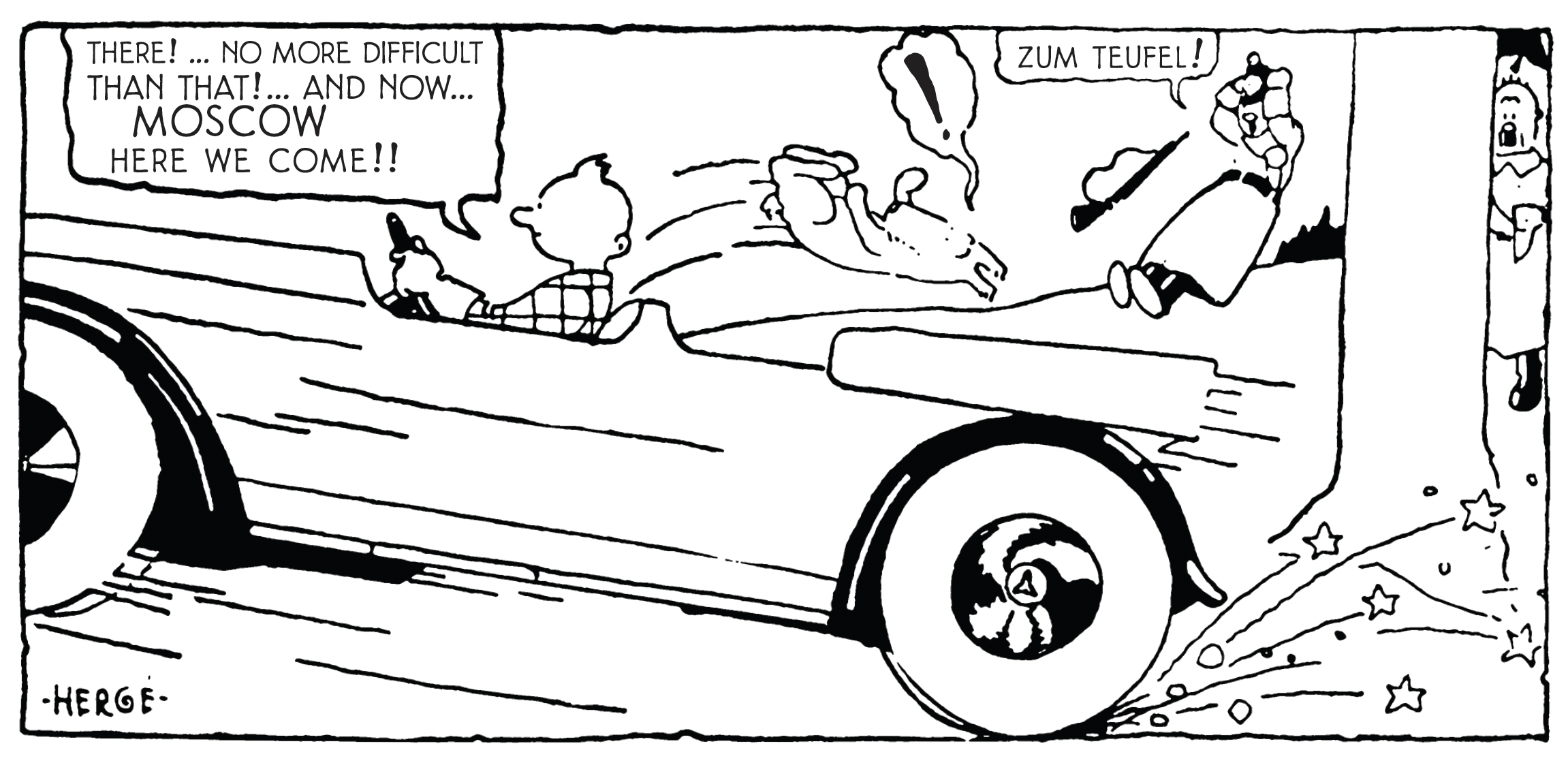
However, they hadn’t reckoned with the fact that, on the eighth page of the comic strip, Tintin jumps into a car. And as he accelerates so fast the young native from Brussels is left with a permanent hair-related quirk that he would never be able to shake off: his famous quiff.
By tossing that lock of hair back as he speeds along, Hergé is already reinventing his hero… who has only just been created. Thanks to this, the bland, run-of-the-mill character of the early days is instantly transformed into a figure of movement. And thank goodness for that! Because Tintin is tailor made for the road.
He’s a young man of action, always on the go. A bundle of energy and boldness who can’t sit still. Suffice to say that this hair (r)evolution is much more in keeping with his true nature. So from now on, it’s… hair blowing in the wind as he sets off on his adventure.
Even when wet, they are often dry
Another notable feature—and by no means the least important—is that Tintin’s hairstyle regularly defies the laws of nature. Whereas ordinary people would emerge from a downpour or a sea spray with their hair flat and limp, or even completely dishevelled, Tintin, for his part, comes out unscathed.
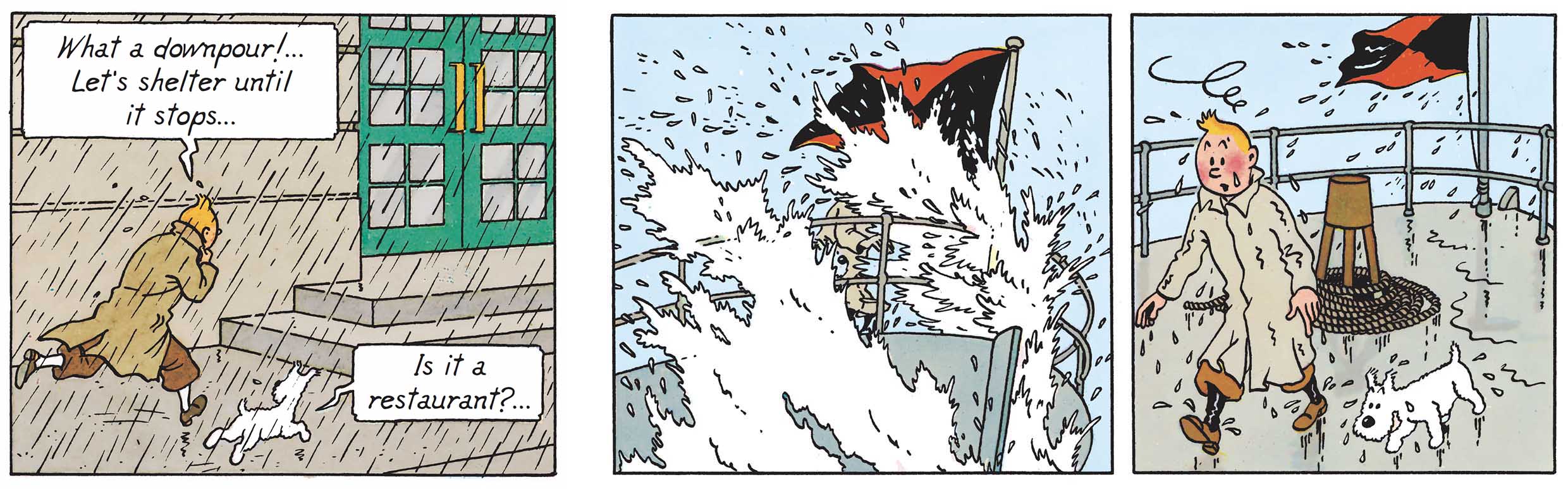
So much so that the water seems to run off his tuft of hair just as it would from a duck’s feathers. In other words: as if the elements had no hold over him. Is this a touch of Hergé’s whimsy – even if it means, for once, sacrificing a little of the realism to which he is usually so attached – so that his hero retains his most distinctive feature? Or should we imagine that this – clearly unruly – lock of hair has been skilfully waterproofed with copious amounts of hairspray or gel?
History doesn’t say, but one thing is certain: thanks to this special treatment, Tintin’s quiff retains its flair – whatever the circumstances. Neither curls nor frizz can alter its legendary shape. But there are, of course, a few – rare – exceptions that prove the rule.
For instance, in The Blue Lotus, when Tintin dives into the waters of the Yangtze River to save his friend Chang, his fringe finally lies flat against his forehead, though only for the duration of one or two vignettes. The same goes for The Crab with the Golden Claws, when Tintin and the Captain’s boat capsizes and the two companions fall into the sea.
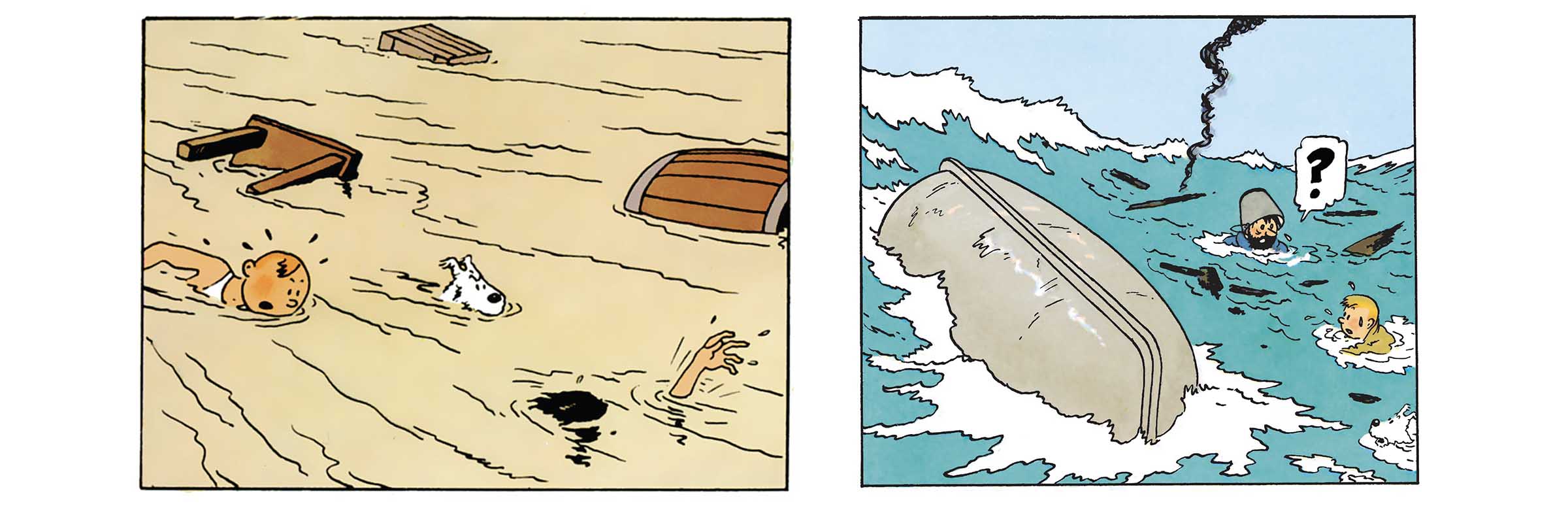
Another instance of ‘hair straightening’ occurs in the black-and-white version of Tintin in the Congo, this time when Tintin dives in to rescue Snowy. But in the coloured edition, miraculously, whether underwater or fresh out of the bath, his quiff remains intact… not a strand out of place. “A leopard cannot change its spots,” as the saying goes. Well, in Tintin’s case, his hair is always impeccably coiffed, as if the stylised apostrophe crowning his head possessed an infallible memory of its shape.
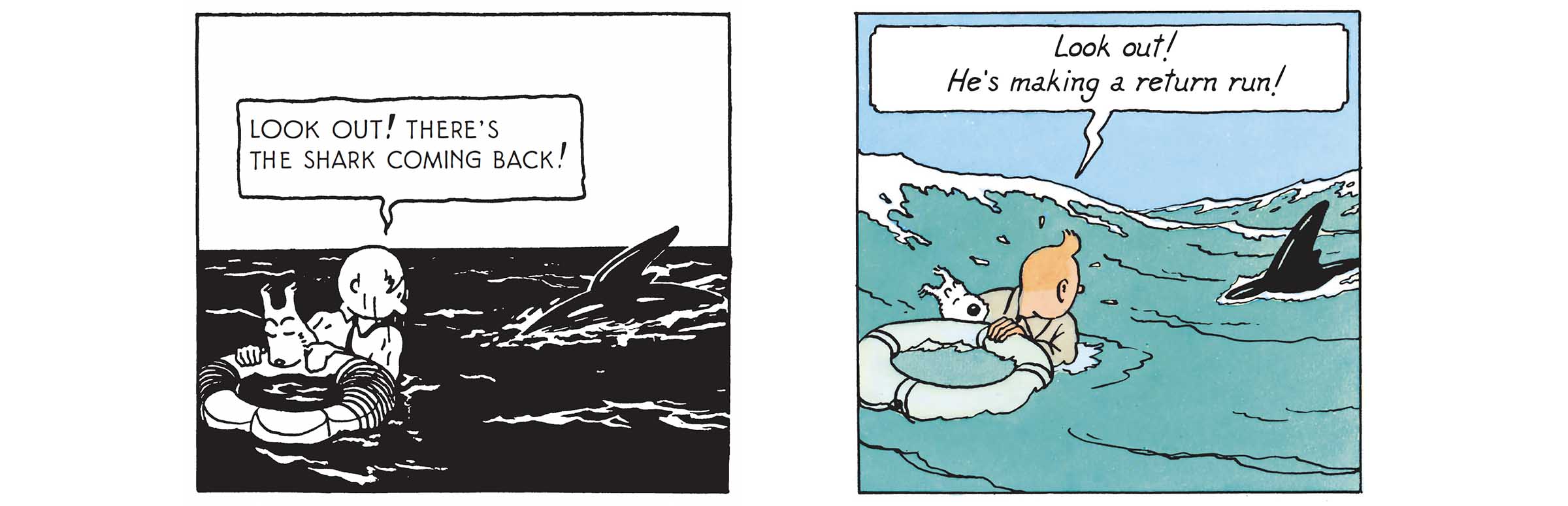
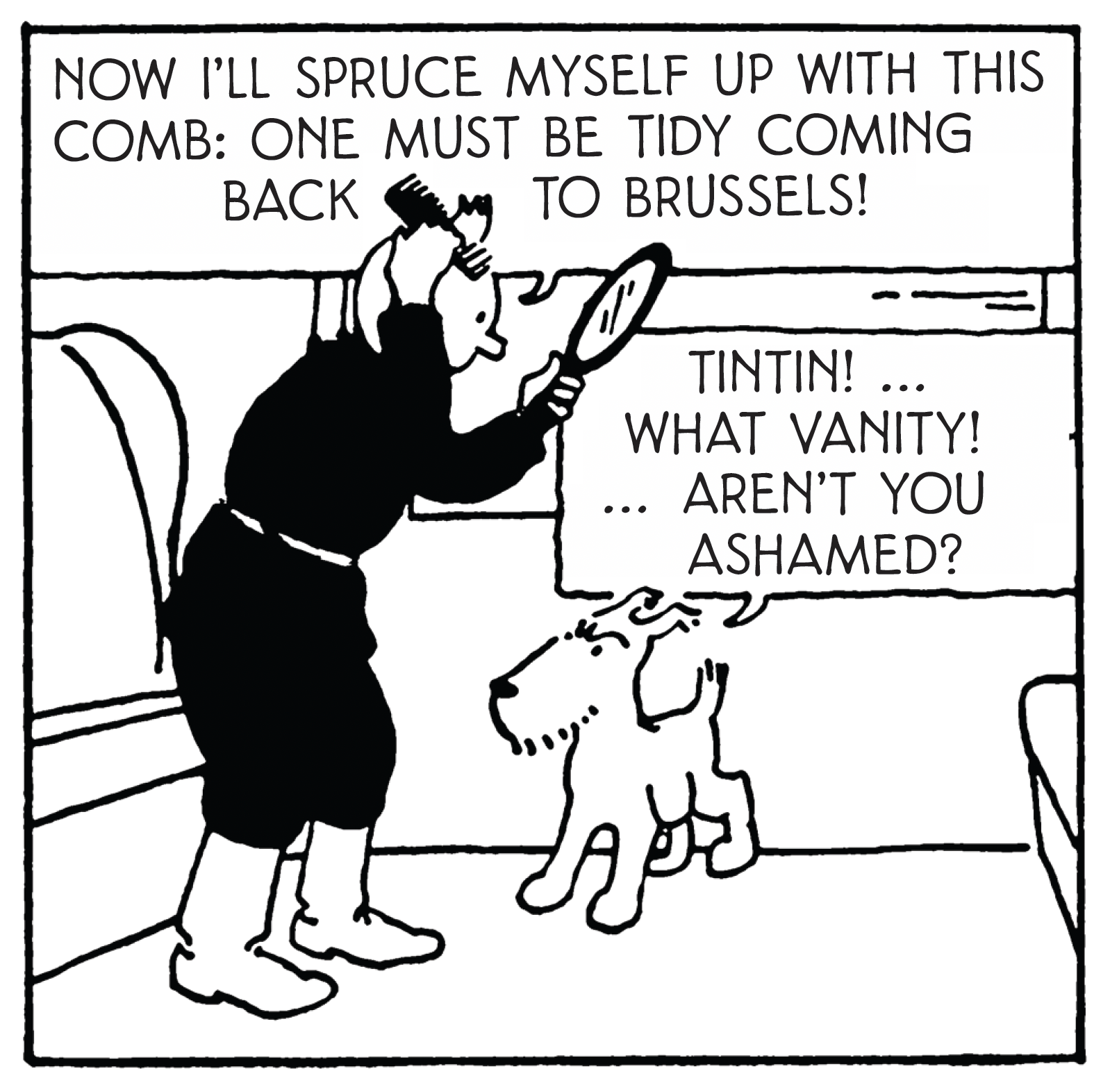
There is nothing unusual about this, really, as this quiff is less an aesthetic detail than a symbol. It identifies Tintin even before he speaks or acts – and sometimes even before his face is clearly visible. And in Hergé’s world, where everything is reduced to its essence, it is an absolute symbol, encapsulating silhouette, movement and character all at once. A remarkable economy of means that constitutes one of Hergé’s greatest feats. A stroke of genius that must surely make many hairdressers green with envy!
Texts and pictures © Hergé / Tintinimaginatio - 2026


