


 News
News Contest
 Forums
 Collectors
 Videos
 E-books
The Speaking Vignette: The Treasure under the Sea
Forget about sharks! Treasures aren't found only on beaches marked with a prophetic 'X,' but also at the bottom of the oceans. In this part of Red Rackham's Treasure, the young reporter moves among the remains of The Unicorn, Sir Francis Haddock's ship.
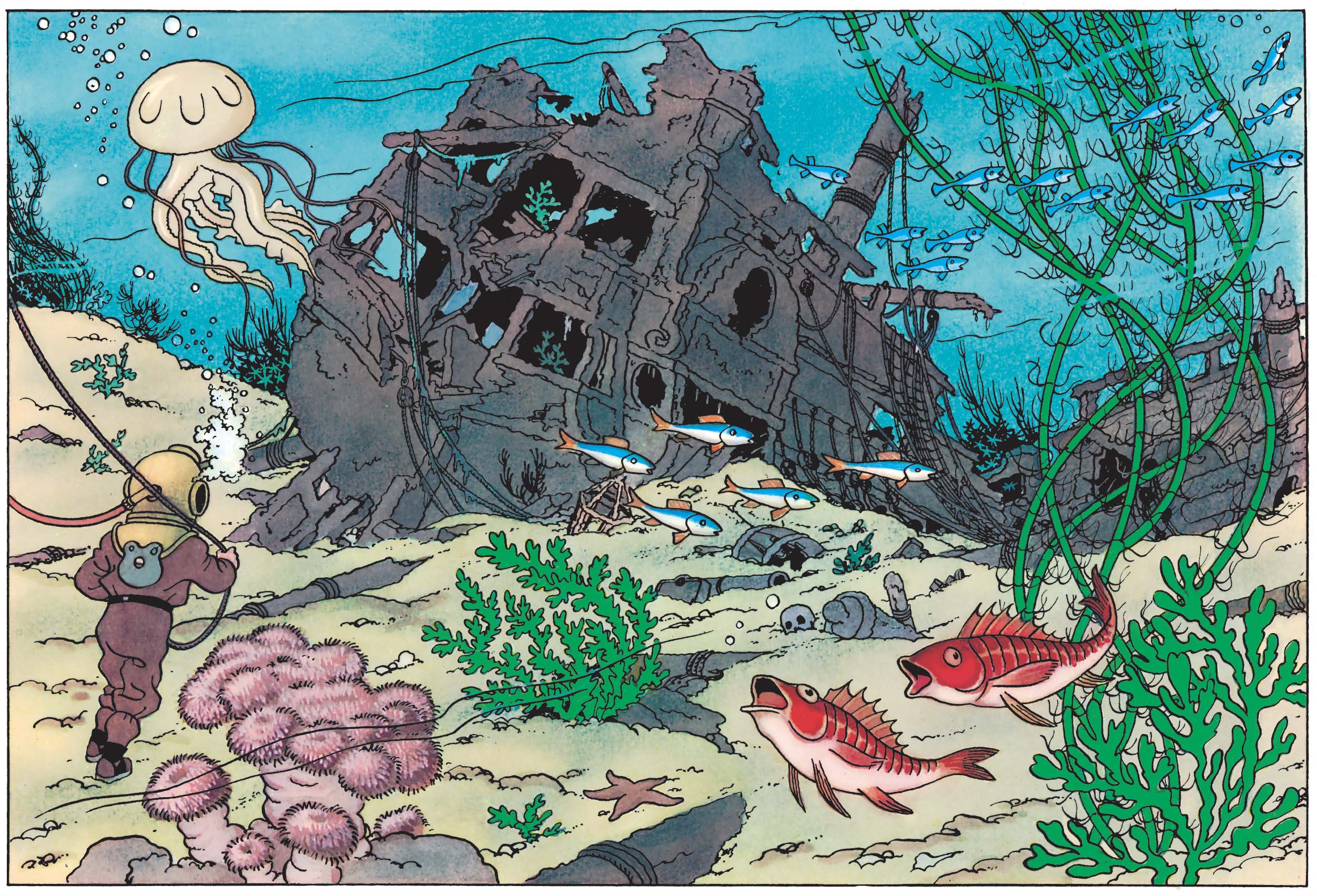
At first glance, this vignette simply shows a step in the search for Red Rackham's treasure. Yet, it also reflects Hergé's remarkable research. Almost nothing is left to chance: the helmeted diving suit in the adventure faithfully reproduces a real model by Rouquayrol-Denayrouze and Charles Petit (1889), supplied with air from the surface by a pump operated by the Thom(p)sons.

We used to take it for granmted, and now here he is as an Indiana Jones before his time, already doing underwater archaeology! Of course, the reporter with the quiff doesn’t act like an archaeologist in the modern sense. His goal is to find a treasure, not to scientifically study a wreck. But Hergé is already setting the stage for what will become a real field of research several years later: exploring submerged ruins.
When the adventure was published in colour in 1945, this field was still in its infancy. Independent diving was just starting out and major underwater archaeological campaigns were yet to be invented. So, the image of Tintin moving among the remains of an old ship was almost like science fiction for readers at the time. And Tintin fans know that Hergé has a memorable invention from Professor Calculus in store for us in this adventure.
This fascination with the depths fits perfectly into Tintin's world. Whilst cars and planes play a big role in his adventures, he also developed a growing interest in the maritime world from the late 1930’s. To draw The Unicorn, he gathered a lot of documentation, studied plans of old ships, and even had a highly accurate model made to represent his vessel from all angles with the utmost realism.
However, the expedition created by Hergé is not without its liberties. Experts have since pointed out several anachronisms and technical impossibilities. The coordinates left by Sir Francis Haddock are far too precise for the 17th century, and the wreck, if it really existed at the indicated location, would be resting more than 5,000 metres deep, well beyond the exploration capabilities shown in the book.
Never mind, these approximations really don't matter much in this thrilling quest to find Red Rackham's treasure. Unlike the frantic chases that mark so many Tintin adventures, everything seems pretty calm here.
This scene also shows one of Hergé's great qualities: bringing adventure to life through both the beautifully recreated setting and the action. Even before finding the treasure, just exploring a wreck is enough to spark the reader's imagination, just like it did back then and still does today. The mystery lies less in the chest than in what these remains reveal about the past.
So with Hergé, the quest isn’t just about finding a treasure, but also a way to explore history, bring forgotten objects to life, and invite the reader to look into the depths with the eyes of adventure.
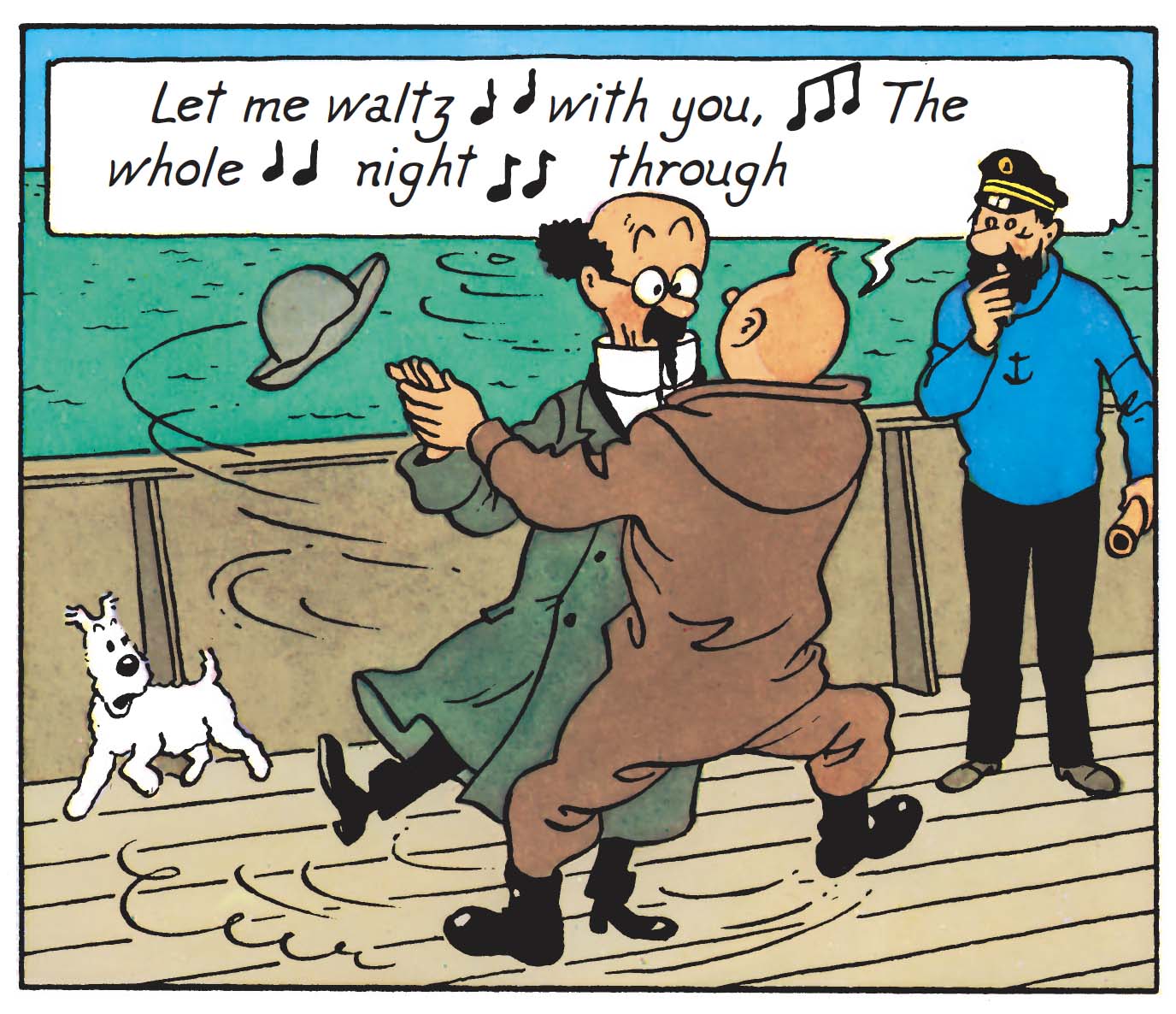
And that is definitely worth a few dance steps between Tintin and Professor Calculus!
Texts and pictures © Hergé / Tintinimaginatio - 2026


