


 News
News Contest
 Forums
 Collectors
 Videos
 E-books
One eclipse can hide another
What kind of mess have our friends found themselves in? The eclipse may have already passed in our skies... but in Tintin's Andes, it’s still the talk of the town.
It must be admitted that, at that precise moment, Tintin was not in the most comfortable situation of his career. Bound to a stake in the heart of the Andes, he was surrounded by Inca priests determined to eliminate Professor Calculus and Captain Haddock. Let’s face it: our adventurers have certainly had more pleasant wake-up calls. No need to worry, though—our reporter is well-accustomed to being tied up; a quick look back at previous adventures proves it. As for Calculus? True to form, he doesn't seem to fully grasp the gravity of the situation. Ultimately, perhaps only Haddock truly appreciates the danger—and he makes that clear by acting recklessly.
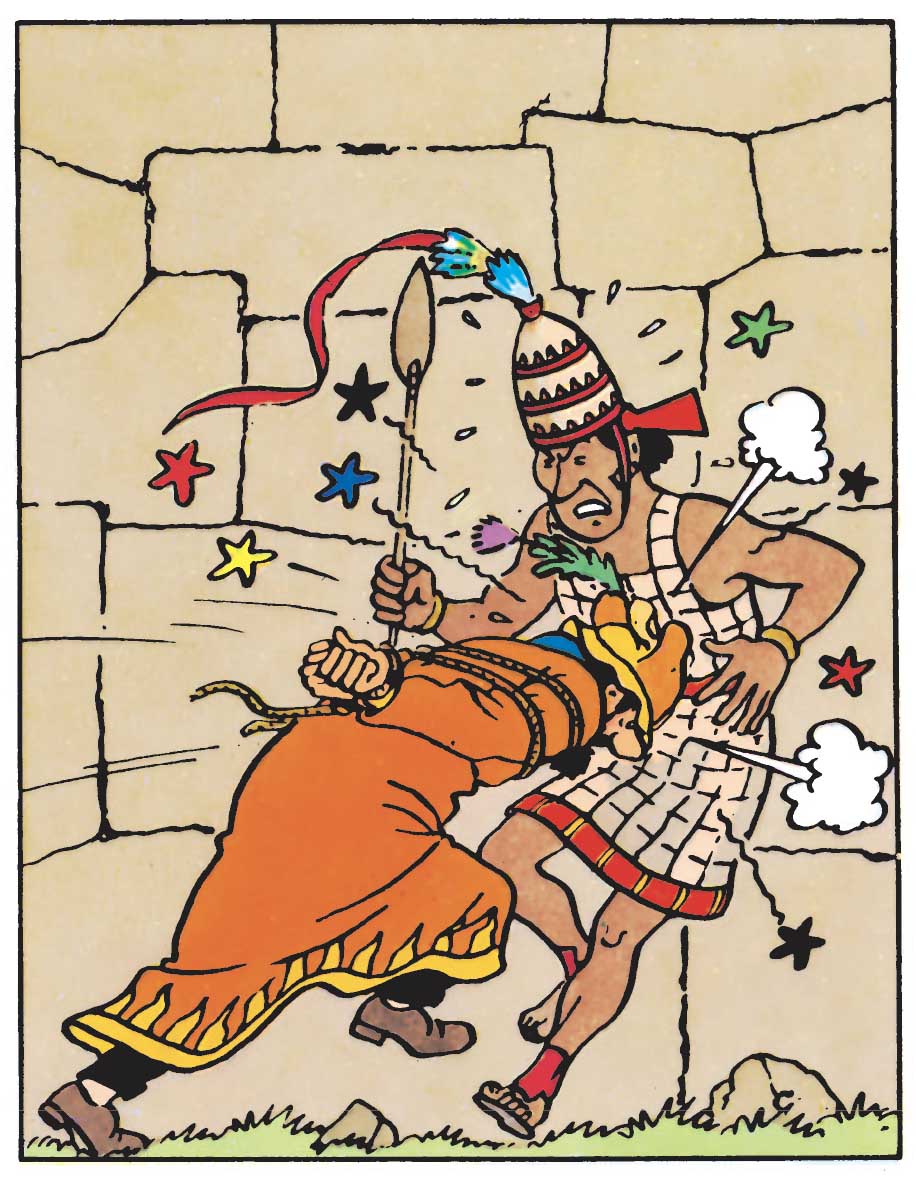
And when the high priest calls upon Pachacamac to have the sun set the pyre ablaze, it is hard not to believe that they’re doomed. It is no coincidence that this scene remains so convincing today: Hergé drew heavily on ancient accounts and illustrations of Inca ceremonies to stage it.
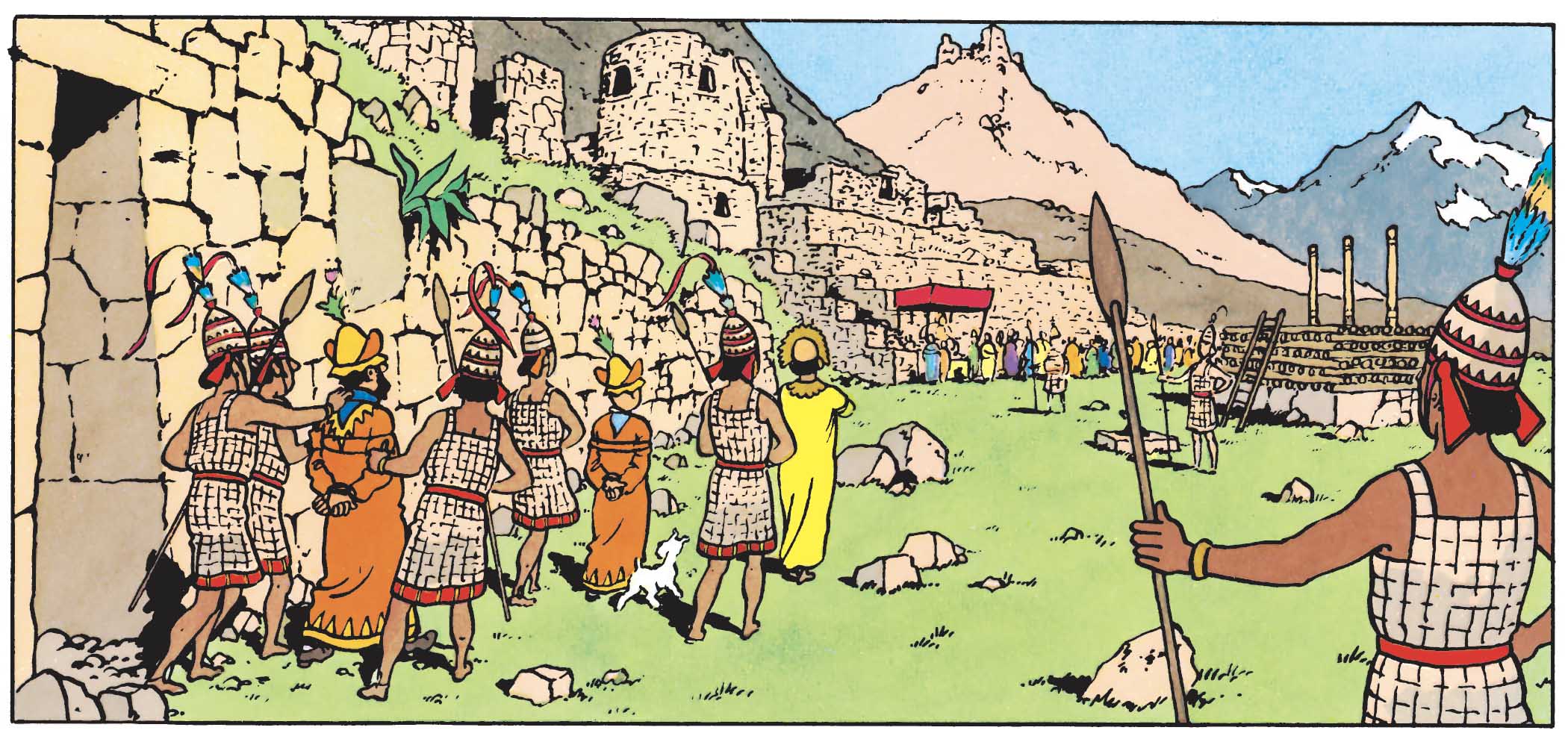
And yet… a few moments later, the Sun disappears. Slowly. The chanting ceases, the priests fall to their knees, and the great Inca himself implores Tintin to bring back the light. For a few minutes, Tintin becomes the man who commands the Sun. Nothing less.
Except that the miracle is, of course, nothing of the sort. Behind what looks like divine intervention lies, in reality, one of the greatest bluffs in the entire series. Fun fact: decades later, several researchers noted striking similarities between this scene and a now-forgotten novel, Le Maître du Soleil by Marcel Priollet. It is enough to fuel further debate among Tintin enthusiasts…
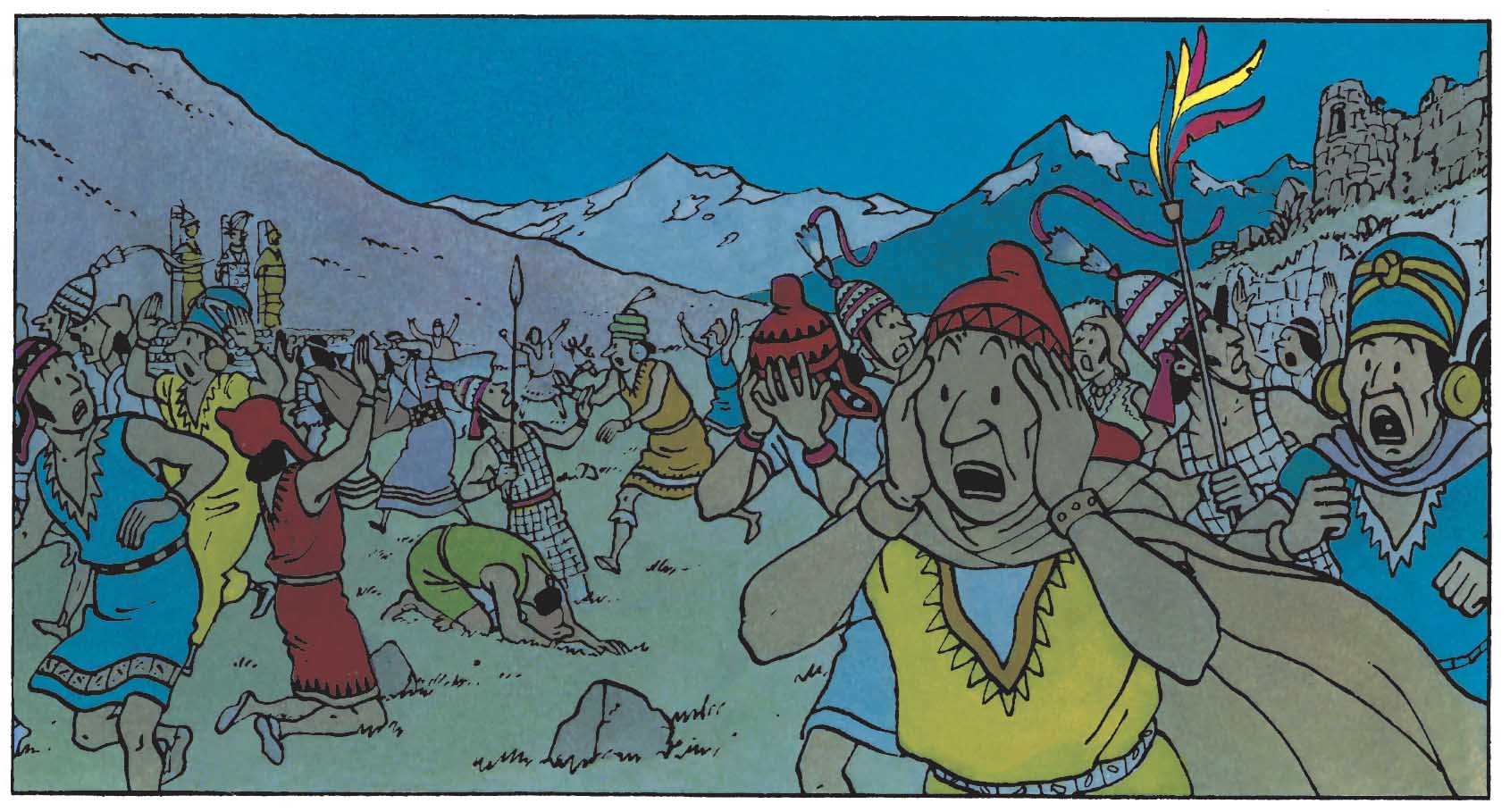
Unlike the Incas, Tintin already knows what is about to happen. Earlier in the adventure, he had stumbled upon a crucial piece of information. A solar eclipse was predicted for that very day. So, no magic involved, nor any stroke of providential luck—just a detail noted at the right moment... and, above all, the presence of mind to use it when all seemed lost. A few lines glimpsed in a newspaper clipping had seemed insignificant at the time, yet they would become his greatest asset just as the flames were about to rise.
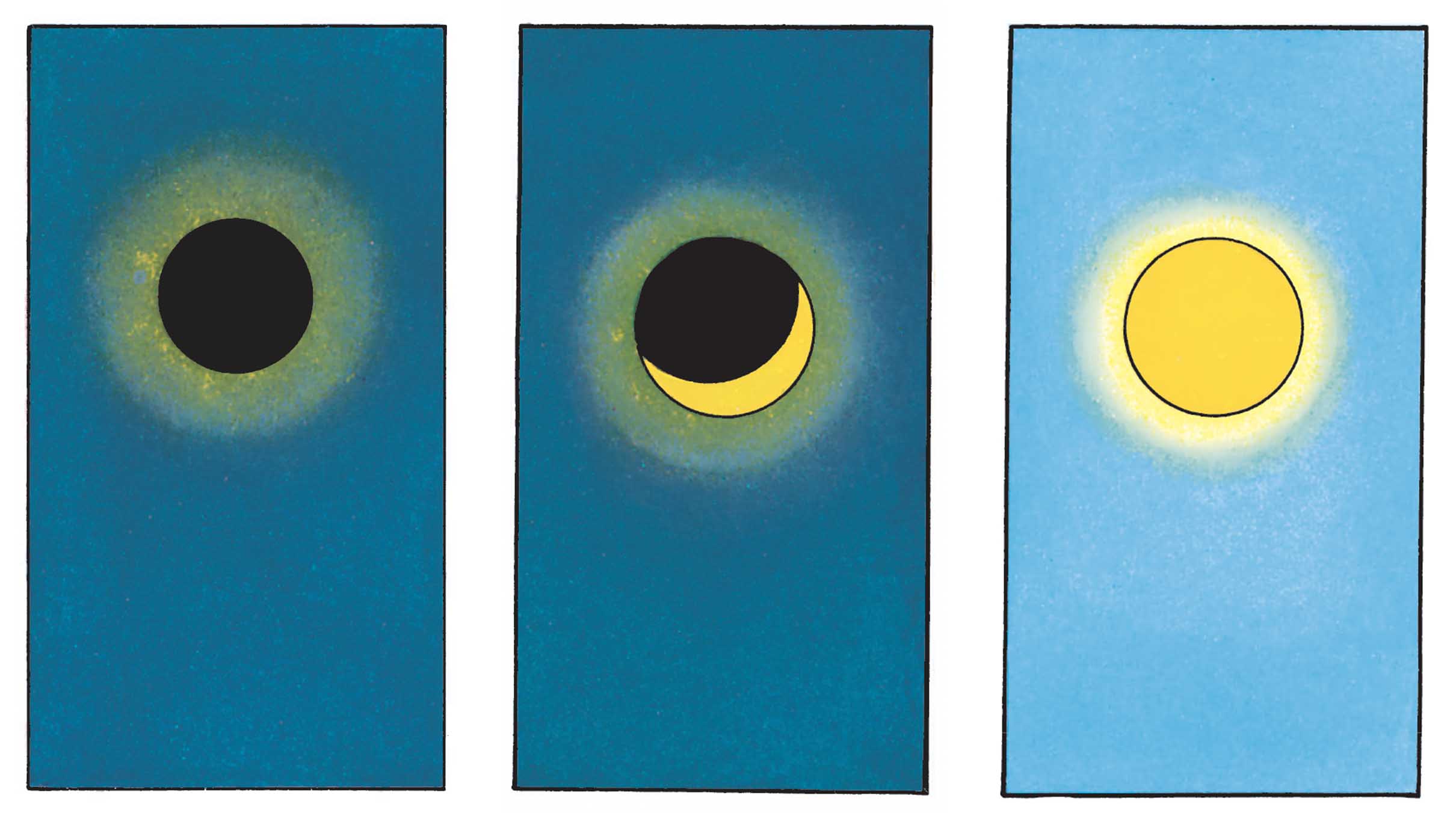
While Thomson and Thompson scatter to the four corners of the globe in search of their companions, Tintin faces a completely different problem. Making the sun disappear is one thing; bringing it back is quite another! No sooner has darkness fallen over the temple than the high priest—and then the Inca himself—begs Tintin to restore the celestial body to his people. And so, our reporter finds himself promoted to Master of the Sun, forced to negotiate with the heavens just when he is hoping, above all, to escape the funeral pyre as quickly as possible.
How does one create a scene that will leave an indelible mark on the imaginations of generations of readers? Nothing is left to chance. Before sending Tintin to the stake, Hergé had amassed an impressive amount of research on Peru. Reports from National Geographic inspired the procession, costumes, and atmosphere of the ceremony, while historical accounts of the Incas provided details down to the method of lighting the pyre using the sun's rays.
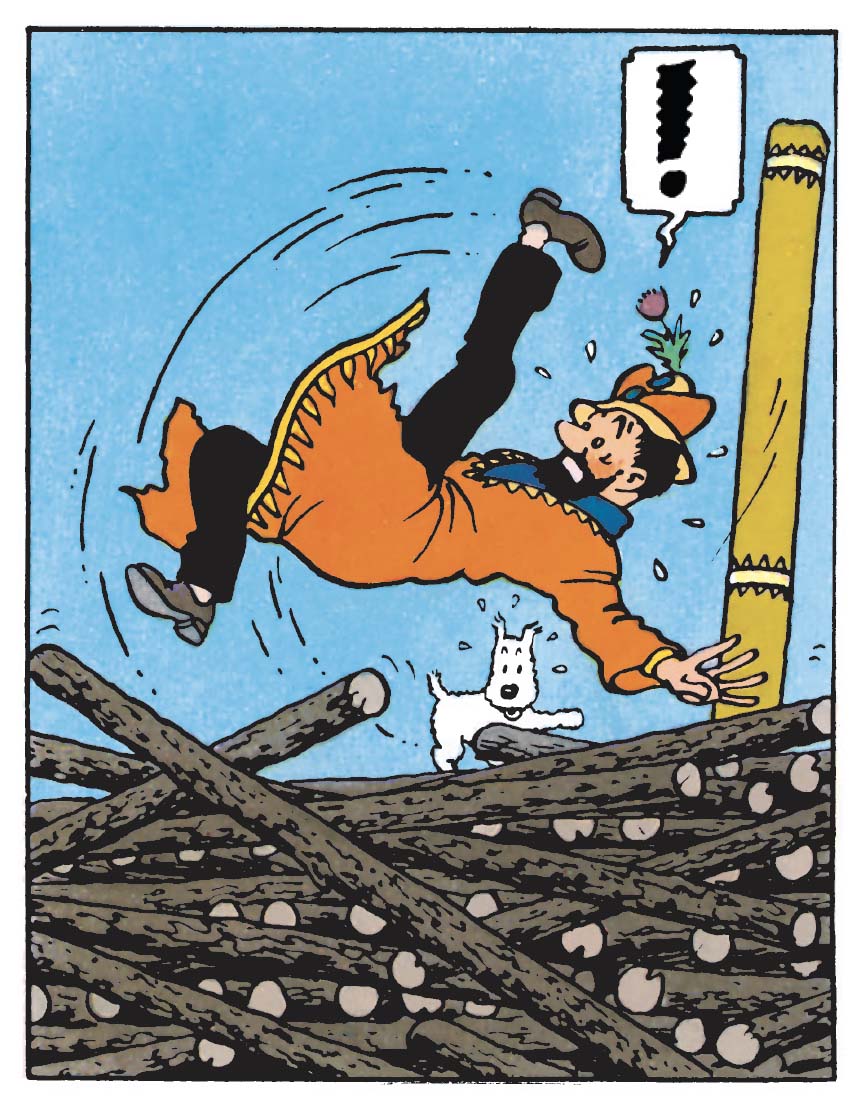
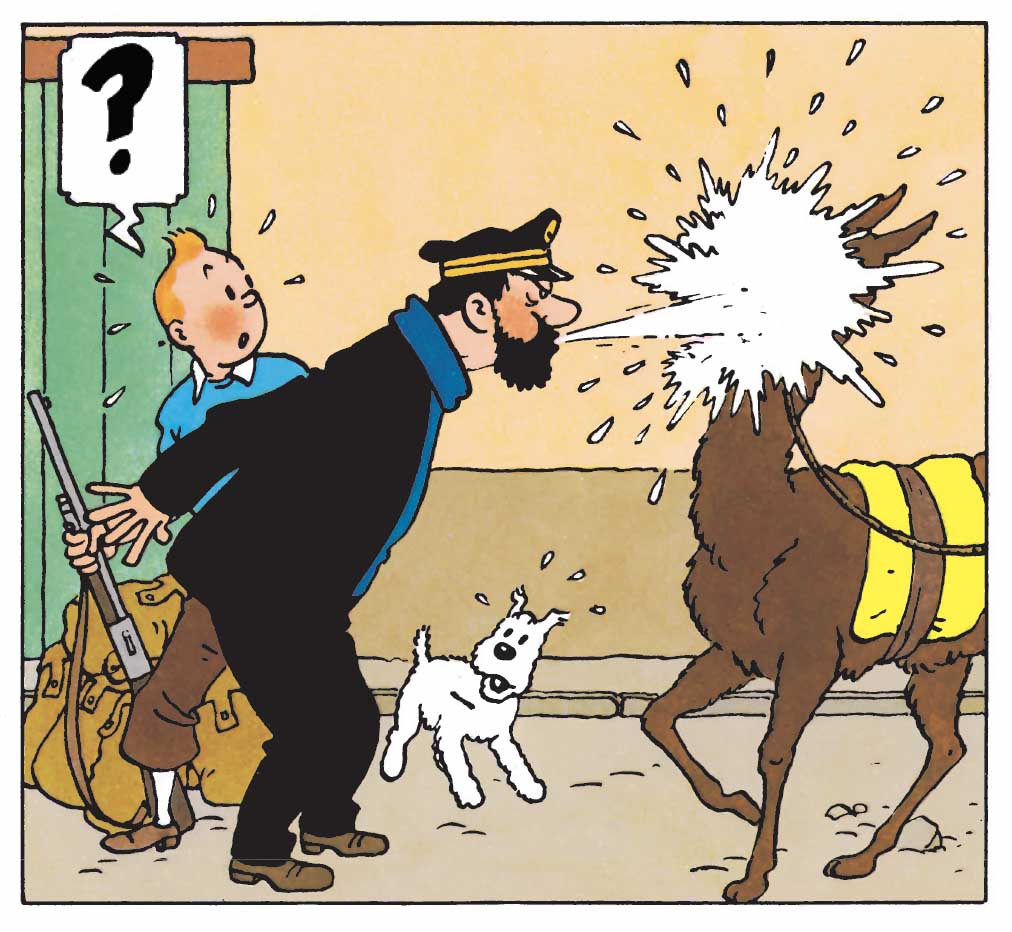
For while Tintin improvises his greatest feat of sleight-of-hand, Haddock stays true to form. Between the particularly ill-mannered llamas, the long mountain treks, and that unfortunate tendency to end up trussed up whenever an adventure takes an exotic turn, the Captain racks up mishaps with remarkable consistency. The funniest part is that the llamas weren't entirely invented for the sake of a gag; Hergé had discovered in an old account that they did indeed have the nasty habit of spitting—preferably right in their victim's face. Haddock is the first to bear the brunt of this before returning the favour—his own unique way of settling the score with the local wildlife. As for Calculus, one would almost have to explain to him, after the fact, that he had a narrow escape from the stake...
Texts and pictures © Hergé / Tintinimaginatio - 2026


