News
News Contest
 Forums
 Collectors
 Videos
 E-books
Tintin in Wonderland
Like many holidaymakers, you will soon be making your way through airports, railway stations, platforms, bus terminals, and long summer roads in search of another country to explore. Yet, on closer inspection, while Tintin travels across the known world throughout his adventures, another geography gradually unfolds before the reader's eyes. The names sound familiar, the landscapes feel believable, and the borders seem almost tangible. And yet, it is impossible to find a single one of them on any map. Now there's a mystery worthy of Thomson and Thompson!
And yet, all it takes is a black pelican flag, a strange alphabet scribbled on a sign, a uniform adorned with elaborate braiding, or a train crossing a mountain valley to know exactly where we are. Syldavia, Borduria, or Khemed. Names that officially exist nowhere on any map, and yet somehow seem to have belonged to our collective memory forever.
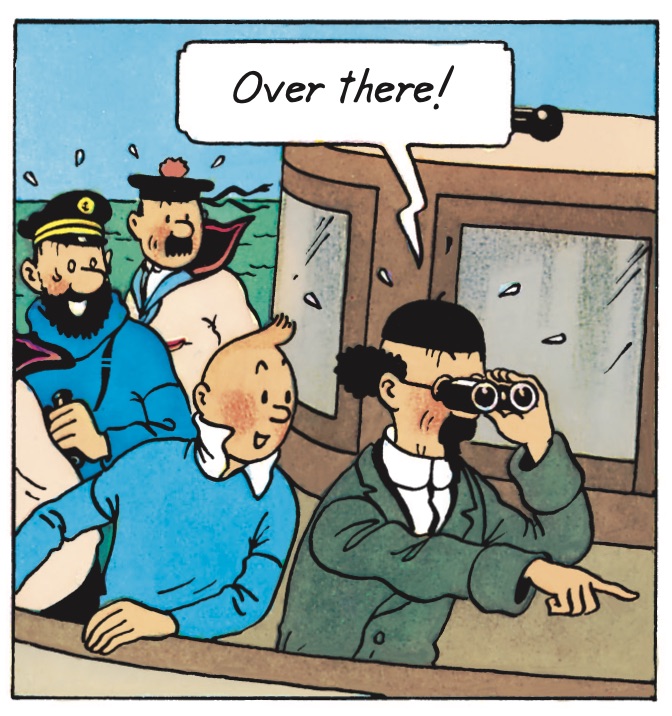
Tintin's creator had more than one trick up his sleeve! Beyond his characters and plots, Hergé excelled at inventing entire countries endowed with their own identity, implicit history, architecture, language, territory, and sometimes even a genuine collective psychology. Few « bande dessinées » authors have pushed the quest for geographical coherence so far. These imaginary borders often feel more convincing than worlds created with far greater resources.
Under the blazing summer heat, the time has come to explore these worlds that are both real and fictional. Pack your bags, do not forget your sunglasses, and keep your passport close at hand… we shall not be counting our flight hours in this exclusive feature!
Syldavia, Reimagined Central Europe
Before we go any further, let us clarify one thing: these fictional states are never merely exotic backdrops designed to send Tintin travelling. They shape the narrative, fuel political tensions, and often bring no end of trouble to poor Captain Haddock! Behind their invented names lie very real fragments of twentieth-century Europe, with its fragile monarchies, rising dictatorships, coups d'état, spheres of influence, and geopolitical anxieties.
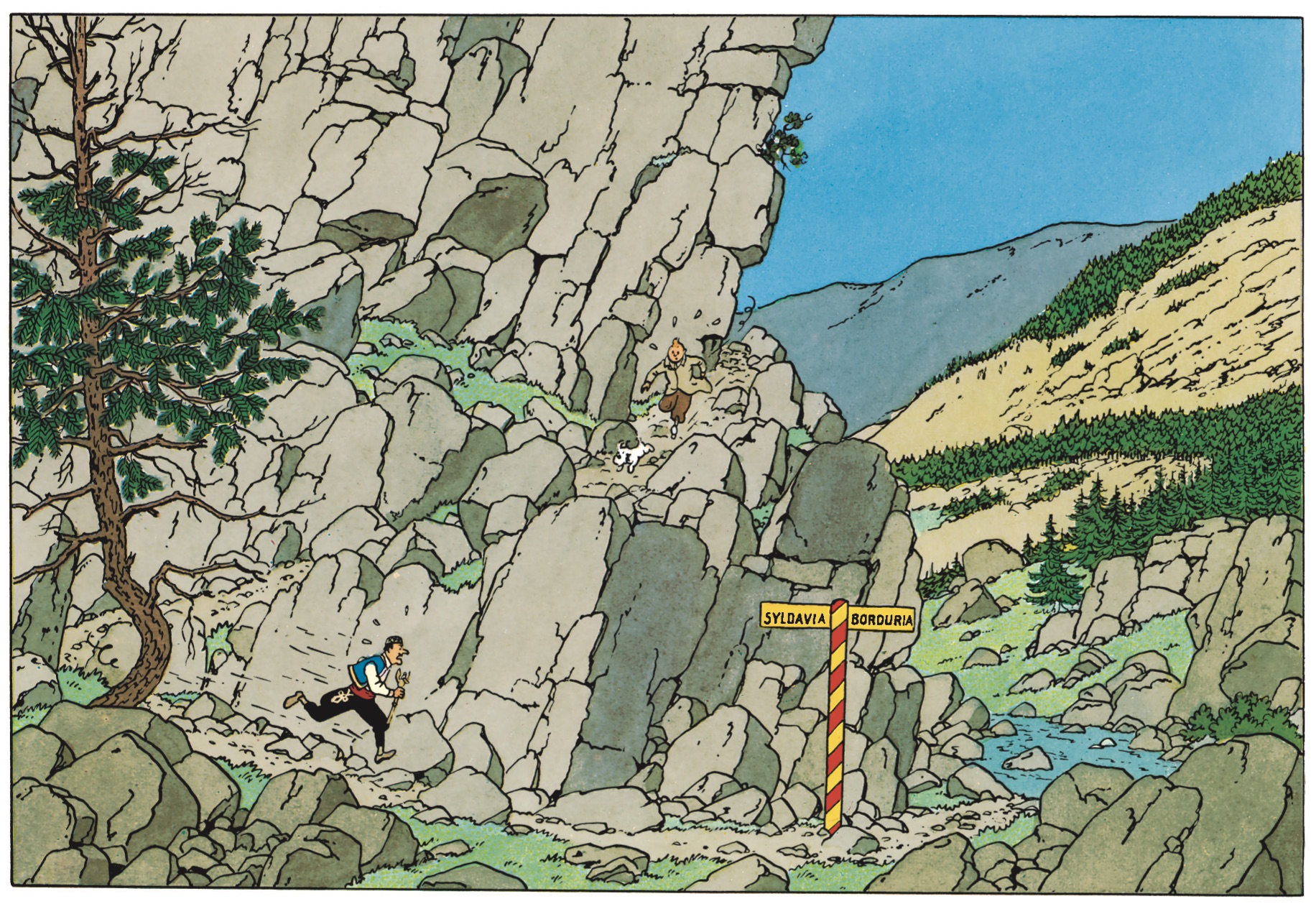
Under such circumstances, it is impossible to discuss Tintin's imaginary countries without beginning with Syldavia, probably Hergé's most famous geopolitical creation. First appearing in King Ottokar's Sceptre in 1939, this small Balkan monarchy feels immediately familiar, as though it had always existed somewhere between the Carpathians and the Adriatic. Arm yourself with a very powerful magnifying glass if you intend to locate it on a map!
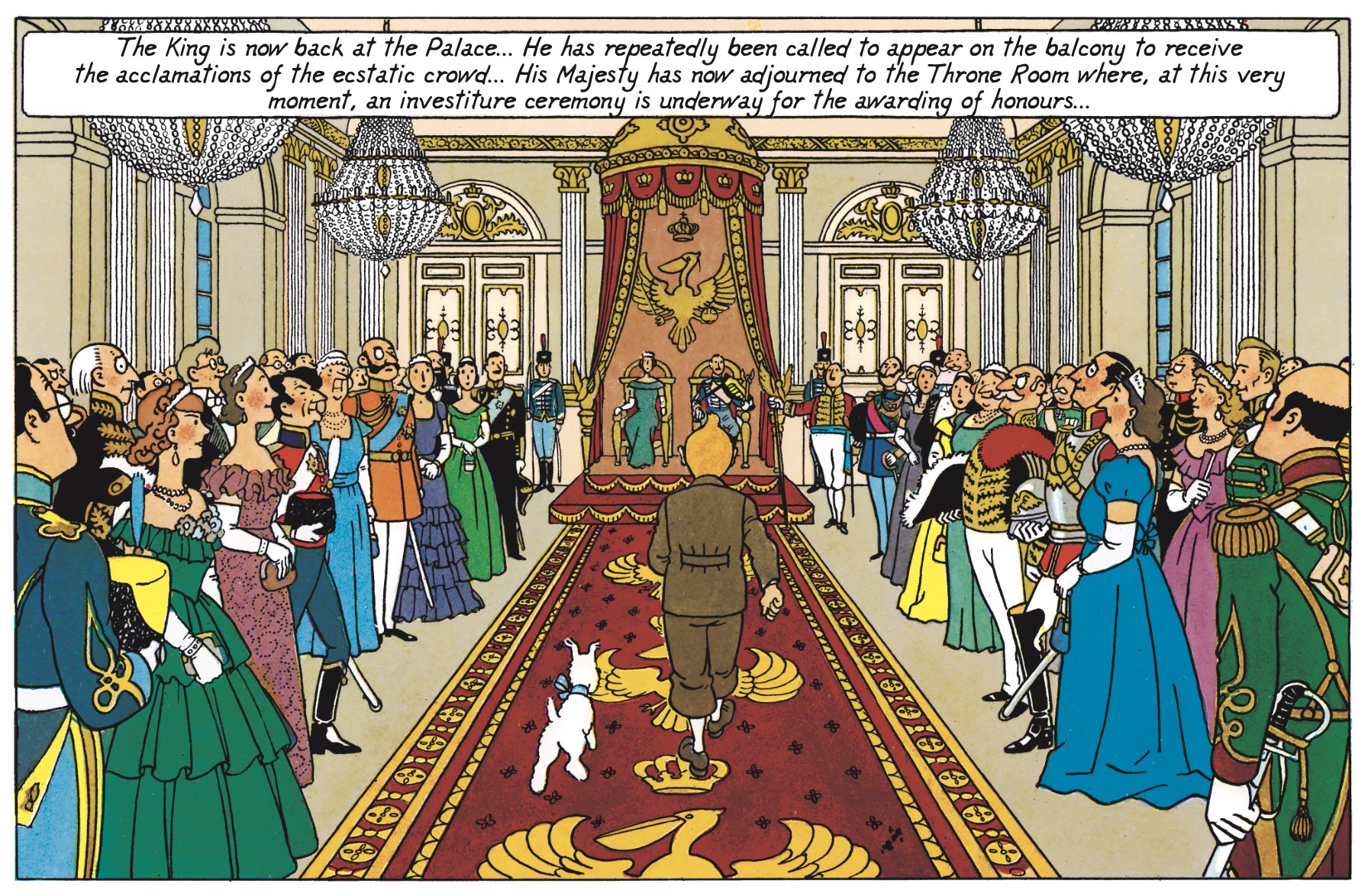
And yet, Syldavia is not a direct copy of any specific country. Instead, Hergé proceeds through recomposition. He draws upon the Balkans, Central Europe, various Slavic traditions, Hungary, Romania, Montenegro, and Albania before assembling these influences into a coherent nation.
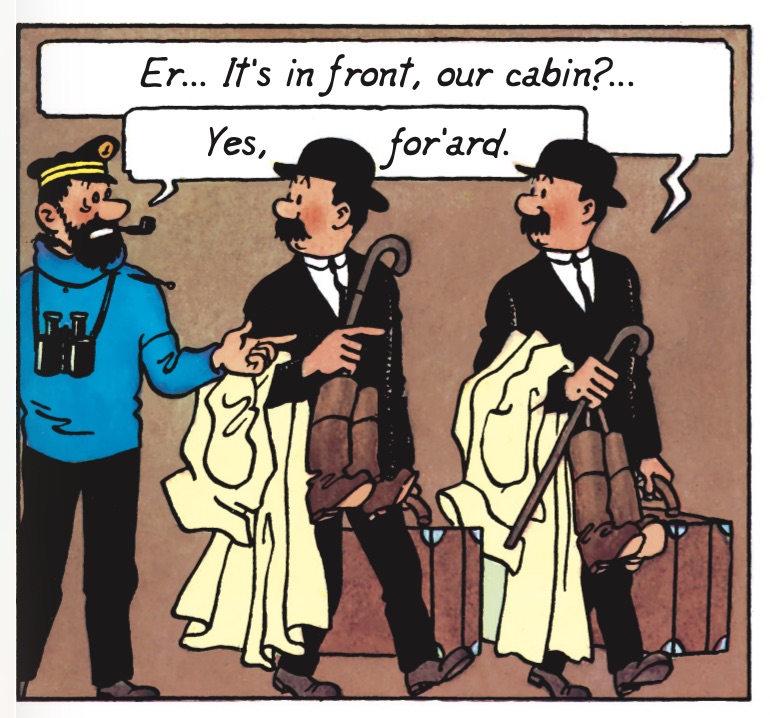
Nothing is left to chance. Traditional costumes, royal guards, mountain landscapes, hilltop fortresses, village names, aircraft, railway stations, and even licence plates all contribute to this sense of reality. Even the Syldavian language is the result of meticulous construction. Beneath its seemingly Slavic sounds lie structures inspired by the Marols dialect of Brussels and by Flemish (see article "The Speaking Vignette: Do You Speak Syldavian?")
How can one help but smile at certain inscriptions that appear instantly authentic, despite being largely incomprehensible to the reader? Hergé understood one essential truth: a believable nation is not built on a map alone, but on an accumulation of details capable of creating the illusion of lived reality.
Borduria, the Face of Dictatorship
Standing opposite Syldavia is Borduria, another major invention in the Tintin universe. Once again, Hergé does not create a completely abstract country. Instead, he blends together several European authoritarian regimes in order to produce a dictatorship that is instantly recognisable.
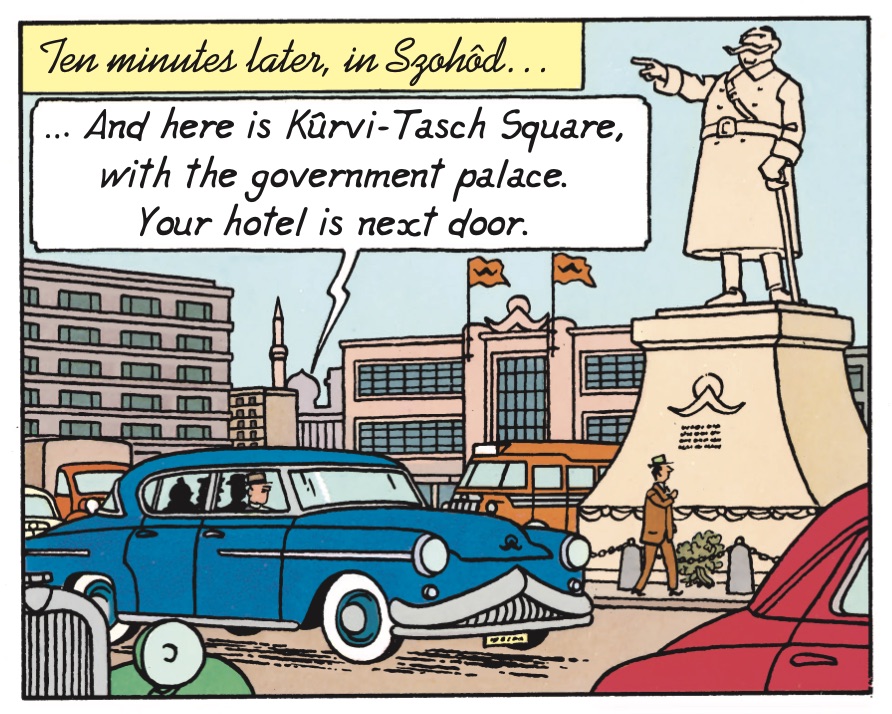
Over the course of the albums, Borduria evolves alongside its era. In King Ottokar's Sceptre, it clearly evokes the expansionist ambitions of the fascist regimes of the 1930s. Later, in The Calculus Affair, it takes on the appearance of a people's democracy locked down by surveillance and a cult of the leader. A cult of the leader?
It is impossible, of course, not to think of the famous Marshal Plekszy-Gladz, whose moustache gradually invades public space until it becomes an omnipresent political emblem. Posters, statues, official symbols, monumental architecture, here Hergé constructs a chilling satire of totalitarian states.
Yet perhaps the most fascinating aspect is the restraint of the whole device. Faithful to the clear-line style, Hergé never descends into grotesque caricature. Borduria works precisely because it feels plausible. The streets are orderly, the soldiers disciplined, and the buildings convincing. Nevertheless, on certain aspects of the Bordurian regime, our lips are sealed, as two famous detectives might say.
Khemed, the Powder Keg of Oil
With Land of Black Gold and The Red Sea Sharks, Hergé shifts his gaze towards the Middle East. Khemed emerges as a territory shaped by oil rivalries, diplomatic tensions, and international trafficking, all of which strongly echo the geopolitical climate of the 1930s through to the 1950s.
Once again, the country is built upon a blend of real-world inspirations. Gulf monarchies, British protectorates, desert roads, strategic ports, emirs, and oil companies intertwine within a fictional construction that is immediately recognisable and often highly amusing.
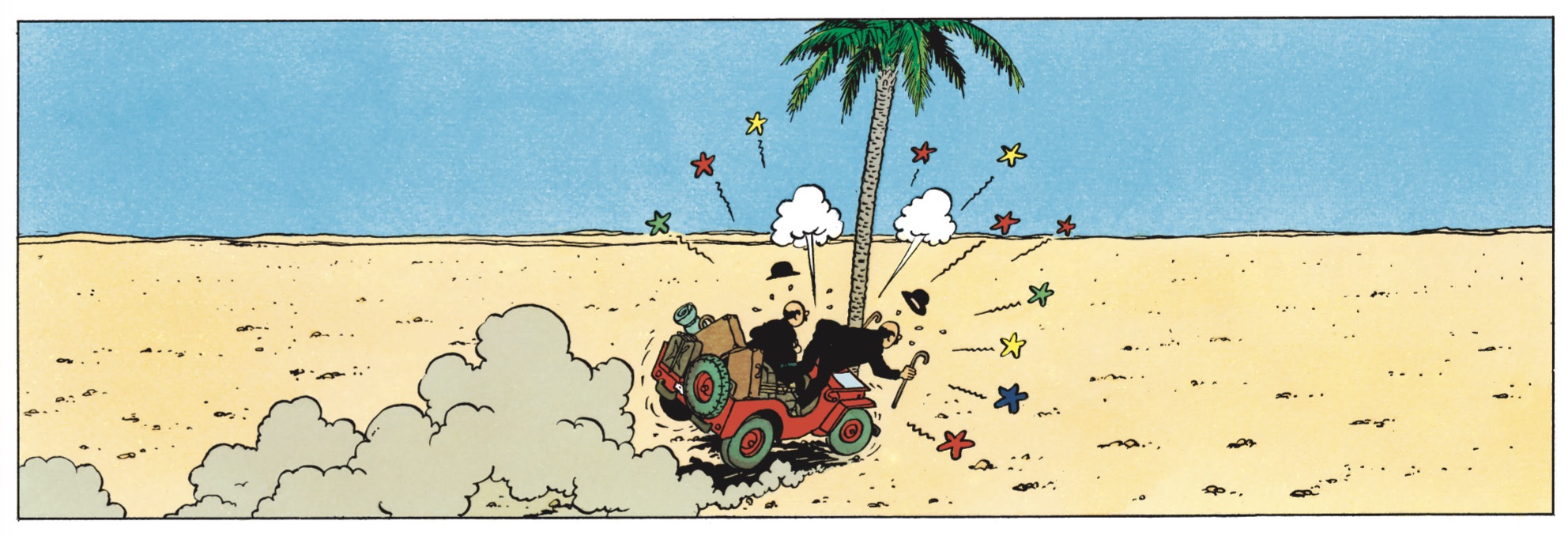
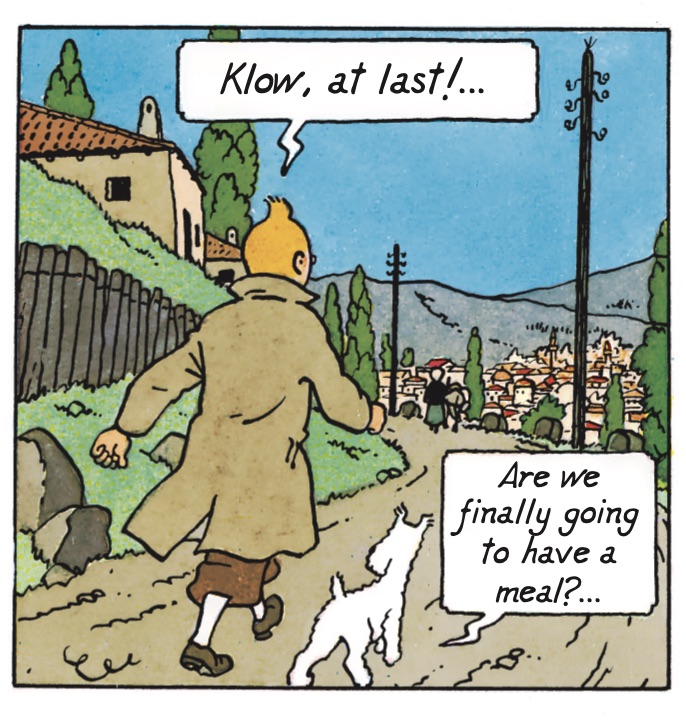
Perhaps most remarkable is the way Hergé succeeds in bringing this setting to life. The cities feel inhabited, the ports bustling, and the desert tracks genuinely dangerous. Even the vehicles, uniforms, and oil infrastructure contribute to this sense of authenticity. It is more than enough to send Tintin narrowly escaping a host of henchmen, and, above all, thirst... especially where the Captain is concerned!
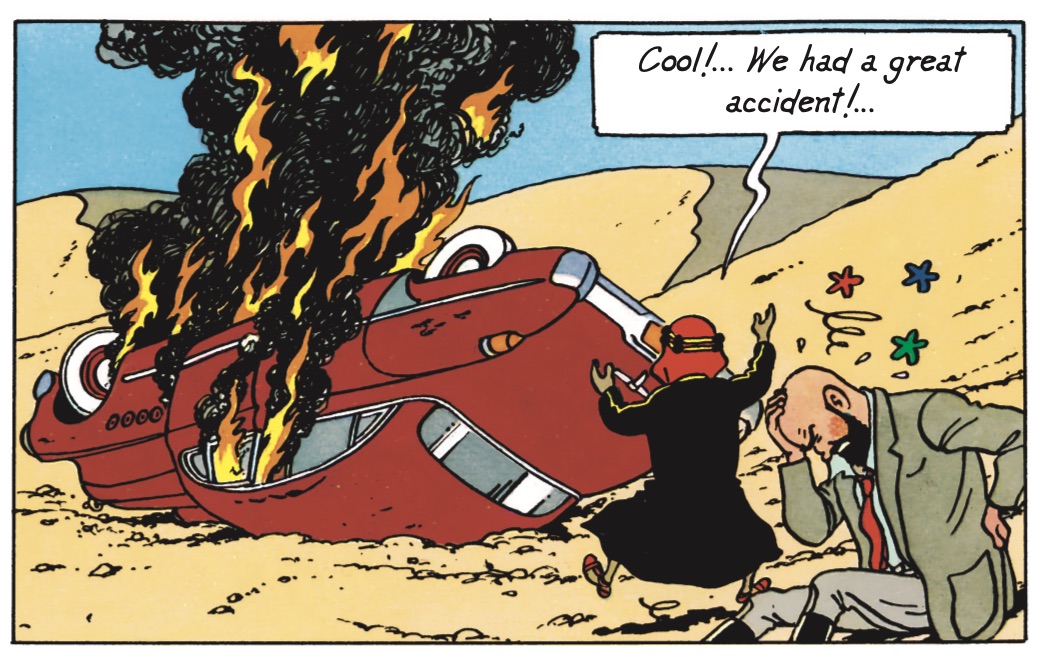
Khemed is not merely an Oriental backdrop. It becomes a permanent zone of tension where economic interests, foreign influence, and power politics collide. Beneath the adventure, Hergé already hints at a world in which oil is profoundly reshaping international relations. As you might expect, a few spectacular crashes are part of the package.
In the Lands of San Theodoros and Nuevo Rico
The New World is by no means absent from Tintin's adventures. And, as two famous moustachioed detectives might say, « To be precise... », Hergé multiplies his imaginary nations here as well. In The Broken Ear and later Tintin and the Picaros, he imagines unstable South American republics regularly shaken by revolutions, coups d'état, and military rivalries. But before any revolution gets under way, it is best to keep your eyes open, for in these lands a simple monitor lizard can very quickly become a prehistoric diplodocus in the eyes of a certain Captain!
San Theodoros and Nuevo Rico become almost geopolitical caricatures of Latin America as viewed from 1930s Europe. Yet behind the humour and exaggeration lies an impressive amount of documentation and research.
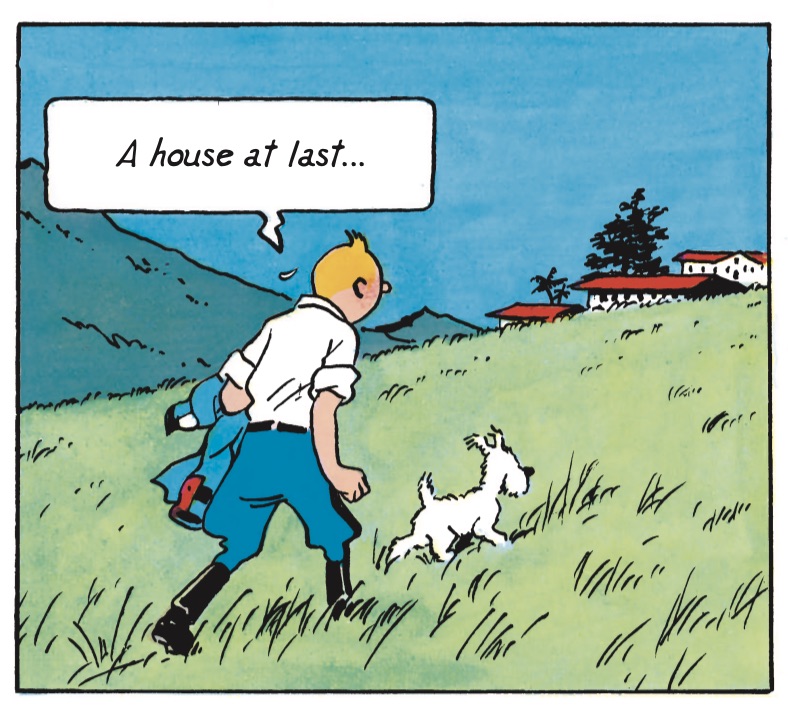
Uniforms inspired by various South American armies, dense jungles, dusty villages, foreign oil companies, improvised guerrilla movements, and power-hungry generals all evoke situations that were very real in several countries across the continent.
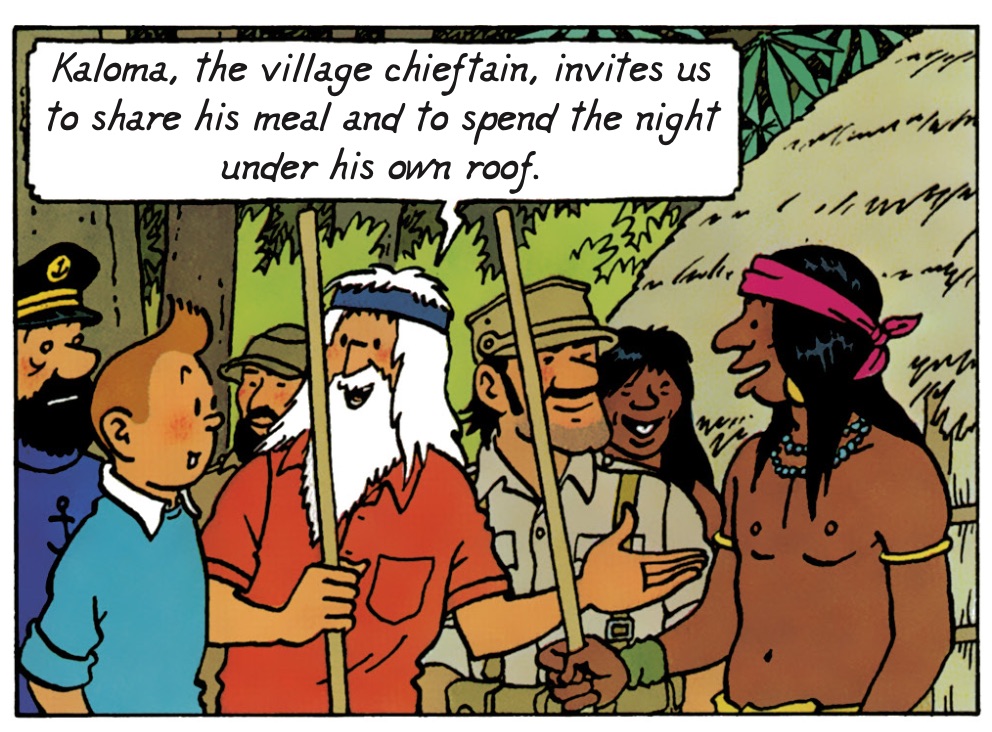
Hergé also introduces a more ironic dimension. Changes of government often appear interchangeable, as though power itself had become a permanent theatrical performance. In the end, even the Arumbayas seem to weather these upheavals with remarkable calm, as though revolutions pass more quickly than traditions.
The Forgotten Corners of the Atlas
The keenest detectives and most attentive readers will already have spotted a few missing countries on our map. Have we covered everything? Not in the slightest. Beyond the better-known examples already mentioned lie other territories, sometimes only briefly referenced, yet contributing just as much to the richness of this imaginary atlas.
Among them is São Rico, neighbour and rival of San Theodoros in The Broken Ear. Behind this fictional name lies another variation on the unstable South American republics that fascinated the European press of the period, in a context marked by border disputes, coups d'état, and rivalries over oil resources.
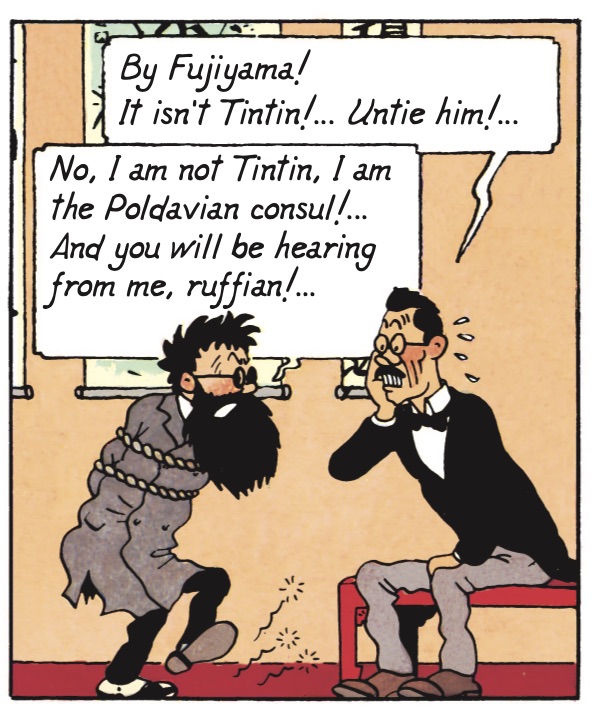
Further north in this imaginary geography appears Poldavia, briefly mentioned in King Ottokar's Sceptre. Its name seems to extend the Balkan logic of Syldavia, as though Hergé were sketching an entire coherent neighbourhood around his kingdom, of which the reader catches only fleeting glimpses.
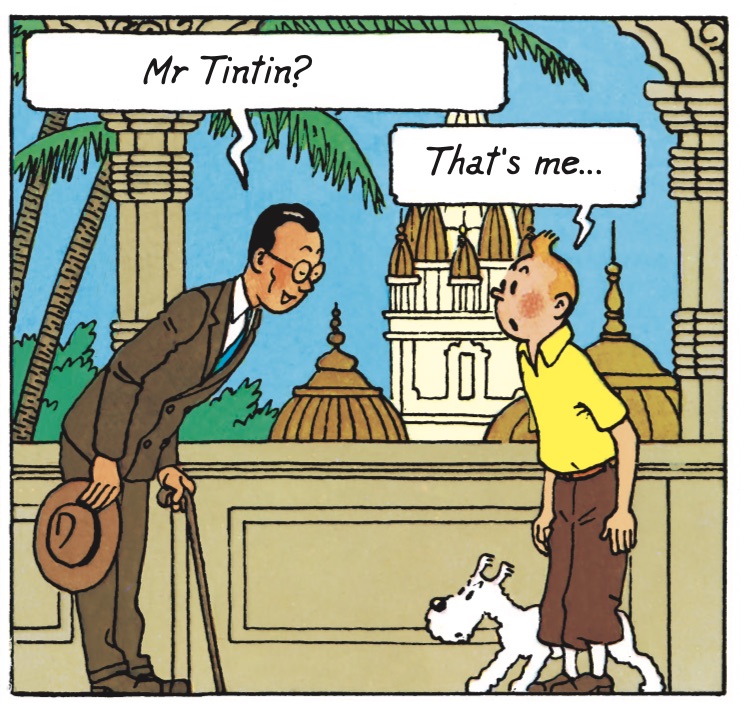
Even more discreet is Gaipajama (known as Rawhajpoutalah in the original French editions), which appears in Cigars of the Pharaoh and later in The Blue Lotus. This fictional princely state in northern India, ruled by a Maharaja, reminds us that Hergé's geographical inventions were not limited to the imaginary Europe of Syldavia or the South American republics. It is a fleeting glimpse of a land that readers rarely have the opportunity to see for more than a moment. Ah! Just when we thought we had discovered a new destination, it somehow manages to remain beyond our reach!
This accumulation of names, even when only briefly glimpsed, creates a rare impression in comics. Like any good atlas, Hergé's countries suggest far more than they actually reveal.
Hergé's Invisible Nations
In inventing these countries, Hergé was not merely trying to take his readers on a journey. Admittedly, after visiting so many lands, one's hair may well be blown about, but genius also lies in the smallest details. He was creating an indirect way of speaking about the real world without becoming trapped in overt political commentary. These fictional states allowed him to condense several historical realities into a single territory that readers could instantly understand.
And yet, despite this historical density, these countries always retain a sense of adventure and accessibility. Above all, they remain lands of adventure.
By the time one closes the albums, it becomes difficult to regard these nations as mere inventions. Album after album, Hergé seems to have added his own countries to Europe's mental map, and indeed to that of the wider world, giving them an almost tangible existence. And what about you? Which one would make you dream the most? Syldavia, Borduria, Khemed… or perhaps another?
Texts and pictures © Hergé / Tintinimaginatio - 2026