


 Noticias
 Concurso
 Forums
 Collectors
 Videos
 E-books
The Speaking Vignette: The Stone Keeper's Secret
What do you see? An immense stone head, or a cosmonaut wearing a helmet and headphones? The answer, perhaps, lies elsewhere entirely...
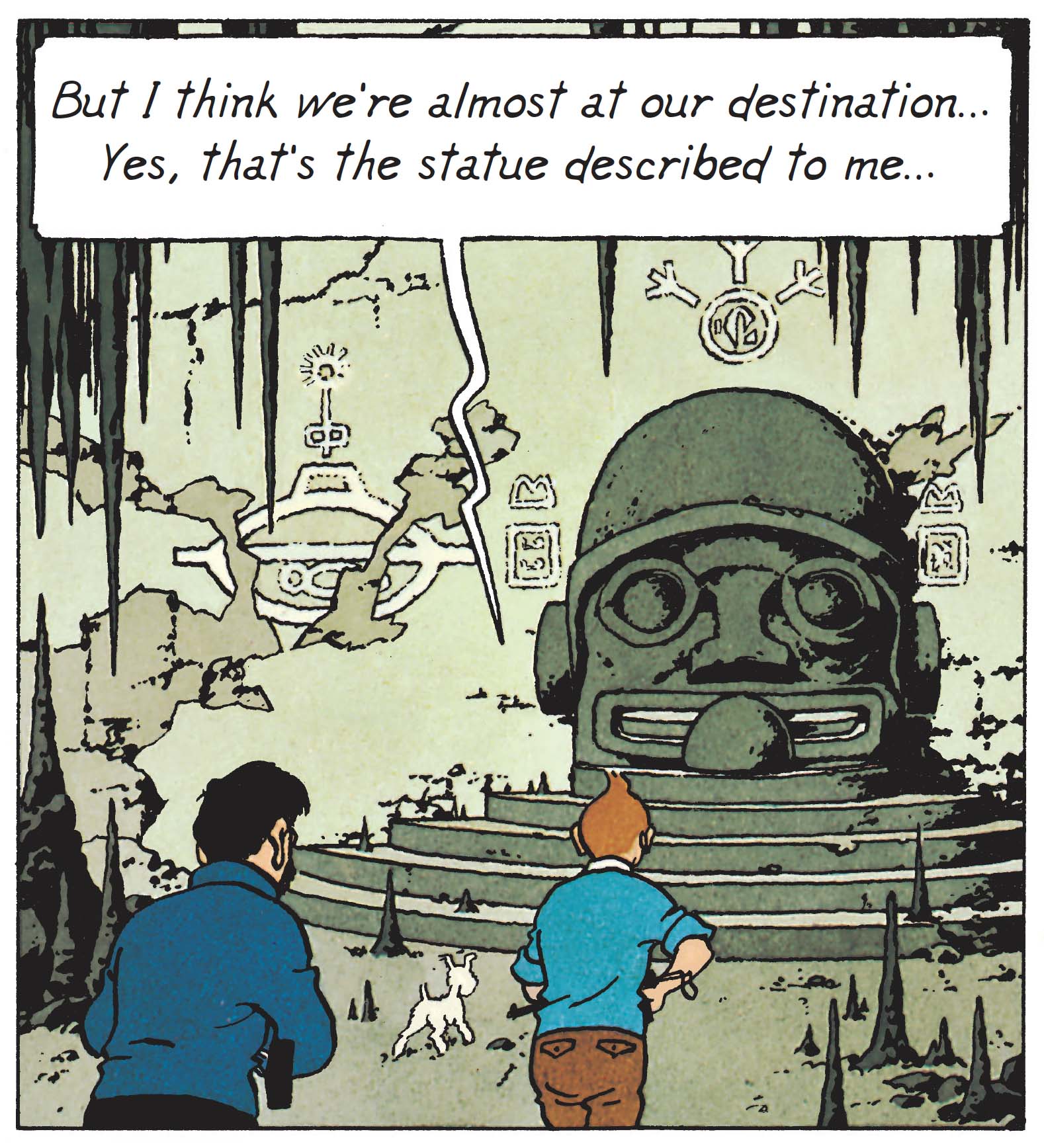
No need to keep you guessing: you have probably recognized Flight 714 to Sydney, where the intrusion of the fantastic does not unfold gradually. It arrives almost all at once, at the very moment Tintin and his companions, held captive on the island of Pulau-Pulau Bompa, discover the entrance to an underground passage.
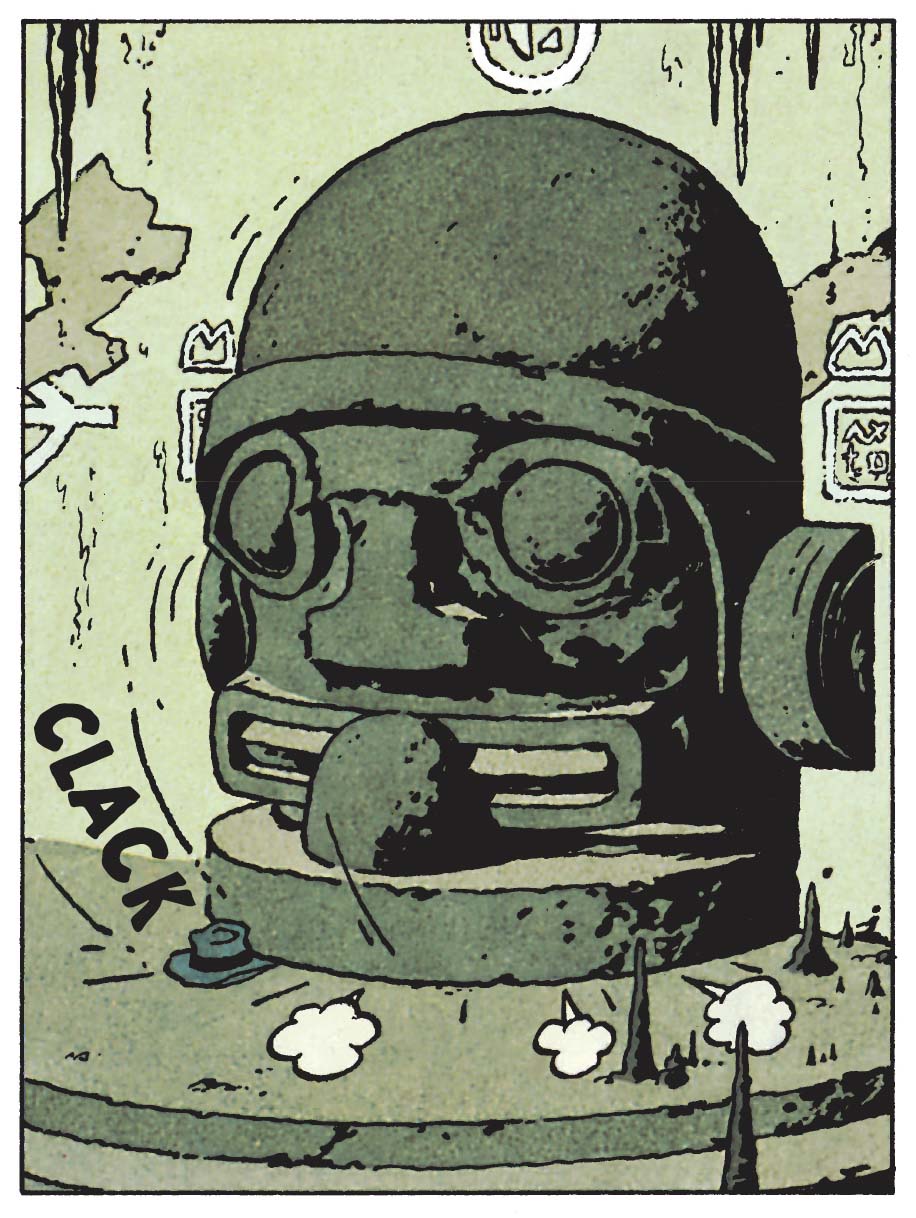
The scene could easily remain within the bounds of a classic adventure: escape, exploration, an improvised hiding place. Not to mention, of course, a well-known villain. But let us return to the matter at hand: this monumental head blocking the explorers’ way. A massive sculpture, a frozen face, it is not merely decorative. It pivots, reveals a hidden passage, and sends the narrative… elsewhere.
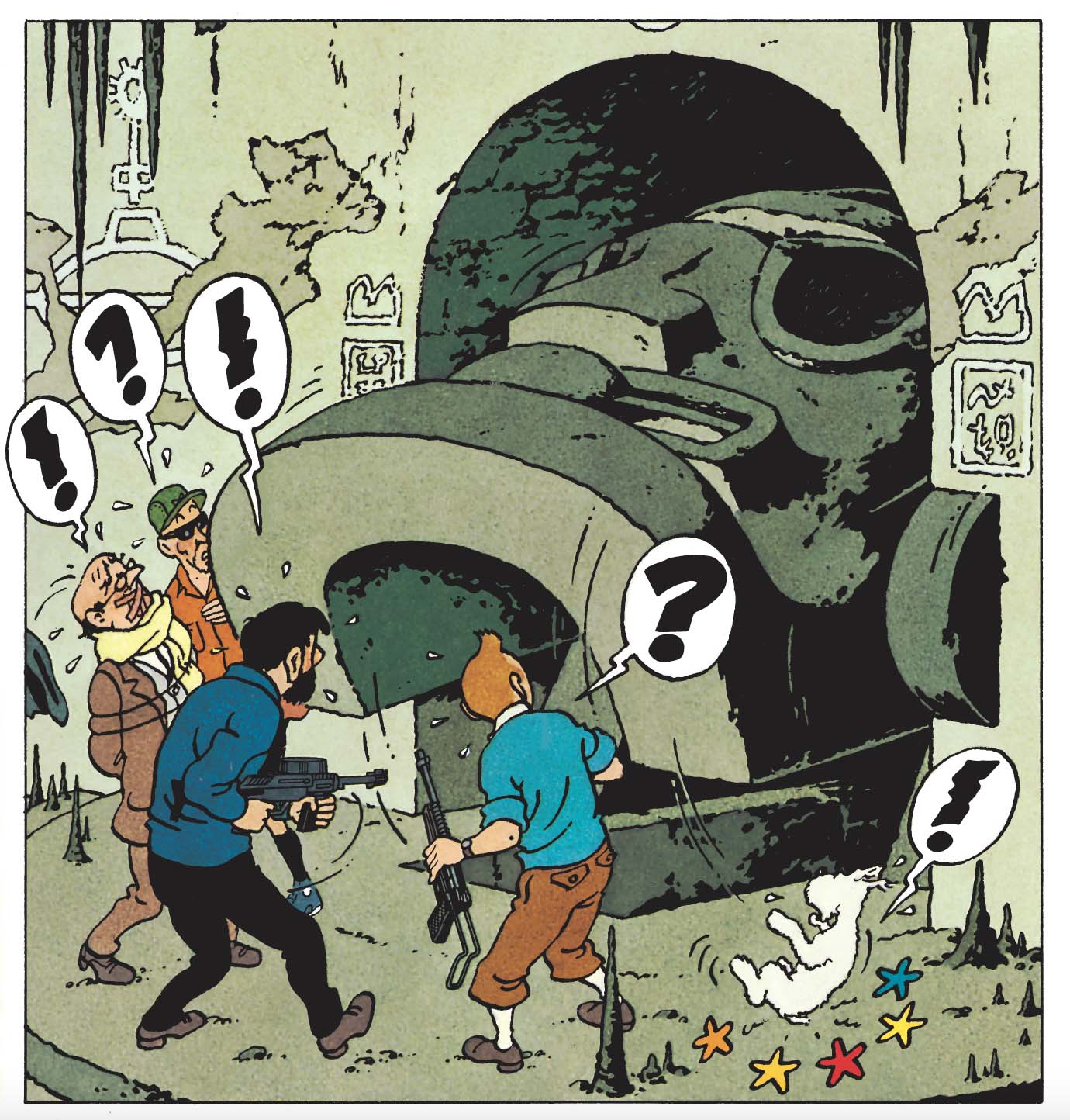
From this panel onward, the album leaves behind the straightforward confrontation with Rastapopoulos and opens onto a different kind of mystery, far more unsettling.
This sculpture, however, is not purely invented. It draws from a very real source: the colossal heads of the Olmecs, discovered in Mexico, whose heavy, helmet-like features have long intrigued both scholars and mystery enthusiasts. Hergé made no secret of this influence, drawing on it directly through the books he was reading at the time.
But he did not stop there. The facial features also owe something to Polynesian statues, the famous tiki, sacred figures with rigid, stylized expressions. The result is a striking blend, almost improbable: a head that seems to come from everywhere at once, at the crossroads of several cultures, much like Tintin himself has often been.
And that is precisely what makes it so compelling!
In the 1960s, a theory enjoyed considerable popularity: that of the ancient astronauts. According to this idea, extraterrestrial civilizations visited Earth in the distant past, leaving behind traces that humans later interpreted as divine works.
Hergé, an attentive reader of such theories, embraced this hypothesis with surprising seriousness, though not without a few playful embellishments. In Flight 714 to Sydney, the temple and its sculptures thus become proof, or at least a suggestion, of ancient contact between humans and visitors from elsewhere. Conveniently enough, a man is already on hand to bridge the gap: Mik Ezdanitoff.
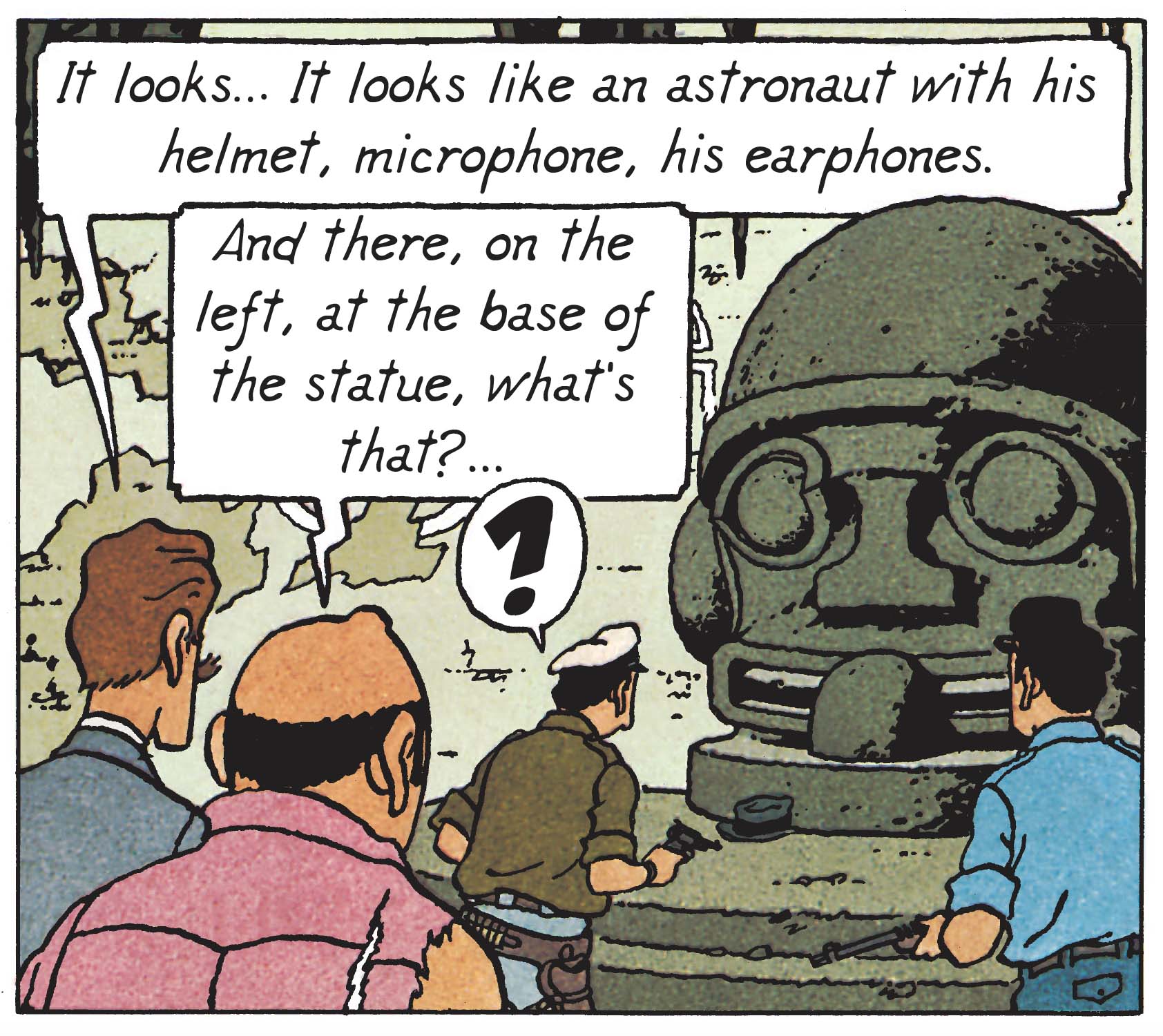
The giant head does not merely guard a doorway. It embodies an entire era fascinated by fashionable theories.
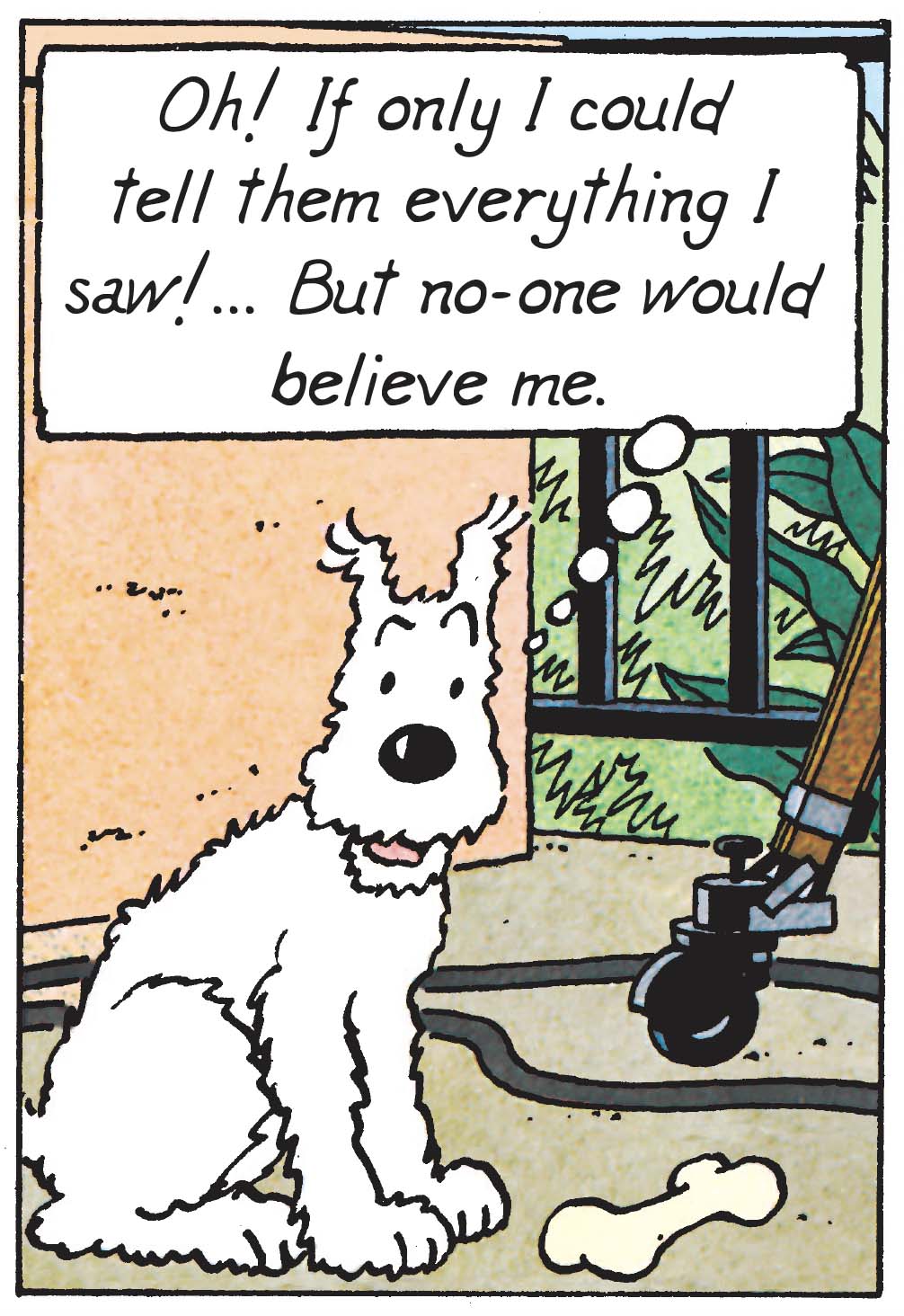
But, as so often with Hergé, the mystery has a second layer. This spectacular revelation, involving flying saucers, telepathy, and an unknown civilization, ends in total amnesia. The characters remember nothing. Only Snowy retains the memory, unable to share it. One must admit, it would have been too easy otherwise.
In other words, everything happened, and yet nothing remains. The stone head stays where it is, silent and closed once more, as if nothing had occurred.
And we leave the island wondering whether Tintin truly lived through this adventure, or whether, as with so many mysteries too vast to grasp, it is better left sealed behind an ancient stone door, guarded by an Olmec… wearing a cosmonaut’s helmet.
To learn more about this album, you can also read the feature « When Mars Attacks! »
Texts and pictures © Hergé / Tintinimaginatio - 2026


